

What Are The Differences Between Digital And Traditional Question Banks?
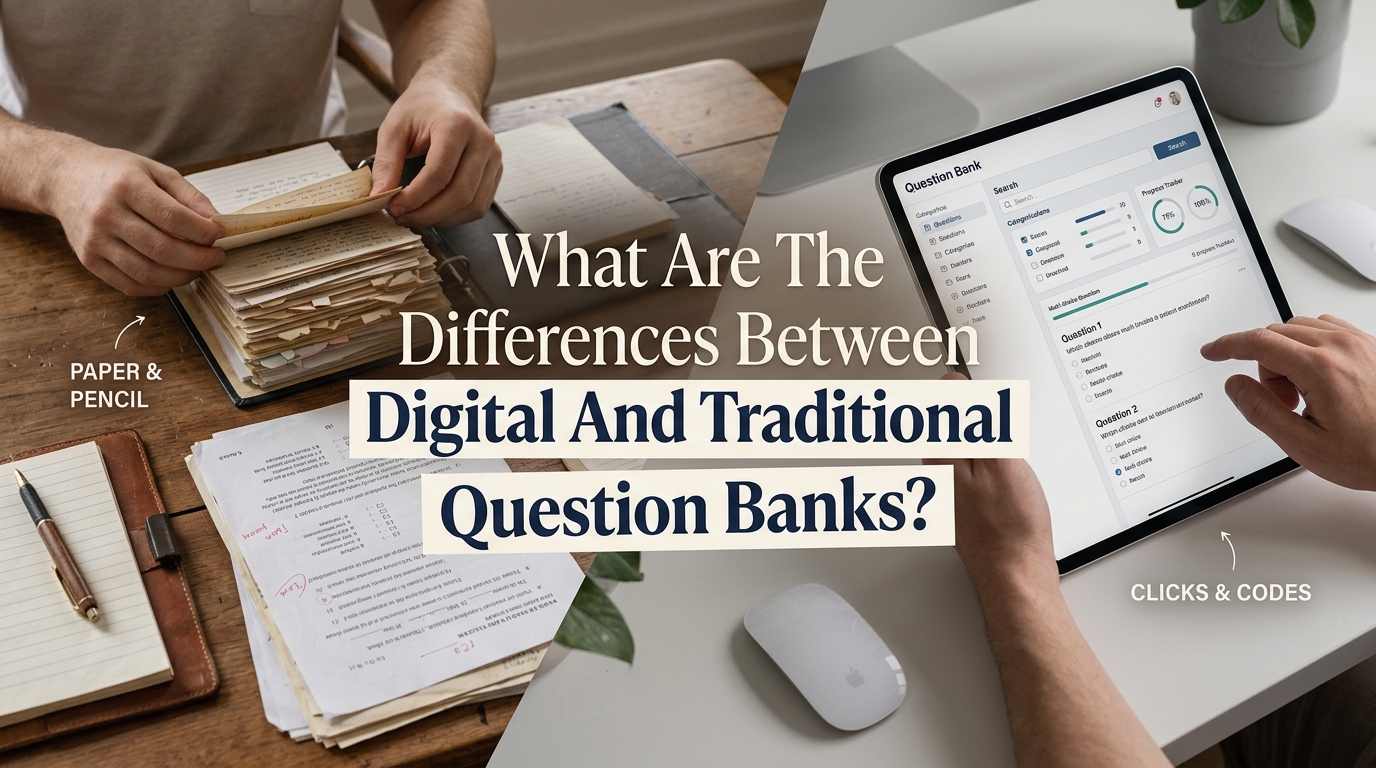
Question banks are important educational resources that help teachers prepare assessments and allow students to practice what they have learned. They contain questions organized by subject, topic, difficulty level, or learning objective. Today, question banks are commonly available in two forms: digital question banks and traditional question banks. Digital question banks use electronic devices and software to store and manage questions, while traditional question banks usually rely on printed books, worksheets, or physical documents. Understanding the differences between these two formats can help teachers and students choose the most suitable option for their learning needs.
WHAT ARE DIGITAL AND TRADITIONAL QUESTION BANKS?
A digital question bank is an electronic collection of questions stored and managed through computers, mobile devices, websites, or educational platforms. It may include multiple-choice questions, short-answer exercises, quizzes, and other assessment formats. Depending on the platform, users can search for questions, receive automatic scores, and review their learning progress. Digital question banks are often useful for online learning and assessments that require quick access to educational materials.
In contrast, a traditional question bank usually consists of printed question books, worksheets, paper-based test collections, or physical documents prepared by teachers. Students answer questions using paper and writing tools, while teachers typically check and score responses manually. This format can be used without an internet connection or electronic devices. Traditional question banks remain useful in classrooms where printed materials are readily available and paper-based learning is preferred.
DIFFERENCES IN ACCESSIBILITY AND AVAILABILITY
One major difference between digital and traditional question banks is how users access the questions. Digital question banks can often be accessed through compatible devices from different locations, provided that the platform and internet or offline access requirements are met. Students can practice at home, at school, or while traveling if they have suitable devices. This flexibility makes digital resources convenient for students who need to study outside regular classroom hours.
Traditional question banks are generally accessed through printed materials or physical documents. Students may need to carry books or worksheets and make photocopies when additional practice materials are required. However, printed resources do not depend on batteries, software, or internet connectivity. They can be especially useful in areas where digital access is limited or when students prefer reading and writing on paper.
DIFFERENCES IN COST AND RESOURCE MANAGEMENT
Digital question banks may reduce some long-term printing and paper expenses because questions can be stored and distributed electronically. Teachers can update a question without printing an entirely new collection, and students may access shared materials without purchasing separate printed copies. However, digital systems may involve subscription fees, device costs, internet expenses, or technical support. The overall cost depends on the platform and the resources already available.
Traditional question banks require paper, printing, photocopying, and physical storage. These expenses may increase when teachers frequently update materials or distribute large numbers of worksheets. Printed resources can still be economical when a school already has suitable books and printing facilities. Therefore, neither format is always cheaper, and schools should compare their actual needs, available equipment, and long-term costs before deciding.
DIFFERENCES IN ASSESSMENT AND FEEDBACK
Digital question banks can make assessment more efficient through features such as automatic scoring and immediate feedback. For example, a platform can automatically mark many multiple-choice questions and display results as soon as students submit their answers. Some systems also provide explanations, record scores, and summarize performance by topic. These features can help students identify mistakes quickly and allow teachers to review learning progress more efficiently.
Traditional question banks usually require teachers to check students’ answers manually, especially when assessments involve written responses. This process can take more time, but it also gives teachers opportunities to examine students’ reasoning and provide detailed comments. Paper-based assessments can evaluate complex answers just as effectively as digital assessments when suitable marking criteria are used. The main difference is often the method of scoring and feedback delivery rather than the educational value of the questions themselves.
DIFFERENCES IN FLEXIBILITY AND QUESTION UPDATES
Digital question banks generally make it easier to organize, revise, and update questions. Teachers can change wording, correct errors, add new topics, or adjust difficulty levels without replacing an entire printed collection. Search and filtering tools can also help educators find questions based on specific learning objectives. Some platforms support collaboration, allowing authorized teachers to contribute to a shared question bank.
Traditional question banks are more difficult to update because changes may require editing documents, printing replacement pages, or distributing new worksheets. Older materials may remain in circulation even after the curriculum or learning requirements have changed. However, printed question collections can still be revised by creating new editions or replacing individual worksheets. Both formats need regular reviews to maintain accuracy, relevance, and educational quality.
DIFFERENCES IN STUDENT LEARNING EXPERIENCE
Digital question banks can offer an interactive learning experience through timed quizzes, progress indicators, multimedia content, and personalized practice when these features are supported. Students may be able to repeat exercises, view their scores, and focus on topics where they need more practice. Some platforms also include accessibility features, such as adjustable text sizes or audio support. These options can make digital practice more flexible for students with different learning needs.
Traditional question banks provide a more direct learning experience without digital notifications or other screen-based distractions. Students can write notes beside questions, underline important information, and work through exercises on paper. Some learners may find this approach helpful for concentration and handwritten practice. The most suitable format depends on students’ preferences, the subject being studied, and the learning objectives.
DIFFERENCES IN SECURITY AND DATA PRIVACY
Digital question banks require careful management of access permissions and personal information. Online platforms may store student accounts, assessment scores, and other educational data, so schools should choose reliable services and review their privacy practices. Teachers also need to protect confidential examination questions from unauthorized access. Strong passwords, appropriate permissions, and secure storage can help reduce these risks.
Traditional question banks do not usually require online accounts or digital student records when used only in printed form. However, printed examination materials can still be lost, copied, or viewed by unauthorized people. Teachers should store important test documents securely and control how copies are distributed. Both formats require appropriate safeguards, although the specific security risks differ.
WHICH QUESTION BANK IS BETTER FOR TEACHERS AND STUDENTS?
The best choice depends on the learning environment, available resources, and purpose of the assessment. Digital question banks may be more suitable when teachers need quick updates, automated scoring, flexible access, and performance reports. They can be especially helpful for online learning and frequent practice activities. However, their effectiveness depends on reliable technology, suitable devices, and the quality of the digital platform.
Traditional question banks may be a better option when internet access is limited, printed materials are readily available, or students need paper-based practice. They are also useful for activities that involve handwriting, drawing, or working through calculations on paper. Schools do not necessarily need to choose only one format. Combining digital and traditional question banks can provide flexibility while ensuring that students can access learning materials in different situations.
CONCLUSION
Digital and traditional question banks differ in how questions are stored, accessed, updated, assessed, and distributed. Digital formats often provide greater flexibility, faster feedback, and convenient question management, while traditional formats offer straightforward access without requiring electronic devices or internet connections. Each option has advantages and limitations related to cost, accessibility, security, and learning experience.
Ultimately, the most effective question bank is one that supports clear learning objectives and meets the needs of teachers and students. By considering available resources and assessment requirements, educational institutions can select the right format or combine both approaches. Digital and traditional question banks can each contribute to effective teaching, regular practice, and better learning outcomes when managed appropriately.
Recent Posts

Bagaimana Sistem SKS pada Program Kuliah... 22.11.2026/61 View

How Does Technology Make Daily Evaluation... 21.11.2026/87 View

Apa Strategi Menghadapi Kesenjangan antara Kompetensi... 21.11.2026/85 View

Mengapa Inventaris Aset Penting bagi Kelancaran... 21.11.2026/83 View

When Should Musicians Join a Record... 21.11.2026/87 View
