

What Are the Differences Between Traditional and Modern Music Industries?
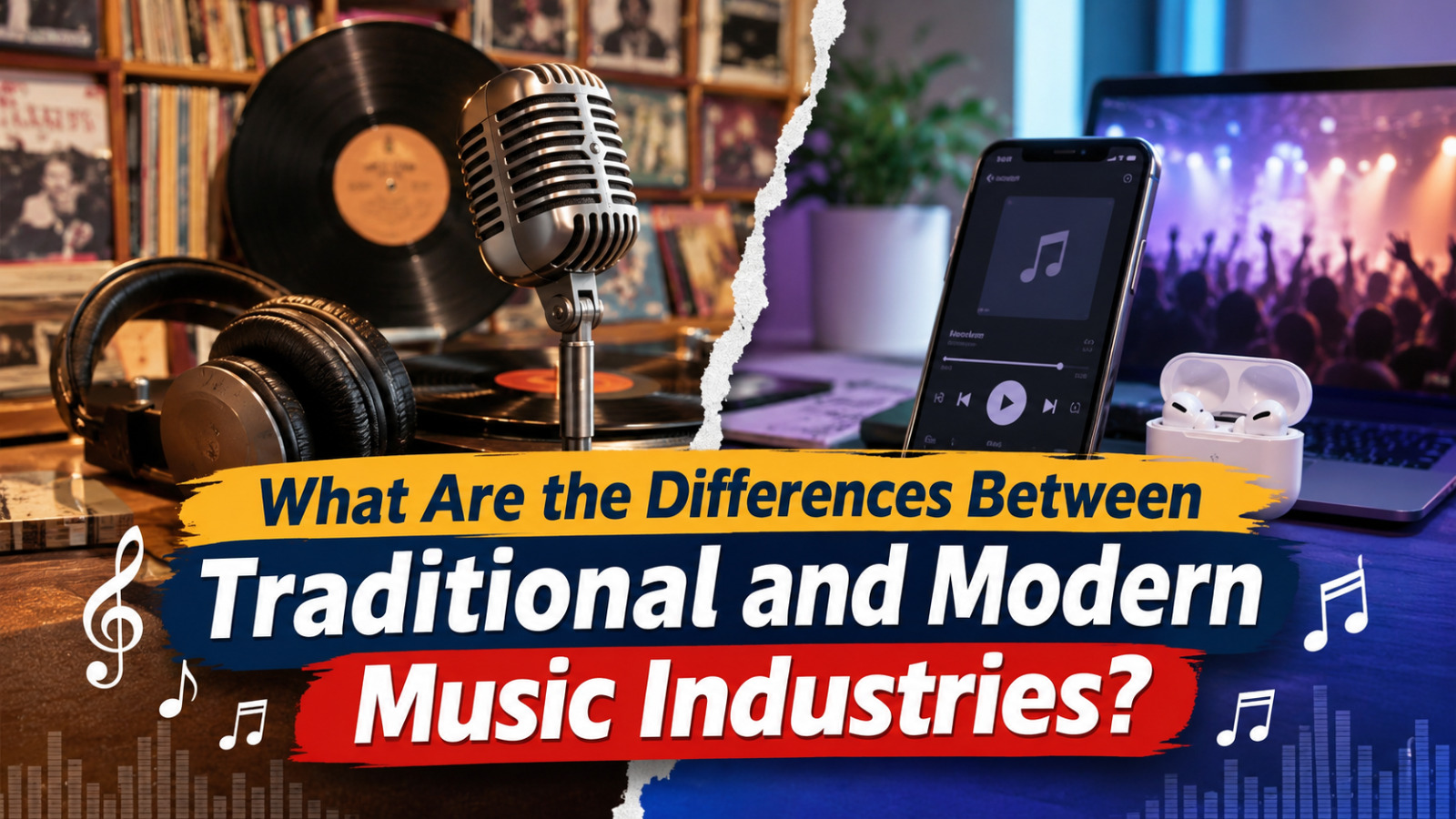
The music industry has experienced significant changes over the years, especially in how music is created, distributed, promoted, and consumed. Traditional music businesses relied heavily on physical recordings, radio broadcasting, television, and record labels to reach audiences. In contrast, the modern music industry uses digital technology, streaming services, and social media to connect artists with listeners worldwide. Understanding the differences between these two systems helps explain how technology has transformed the global music business.
MUSIC PRODUCTION AND RECORDING METHODS
The traditional music industry depended heavily on professional recording studios and expensive equipment to produce high-quality recordings. Musicians usually worked with record producers, sound engineers, and studio technicians throughout the recording process. Producing an album often required significant financial investment and careful coordination between different professionals. As a result, access to professional music production was more limited for independent and emerging artists.
The modern music industry offers more flexible production methods through digital audio technology. Musicians can use computers, recording software, microphones, and virtual instruments to create songs from home studios or other locations. Digital tools make editing, mixing, and mastering more accessible than many traditional recording methods. Although professional studios remain important, independent musicians now have more opportunities to produce and release music without depending entirely on large recording companies.
MUSIC DISTRIBUTION AND ACCESSIBILITY
In the traditional music industry, distribution mainly involved physical products such as vinyl records, cassette tapes, and compact discs. Record labels and distribution companies managed the production, transportation, and sale of these products to music stores. Radio stations and television programs also played important roles in making songs available to the public. Listeners generally needed to purchase recordings or access scheduled broadcasts to enjoy particular music.
Today, digital music distribution allows songs to reach audiences through streaming services and online music stores. Platforms such as Spotify, Apple Music, and YouTube Music provide access to extensive music catalogs through internet-connected devices. Artists can also distribute their recordings internationally through digital distributors. This development has reduced some geographical and logistical barriers, making music more accessible to listeners and creators around the world.
MUSIC MARKETING AND PROMOTIONAL STRATEGIES
Traditional music promotion relied heavily on radio airplay, television appearances, printed advertisements, music magazines, and public events. Record labels often controlled major promotional campaigns and used their professional networks to introduce artists to wider audiences. Getting attention from influential media organizations could be especially important for musicians who wanted to build successful careers. These methods required considerable planning and financial resources.
Modern music marketing uses social media platforms, digital advertising, music videos, and online communities to promote artists and their releases. Musicians can communicate directly with fans through Instagram, TikTok, YouTube, and other digital channels. They can also analyze engagement statistics to understand audience interests and evaluate promotional campaigns. This approach provides more opportunities for independent musicians, although competition for online attention remains high.
BUSINESS MODELS AND REVENUE SOURCES
The traditional music industry generated much of its revenue through physical album sales, recorded music distribution, radio-related activities, and live performances. Record labels generally played a major role in financing recordings, managing distribution, and organizing promotional activities. Artists received payments according to their recording contracts, royalty arrangements, and other professional agreements. Physical sales were therefore an important part of the industry's commercial structure.
The modern music industry has developed additional revenue sources through music streaming, digital downloads, licensing, merchandise, sponsorships, and online content. Subscription-based and advertising-supported services have changed how recorded music generates revenue. Independent musicians can also build businesses through direct fan support and digital merchandise sales. However, earnings depend on factors such as audience size, ownership rights, platform policies, and contractual agreements.
ARTIST INDEPENDENCE AND GLOBAL OPPORTUNITIES
In the traditional music industry, musicians often depended on record labels to finance recordings, manage promotion, and distribute albums. This relationship could provide valuable professional support, but it also meant that artists sometimes had limited control over certain business and creative decisions. Gaining access to major distribution networks could be difficult for musicians without established industry connections.
The modern music industry gives artists more opportunities to manage their own careers. Through digital platforms, musicians can release original songs, build audiences, and communicate directly with listeners in different countries. They can also collaborate remotely with international producers and other creative professionals. Nevertheless, independence requires knowledge of music business management, copyright, marketing, and financial planning. Artists must balance creative freedom with the responsibilities of managing their professional activities.
CONCLUSION
The traditional and modern music industries differ mainly in their production methods, distribution systems, marketing strategies, revenue models, and opportunities for artists. Traditional music businesses relied heavily on physical recordings, record labels, and conventional media, while modern music businesses depend more on digital technology and online platforms. These changes have made music more accessible and created new opportunities for independent musicians. However, both systems continue to contribute to the development of the global music industry, with traditional methods still playing a role alongside modern innovations.
Recent Posts

How Does Technology Make Daily Evaluation... 21.11.2026/55 View

Apa Strategi Menghadapi Kesenjangan antara Kompetensi... 21.11.2026/57 View

Mengapa Inventaris Aset Penting bagi Kelancaran... 21.11.2026/51 View

When Should Musicians Join a Record... 21.11.2026/52 View

Daily Evaluation or Daily Planning Which... 21.11.2026/59 View
