

What Are the Different Categories in the MAPSI Competition?
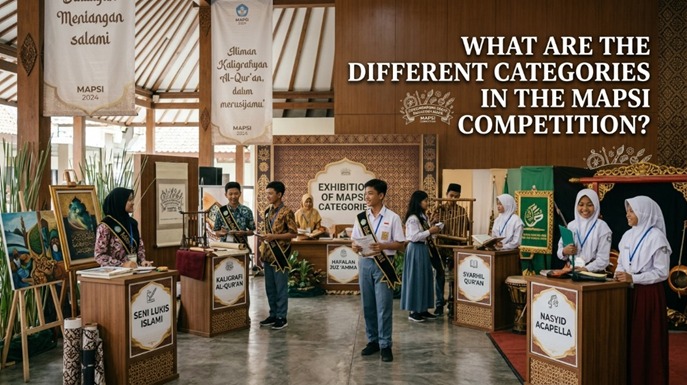
The MAPSI Competition is an educational event that combines Islamic religious education with various forms of Islamic art and creativity. MAPSI stands for Mata Pelajaran Pendidikan Agama Islam dan Seni Islami. It gives students opportunities to demonstrate their knowledge, practice religious skills, and develop artistic abilities.
The competition generally includes several categories, ranging from Islamic studies and Quranic skills to public speaking, traditional arts, and technology. However, the exact competition categories may differ depending on the organizer, region, educational level, and year. Understanding these categories can help students identify their interests and prepare for the competition more effectively.
1. ISLAMIC RELIGIOUS KNOWLEDGE AND BTQ
One of the main categories in MAPSI focuses on Islamic Religious Education (PAI) and Baca Tulis Al-Qur'an (BTQ). This category tests students' understanding of basic Islamic teachings, religious knowledge, and Quran reading and writing skills. Students may be asked to answer questions related to Islamic history, worship, moral values, and other religious subjects. They need to study carefully and understand the material rather than simply memorize information. This category helps strengthen students' religious knowledge and encourages them to apply Islamic values in daily life.
2. WUDU AND PRAYER PRACTICE
The wudu and prayer practice category evaluates students' ability to perform essential Islamic worship correctly. Participants demonstrate the steps of wudu, including the proper sequence and movements. They may also be asked to perform prayers while observing the correct movements and recitations. Accuracy, order, and understanding of the procedures are important aspects of this competition. Through this activity, students can improve their knowledge of religious practices and develop greater discipline in performing daily worship.
3. ADHAN AND IQAMAH
The Adhan and Iqamah category focuses on students' ability to perform the calls to prayer correctly. Participants are assessed on pronunciation, pronunciation clarity, memorization, and the proper sequence of the recitations. Some competitions may also consider voice quality and the participant's confidence. Students need to practice regularly to improve their pronunciation and vocal control. This category helps preserve an important Islamic tradition while developing students' communication and performance skills.
4. QURAN RECITATION AND MEMORIZATION
Quran-related competitions are important parts of MAPSI because they encourage students to build a closer relationship with the Quran. Two common categories are Tilawatil Qur'an and Hifzhil Qur'an. Tilawatil Qur'an focuses on reciting Quranic verses with correct pronunciation, tajwid, and appropriate reading techniques. Meanwhile, Hifzhil Qur'an tests students' ability to memorize and accurately recite selected verses or surahs. Both categories develop concentration, discipline, and appreciation of the Quran.
5. KHAT AND ISLAMIC CALLIGRAPHY
The Khat and calligraphy categories allow students to demonstrate their artistic abilities through Arabic writing. Khat Al-Qur'an emphasizes the art of writing Arabic or Quranic text using appropriate writing styles and techniques. Islamic calligraphy focuses more broadly on creating beautiful compositions of Arabic letters and words. Participants need to pay attention to letter shapes, spacing, proportions, and overall presentation. These activities develop patience, creativity, accuracy, and appreciation for Islamic visual art.
6. KHITABAH OR ISLAMIC PUBLIC SPEAKING
Khitabah is a category that tests students' ability to deliver Islamic speeches in front of an audience. Participants usually prepare a speech containing religious messages, moral lessons, or advice related to everyday life. They are expected to communicate their ideas clearly and organize their material effectively. Judges may consider content, pronunciation, expression, confidence, and the way participants engage with the audience. This category develops public speaking skills, courage, and the ability to share positive messages.
7. ISLAMIC MACAPAT
Islamic Macapat combines traditional Javanese poetry and music with Islamic messages. Students perform Macapat verses that communicate religious teachings, moral values, or advice. They need to understand the lyrics, maintain the appropriate rhythm, and deliver the performance clearly. This category introduces students to local cultural traditions while connecting them with Islamic values. Islamic Macapat helps preserve cultural heritage and encourages students to appreciate the relationship between religion and local arts.
8. ISLAMIC INFORMATION TECHNOLOGY SKILLS
Some MAPSI competitions include a category related to Islamic information technology, often known as TIKI. This category encourages students to use digital tools to complete tasks connected with Islamic education. Depending on the official rules, activities may involve computer skills, digital content, or other technology-based assignments. Participants need to demonstrate accuracy, creativity, and the ability to use technology appropriately. This category shows how digital skills can support learning and the positive communication of Islamic values.
9. ISLAMIC STORYTELLING
The Islamic storytelling category gives students opportunities to present stories containing religious lessons and positive values. The stories may be inspired by Islamic history, exemplary figures, or everyday situations that teach honesty, kindness, and responsibility. Participants need to understand the story and communicate it in an interesting way. Expression, voice, pronunciation, and confidence can influence the quality of their performance. Storytelling develops imagination, communication skills, and the ability to deliver meaningful messages.
10. RELIGIOUS SONG DUET
The religious song duet category allows two students to perform a song with Islamic themes. Participants need to work together to maintain harmony, rhythm, and vocal balance. They should also understand the meaning of the song so that they can communicate its message effectively. Preparation requires cooperation, regular practice, and good coordination between both performers. This category develops musical talent while teaching students the importance of teamwork and mutual support.
11. REBANA MUSIC PERFORMANCE
Rebana is a traditional Islamic musical performance that uses frame drums and coordinated rhythms. In this category, students perform as a group and work together to create an organized musical presentation. They need to maintain rhythm, follow musical arrangements, and coordinate their movements. Depending on the competition rules, the judges may assess musical accuracy, group cooperation, and overall performance. Rebana helps students develop musical creativity, teamwork, and appreciation for Islamic cultural traditions.
HOW CAN STUDENTS CHOOSE THE RIGHT MAPSI CATEGORY?
Students should choose a MAPSI category based on their interests, abilities, and willingness to practice. Those who enjoy studying religion may prefer Islamic knowledge, BTQ, or Quran memorization. Students with artistic interests may explore calligraphy, Islamic Macapat, religious songs, or Rebana. Meanwhile, those who enjoy speaking or using technology can consider Khitabah, storytelling, or information technology competitions.
Teachers can help students identify their strengths and select suitable categories. Students should also read the official competition guidelines because each organizer may have different requirements, participant limits, and assessment criteria. Choosing a suitable category allows students to prepare more confidently and develop their talents effectively.
CONCLUSION
The MAPSI Competition offers various categories that combine Islamic knowledge, religious practices, Quranic skills, artistic expression, public speaking, and technology. Each category provides different opportunities for students to demonstrate their abilities and learn valuable skills. The available categories may vary depending on the organizer and the competition year, so students should always check the latest official guidelines before registering.
More importantly, MAPSI is not only about winning awards. It also encourages students to develop confidence, discipline, creativity, cooperation, and positive character. By choosing a category that matches their interests and practicing consistently, students can make the most of MAPSI as an opportunity for learning and personal growth.
Recent Posts

How Does Technology Make Daily Evaluation... 21.11.2026/63 View

Apa Strategi Menghadapi Kesenjangan antara Kompetensi... 21.11.2026/64 View

Mengapa Inventaris Aset Penting bagi Kelancaran... 21.11.2026/60 View

When Should Musicians Join a Record... 21.11.2026/59 View

Daily Evaluation or Daily Planning Which... 21.11.2026/67 View
