

What Are the Different Types of Inflation and Their Effects?
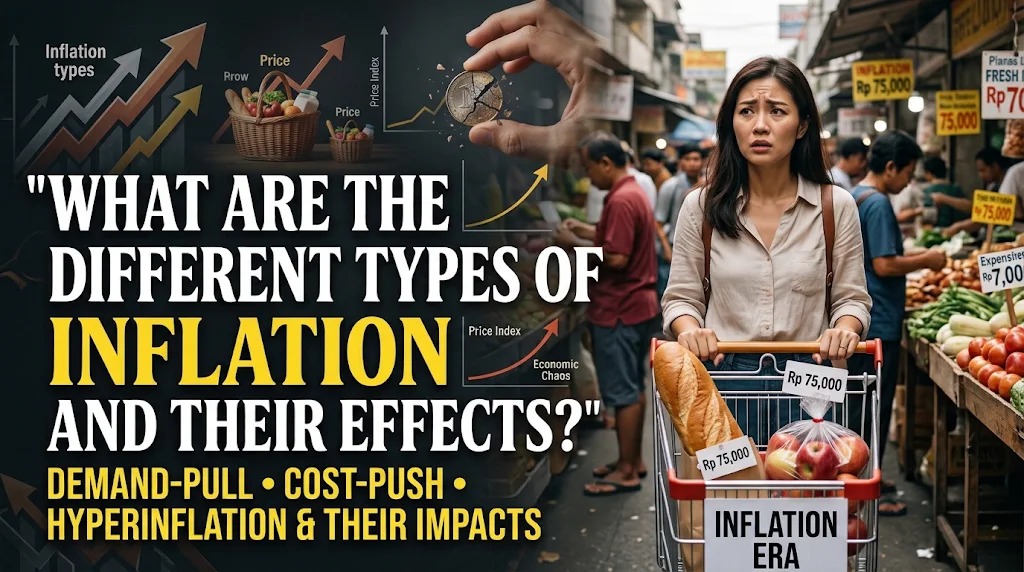
Inflation is an economic phenomenon that occurs when the general prices of goods and services increase over time. It can influence consumer purchasing power, business activities, household expenses, and the overall stability of an economy. However, inflation does not always happen in the same way or at the same intensity. Economists classify inflation into several types based on its causes, speed, and the conditions that influence price movements. Understanding the different types of inflation helps governments, businesses, and consumers recognize economic changes and evaluate their potential effects on everyday life.
TYPES OF INFLATION BASED ON THEIR CAUSES
Inflation can be classified according to the economic factors that cause prices to increase. Two common categories are demand-pull inflation and cost-push inflation. Both can lead to higher prices, but they develop through different economic processes.
Demand-pull inflation occurs when the demand for goods and services grows faster than the available supply. When consumers have more money to spend and businesses cannot increase production quickly enough, sellers may raise prices. This situation can happen during periods of strong economic growth, rising household incomes, or increased consumer spending.
Cost-push inflation happens when businesses experience higher production expenses. Rising prices for raw materials, fuel, electricity, transportation, and employee wages can increase the cost of producing goods and services. Companies may transfer some of these additional expenses to consumers through higher selling prices. Both types can reduce purchasing power, although their underlying causes require different economic responses.
TYPES OF INFLATION BASED ON THEIR SPEED
Economists also classify inflation according to how quickly prices increase. This classification helps explain the intensity of inflation and the challenges it may create for an economy. The main categories commonly discussed are creeping inflation, walking inflation, galloping inflation, and hyperinflation.
Creeping inflation refers to a relatively slow and gradual increase in the general price level. It is often associated with low and predictable inflation rates. Businesses and households may be able to adjust their budgets and financial plans more easily when prices increase gradually.
Walking inflation describes a more noticeable rate of price increases that can create additional pressure on consumers and businesses. When inflation continues at a moderate but faster pace, household expenses may rise more quickly than income. This can encourage consumers to reconsider their spending habits and businesses to adjust their pricing strategies.
Galloping inflation occurs when prices rise rapidly and create serious economic uncertainty. Consumers may find it difficult to maintain their purchasing power, while businesses may struggle to estimate future operating costs. Hyperinflation represents an extremely severe form of inflation in which prices increase at an exceptionally rapid rate, causing the value of money to deteriorate dramatically. These classifications help illustrate why maintaining price stability is important for economic confidence.
CORE INFLATION AND HEADLINE INFLATION
Another important classification distinguishes between core inflation and headline inflation. These measurements provide different perspectives on price movements and are commonly used by economists and policymakers to evaluate economic conditions.
Headline inflation measures the overall change in consumer prices, including categories such as food and energy. It provides a broad picture of the price increases experienced by consumers. Because it includes all major consumer spending categories, headline inflation can be influenced by temporary changes in food availability, fuel prices, and other external conditions.
Core inflation generally excludes certain categories with highly volatile prices, commonly food and energy. The purpose is to identify underlying inflation trends without allowing short-term fluctuations to dominate the measurement. Central banks and economic analysts often monitor core inflation when evaluating longer-term price pressures and considering monetary policy decisions.
Both measurements are important because they provide complementary information. Headline inflation reflects the overall changes consumers face, while core inflation helps policymakers examine more persistent price movements. Looking at both indicators can provide a more complete understanding of an economy's inflation conditions.
THE EFFECTS OF DIFFERENT TYPES OF INFLATION ON CONSUMERS
Different types of inflation can affect consumers in various ways, depending on how quickly prices increase and which products become more expensive. When inflation is gradual, households may have more time to adjust their budgets and spending priorities. However, even relatively low inflation can reduce purchasing power when income does not increase over time.
More rapid inflation can create greater financial pressure. Families may need to spend a larger portion of their income on essential goods such as food, transportation, housing, and electricity. This can leave less money for education, recreation, savings, and other financial goals. People with fixed incomes may face additional difficulties because their earnings may not adjust regularly to changing prices.
Inflation can also influence saving and borrowing decisions. When the real return on savings is lower than the inflation rate, the purchasing power of saved money may decline. Meanwhile, changing interest rates can affect loan payments and the cost of financing. These effects demonstrate why consumers need to understand inflation when managing their personal finances.
HOW BUSINESSES AND GOVERNMENTS RESPOND TO INFLATION
Inflation can create challenges for businesses because it affects production expenses, pricing decisions, and long-term planning. When raw materials, transportation, and labor become more expensive, companies may need to review their budgets and operating strategies. Small businesses can be particularly vulnerable because they may have limited resources to absorb unexpected cost increases.
Governments and central banks use different policies to manage inflation and maintain economic stability. Monetary policy is one important approach, often involving adjustments to interest rates and other measures that influence borrowing and spending. When inflation is too high, central banks may tighten monetary conditions to reduce excessive demand and help stabilize prices.
Governments can also use fiscal policies, improve infrastructure, support domestic production, and strengthen supply chains. These measures can help address some of the underlying factors contributing to inflation. However, the appropriate response depends on whether inflation is primarily driven by excessive demand, rising production costs, supply disruptions, or a combination of several factors. Understanding the type of inflation is therefore important when selecting suitable economic policies.
CONCLUSION
Inflation can be classified according to its causes, speed, and measurement methods. Demand-pull and cost-push inflation explain different reasons behind rising prices, while creeping inflation, walking inflation, galloping inflation, and hyperinflation describe different levels of price increases. Core inflation and headline inflation provide additional perspectives for evaluating economic conditions. Each type can affect consumers, businesses, and governments in different ways. Understanding these classifications helps people recognize economic challenges and appreciate the importance of maintaining stable prices and sustainable economic growth.
Recent Posts

Bagaimana Sistem SKS pada Program Kuliah... 22.11.2026/35 View

How Does Technology Make Daily Evaluation... 21.11.2026/69 View

Apa Strategi Menghadapi Kesenjangan antara Kompetensi... 21.11.2026/69 View

Mengapa Inventaris Aset Penting bagi Kelancaran... 21.11.2026/67 View

When Should Musicians Join a Record... 21.11.2026/68 View
