

What Are the Effects of Global Warming on Humans and the Environment?
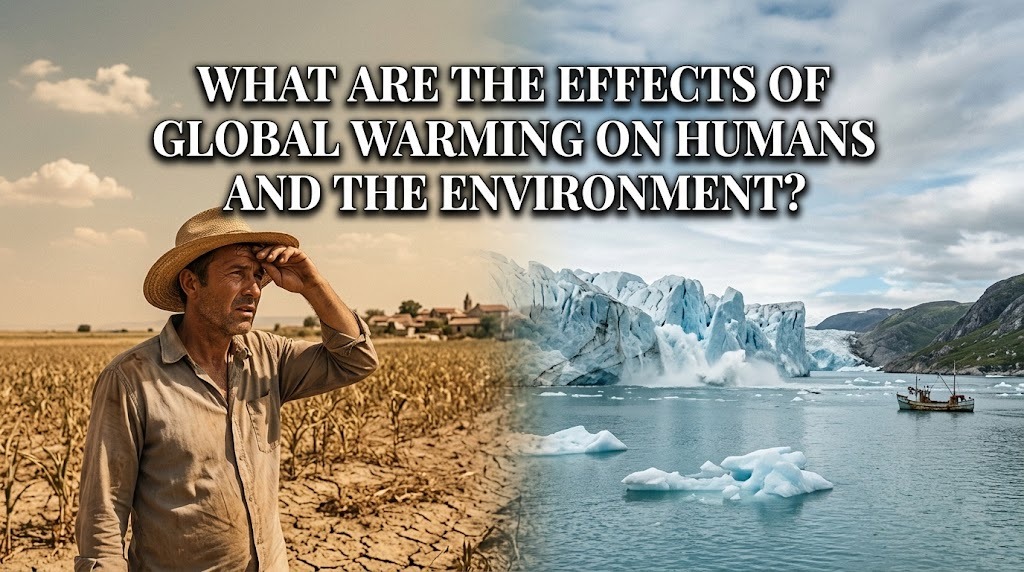
Global warming is the long-term increase in Earth's average surface temperature, primarily caused by human activities that release greenhouse gases into the atmosphere. These gases trap heat and disrupt the planet's natural energy balance. As temperatures rise, the effects can spread across human health, ecosystems, agriculture, water resources, and coastal environments.
Understanding the effects of global warming on humans and the environment is important because these changes influence daily life and the stability of natural systems. Some impacts are already visible, including more frequent heat extremes, melting glaciers, rising sea levels, and changes in rainfall patterns. The severity of these effects depends on the amount of future warming, local conditions, and how effectively communities prepare and respond.
INCREASING RISKS TO HUMAN HEALTH
One of the major effects of global warming on human health is greater exposure to extreme heat. Heatwaves can increase the risk of heat-related illnesses, especially among older adults, young children, outdoor workers, and people with certain medical conditions. High temperatures can also make physical activity and outdoor work more difficult, while increasing demand for cooling and healthcare services.
Global warming can influence health in other ways as well. Changes in temperature and rainfall can affect the distribution of mosquitoes and other disease-carrying organisms in some regions. In addition, wildfire smoke and certain forms of air pollution can worsen respiratory problems. Floods, storms, and other climate-related hazards may damage healthcare facilities and interrupt access to essential services. These risks show why reducing emissions and improving public health preparedness are important parts of climate action.
DISRUPTING ANIMALS, PLANTS, AND ECOSYSTEMS
Global warming affects ecosystems by changing the temperatures and environmental conditions that living organisms depend on. Some animals may need to move to cooler areas, while certain plants may struggle when temperatures or rainfall move beyond the conditions in which they grow well. Species that cannot adapt quickly enough may experience declining populations or face a greater risk of extinction.
These changes can also affect relationships between species. For example, plants may flower earlier as temperatures rise, while the insects that pollinate them may not change their activity at the same rate. In marine environments, warmer ocean water can cause coral bleaching and place pressure on coral reef ecosystems. When habitats are damaged, food chains and natural processes may also be disrupted. Protecting biodiversity and preserving natural habitats can help ecosystems become more resilient to climate-related changes.
AFFECTING AGRICULTURE AND FOOD SUPPLIES
Another important effect of global warming on the environment is its influence on agricultural production. Crops require suitable temperatures, adequate water, and predictable growing conditions. Excessive heat, prolonged droughts, heavy rainfall, and flooding can damage crops, reduce yields, and make farming more difficult in affected regions.
Livestock can also experience heat stress, which may affect animal health and productivity. Changes in rainfall and temperature can influence pests and plant diseases, creating additional challenges for farmers. When agricultural production is disrupted, food availability and prices may be affected, especially in communities that depend heavily on local harvests. However, the effects differ among crops and regions, and some areas may experience temporary benefits under certain conditions. Improving farming methods, managing water efficiently, and developing climate-resilient crops can help reduce these risks.
CAUSING WATER SHORTAGES AND RISING SEA LEVELS
Global warming and water availability are closely connected. Higher temperatures increase evaporation from soil and water surfaces, while changing rainfall patterns can make water supplies less reliable in some locations. Droughts can reduce the amount of water available for households, agriculture, and industry, while intense rainfall may overwhelm drainage systems and contaminate water sources.
Rising sea levels create additional risks for coastal areas. As ocean water warms, it expands, and melting land-based ice adds more water to the oceans. These processes contribute to coastal flooding, erosion, and saltwater intrusion into some freshwater sources. Low-lying communities may face damage to homes, roads, farmland, and essential infrastructure. Protecting watersheds, improving water management, restoring coastal ecosystems, and planning development carefully can help communities prepare for these changes.
INCREASING EXTREME WEATHER AND ECONOMIC PRESSURE
Global warming can influence the frequency or intensity of certain extreme weather events. Heatwaves are becoming more severe in many regions, and a warmer atmosphere can hold more moisture, contributing to heavier rainfall when weather conditions are suitable. At the same time, higher temperatures can intensify agricultural and ecological drought in some areas. The relationship between warming and individual storms or other weather events varies, so not every disaster can be attributed to global warming alone.
These hazards can create substantial economic pressure. Floods, wildfires, storms, and prolonged heat can damage homes, roads, businesses, crops, and public infrastructure. Recovery may require significant financial resources, while interrupted transport, electricity, and water services can affect daily activities. Communities with limited resources may face greater difficulties recovering from repeated disasters. Investing in resilient infrastructure, early-warning systems, disaster preparedness, and emissions reduction can help limit future risks.
CONCLUSION
The effects of global warming on humans and the environment include greater heat-related health risks, disruptions to ecosystems, challenges for agriculture, pressure on water supplies, rising sea levels, and damage caused by certain extreme weather events. These impacts are connected because changes in natural systems can influence food production, public health, livelihoods, and economic stability. Their severity varies across regions and depends partly on how much the planet continues to warm.
Reducing greenhouse gas emissions is essential to limiting future global warming and its associated risks. Protecting forests, improving energy efficiency, expanding cleaner energy sources, and preparing communities for climate impacts can help support both people and ecosystems. Through coordinated action by individuals, businesses, and governments, societies can reduce avoidable emissions and strengthen their ability to adapt to environmental changes.
Recent Posts

Bagaimana Sistem SKS pada Program Kuliah... 22.11.2026/47 View

How Does Technology Make Daily Evaluation... 21.11.2026/75 View

Apa Strategi Menghadapi Kesenjangan antara Kompetensi... 21.11.2026/77 View

Mengapa Inventaris Aset Penting bagi Kelancaran... 21.11.2026/73 View

When Should Musicians Join a Record... 21.11.2026/77 View
