

What Are the Effects of Historic Building Damage on Cultural Heritage?
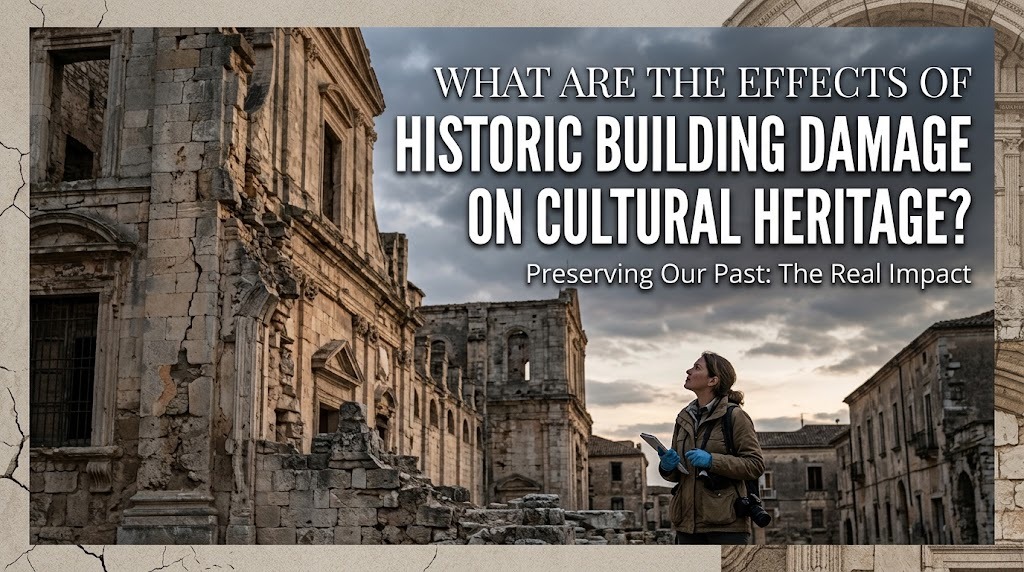
Historic buildings are important parts of cultural heritage because they preserve evidence of past events, architectural styles, and community traditions. These structures help people understand how earlier generations lived, worked, and developed their surroundings. However, historic buildings can suffer damage due to natural disasters, aging materials, pollution, neglect, and inappropriate renovation. When these structures are damaged or destroyed, the consequences can extend beyond the loss of a physical building.
Understanding the effects of historic building damage on cultural heritage is essential for encouraging preservation efforts. Protecting historic structures helps maintain historical knowledge, cultural identity, educational resources, and tourism opportunities for future generations.
THE LOSS OF HISTORICAL INFORMATION
One of the most significant effects of historic building damage is the loss of valuable historical information. Buildings often contain original materials, architectural details, inscriptions, and construction techniques that reveal how people lived in the past. These features can provide evidence about historical events, technological developments, and the social conditions of a particular period.
When a historic structure is severely damaged, some of this evidence may become difficult or impossible to recover. Even when a building can be reconstructed, newly created materials may not fully reproduce the information preserved in the original structure. This is why documentation, careful restoration, and preventive maintenance are important parts of historical preservation.
THE DECLINE OF CULTURAL IDENTITY
Cultural heritage buildings can represent the identity and collective memory of a community. They may be associated with important historical events, religious traditions, local achievements, or the experiences of previous generations. For many communities, these places provide a connection between the past and the present.
Damage to such buildings can weaken this connection, particularly when a structure has strong cultural or symbolic meaning. The loss may also affect community pride and reduce opportunities for younger generations to learn about their heritage. Preserving historic buildings helps communities maintain meaningful links to their history while allowing cultural traditions to be passed on.
THE LOSS OF ARCHITECTURAL HERITAGE
Historic buildings often display architectural styles and construction methods that are different from those used in modern structures. Their designs may include traditional materials, decorative elements, distinctive layouts, and techniques developed by earlier builders. These characteristics contribute to the diversity of architectural heritage in a region.
When historic buildings are damaged beyond repair, unique architectural features may disappear permanently. This can make a city or town less representative of its historical development and reduce the variety of buildings available for study. Careful conservation can help protect original features while addressing structural problems and safety requirements.
THE IMPACT ON EDUCATION AND TOURISM
Historic buildings can serve as educational resources for students, researchers, and visitors. They provide opportunities to study history, architecture, engineering, art, and cultural development through real examples. When buildings are damaged, access to these learning experiences may become limited, especially if the structures must be closed for safety reasons.
Damage can also affect historical tourism. Visitors may be less able to explore important sites, while local businesses that depend on tourism may experience reduced activity. Restoration projects can help recover some of these opportunities, although extensive repairs may require considerable time, funding, and specialist knowledge. Protecting historic buildings before serious damage occurs can therefore support both education and local economic activity.
THE NEED FOR CONSERVATION AND PREVENTIVE MEASURES
The effects of historic building damage show why cultural heritage conservation should be treated as a long-term responsibility. Regular inspections can help identify cracks, water leaks, material deterioration, and other problems before they become more serious. Appropriate maintenance can also reduce the risk of damage caused by environmental conditions and inadequate building management.
Conservation requires cooperation among governments, heritage specialists, property owners, local communities, and other stakeholders. Restoration should respect the building's historical significance and use suitable methods and materials whenever possible. Photographs, architectural surveys, and digital records can also help document important features. Although documentation cannot replace an original structure, it can support research and recovery efforts when physical damage occurs.
CONCLUSION
The effects of historic building damage on cultural heritage include the loss of historical information, weakening of cultural identity, disappearance of architectural features, and reduced opportunities for education and tourism. These consequences can affect not only individual buildings but also the communities that depend on them as sources of history, identity, and shared memory.
Protecting historic buildings requires regular maintenance, responsible restoration, proper documentation, and cooperation among relevant parties. By taking preventive measures and respecting the historical value of these structures, communities can help preserve their cultural heritage and ensure that future generations have opportunities to learn from the past.
Recent Posts

Bagaimana Sistem SKS pada Program Kuliah... 22.11.2026/51 View

How Does Technology Make Daily Evaluation... 21.11.2026/81 View

Apa Strategi Menghadapi Kesenjangan antara Kompetensi... 21.11.2026/81 View

Mengapa Inventaris Aset Penting bagi Kelancaran... 21.11.2026/77 View

When Should Musicians Join a Record... 21.11.2026/82 View
