

What Are the Effects of Low Reading Interest on the Development of Young Generations?
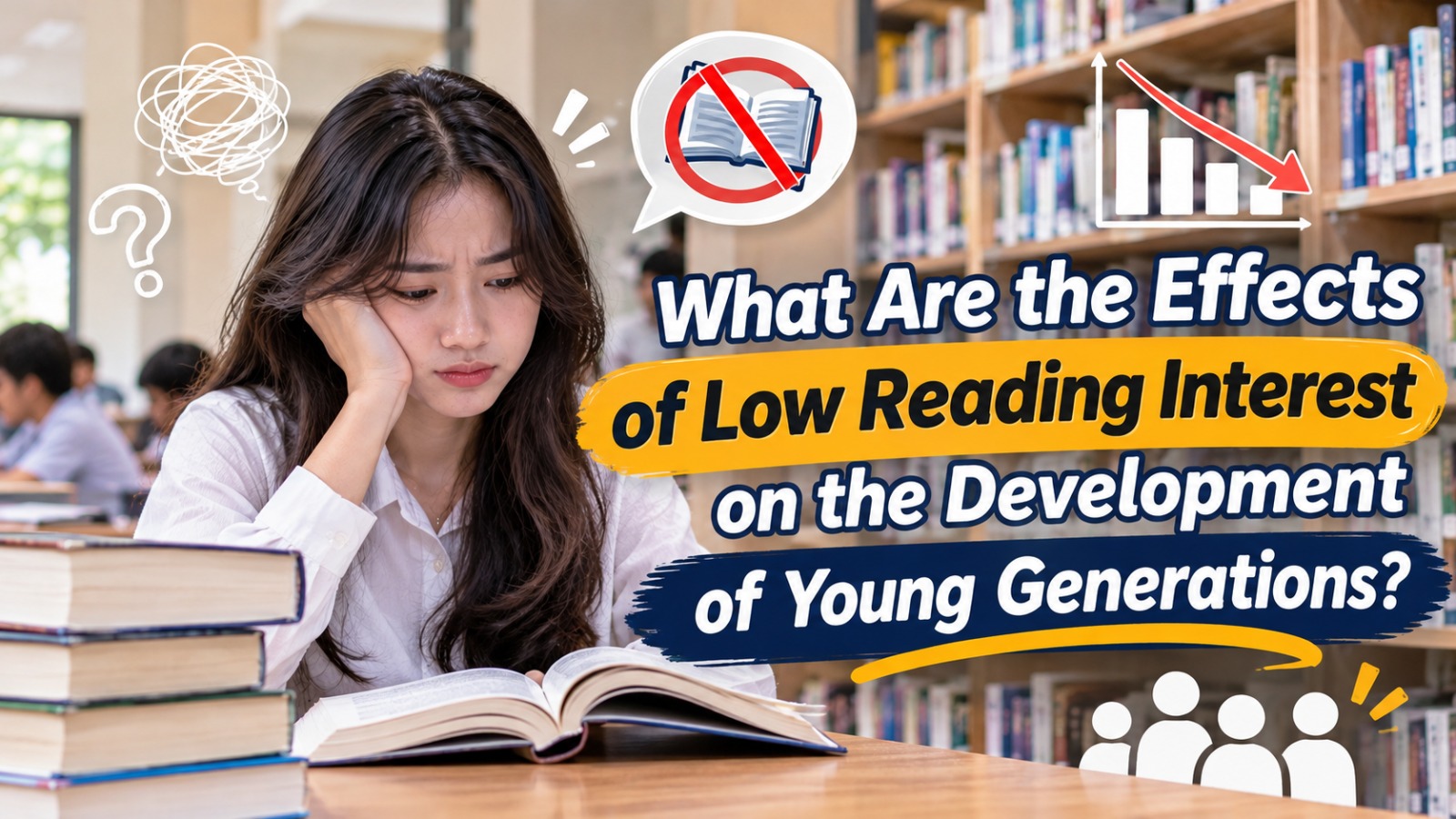
Reading interest is an important factor in developing knowledgeable, creative, and competitive young generations. Through reading, young people can obtain information, improve their understanding, and develop skills that support their education and future careers. However, low reading interest remains a challenge in many communities, particularly as digital entertainment becomes increasingly popular. Many young people spend considerable time watching short videos, browsing social media, and playing online games rather than exploring educational reading materials. If this situation continues, it may affect their intellectual development, academic performance, and ability to compete in an increasingly demanding world.
LIMITING KNOWLEDGE AND UNDERSTANDING OF INFORMATION
One of the main effects of low reading interest is limited access to knowledge. Reading allows young people to explore various subjects, including science, technology, history, culture, and social issues. Without regular reading activities, their opportunities to discover new information may become restricted. This situation can make it more difficult for them to understand developments and changes happening around the world.
Furthermore, limited reading habits can affect their ability to understand complex information. Many educational and professional activities require individuals to process written instructions, analyze reports, and understand different perspectives. Young people who rarely practice reading may need more time to understand unfamiliar vocabulary and detailed explanations. Therefore, developing reading interest is important for expanding knowledge and improving information comprehension.
REDUCING ACADEMIC PERFORMANCE AND LEARNING ABILITIES
Reading plays an essential role in supporting academic achievement because most educational activities involve understanding written information. Students need reading skills to understand textbooks, complete assignments, follow instructions, and prepare for examinations. When reading interest is low, students may become less motivated to explore learning materials independently. This can affect their understanding of lessons and limit their academic development.
In addition, regular reading helps students improve concentration, memory, and the ability to connect different ideas. These abilities are useful when studying complicated subjects or solving academic problems. Students who rarely read may become more dependent on short explanations and information provided by others. Encouraging enjoyable reading activities can help them develop independent learning habits and become more confident in their academic abilities.
WEAKENING CRITICAL THINKING AND ANALYTICAL SKILLS
Reading provides opportunities for young people to examine information, compare arguments, and understand different viewpoints. These activities are important for developing critical thinking and analytical skills. When individuals read regularly, they learn to identify important details, recognize relationships between ideas, and evaluate the information they receive. Low reading interest can reduce opportunities to practice these abilities.
This condition may also make young people more vulnerable to accepting information without examining its accuracy. In the digital era, misleading information, exaggerated claims, and false news can spread quickly through online platforms. Without sufficient reading and information-evaluation skills, individuals may struggle to distinguish reliable sources from inaccurate content. Therefore, reading habits should be encouraged as part of developing responsible and critical digital citizens.
LIMITING COMMUNICATION SKILLS AND VOCABULARY DEVELOPMENT
Reading helps young people become familiar with different words, expressions, and sentence structures. These experiences contribute to vocabulary development and improve their ability to communicate effectively. Individuals who regularly read different types of materials often have more opportunities to understand how language is used in various situations. Low reading interest may limit these learning experiences and make it harder to express ideas clearly.
Communication skills are important in education, social relationships, and professional environments. Young people need to explain opinions, participate in discussions, write reports, and communicate with different groups of people. Limited vocabulary can make these activities more challenging, especially when they need to discuss unfamiliar subjects. Developing consistent reading habits can help improve language abilities and build confidence in both written and spoken communication.
REDUCING CREATIVITY AND OPPORTUNITIES FOR PERSONAL DEVELOPMENT
Reading exposes young people to new experiences, ideas, cultures, and ways of thinking. Stories, biographies, scientific discoveries, and educational articles can inspire them to explore their interests and develop creative ideas. When reading activities are rarely practiced, opportunities to gain inspiration from different sources may become limited. This can affect their ability to imagine new possibilities and approach problems creatively.
Furthermore, reading can support personal development by introducing positive values, life experiences, and practical knowledge. Young people can learn about discipline, responsibility, leadership, and problem-solving through different reading materials. These lessons may help them understand themselves and make better decisions in everyday situations. Therefore, reading should be considered an important activity for developing both intellectual abilities and personal character.
REDUCING COMPETITIVENESS IN EDUCATION AND THE WORLD OF WORK
The ability to understand information and continuously develop knowledge is increasingly important in modern education and employment. Young people need to read instructions, understand professional documents, follow technological developments, and learn new skills. Low reading interest can make it more difficult to adapt to these requirements. As a result, they may face additional challenges when pursuing higher education or entering the workforce.
Employers also value individuals who can communicate effectively, analyze information, and learn independently. These abilities are closely connected to consistent reading and information-processing activities. Young people who develop strong reading habits may have more opportunities to improve their professional knowledge and understand changes in their industries. Encouraging reading interest from an early age can therefore contribute to better career preparation and long-term competitiveness.
CONCLUSION
Low reading interest can negatively affect the development of young generations by limiting knowledge, weakening academic abilities, reducing critical thinking, and restricting vocabulary development. It can also influence creativity, personal growth, and competitiveness in education and employment. These effects show that reading is not simply an academic activity but an important foundation for developing capable and independent individuals.
Addressing this challenge requires cooperation between families, schools, communities, and governments. Parents can introduce enjoyable reading activities at home, while schools can organize creative literacy programs and provide accessible reading materials. Communities can also establish reading clubs, public libraries, and educational activities that attract young people. Ultimately, developing strong reading habits is essential for preparing a knowledgeable, creative, critical, and competitive generation that can contribute positively to society.
Recent Posts

Bagaimana Sistem SKS pada Program Kuliah... 22.11.2026/28 View

How Does Technology Make Daily Evaluation... 21.11.2026/65 View

Apa Strategi Menghadapi Kesenjangan antara Kompetensi... 21.11.2026/65 View

Mengapa Inventaris Aset Penting bagi Kelancaran... 21.11.2026/62 View

When Should Musicians Join a Record... 21.11.2026/63 View
