

What Are the Effects of Poor Operations Management on Business Growth?
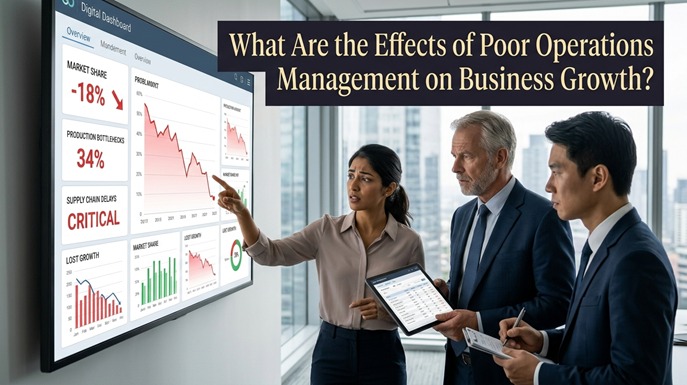
Operations management plays an important role in determining how successfully a business operates and grows. It involves planning, organizing, and controlling daily business activities to ensure that products and services are delivered efficiently. Good operations management helps companies maintain productivity, control costs, satisfy customers, and achieve long-term goals. However, when operations are poorly managed, businesses may experience various problems that affect their performance and competitiveness.
Poor operations management can create serious obstacles, ranging from financial losses and declining product quality to employee dissatisfaction and reduced customer loyalty. These problems can slow business development and make it difficult for companies to compete in the market. Understanding the effects of poor operations management is essential for businesses that want to improve efficiency and achieve sustainable growth.
1. INCREASED OPERATIONAL COSTS
One of the most noticeable effects of poor operations management is increased operational costs. Inefficient processes, excessive resource usage, production errors, and poor inventory control can cause businesses to spend more money than necessary. For example, companies may purchase too much raw material, experience unnecessary equipment downtime, or waste employee working hours. These problems increase daily expenses and reduce the company's ability to manage its financial resources effectively.
When operational costs continue to rise, profit margins may decrease significantly. Businesses may also struggle to maintain competitive prices because their production and service expenses are too high. Without proper cost control, companies can experience financial pressure that limits their ability to invest in new opportunities and support long-term growth.
2. DECLINING PRODUCT AND SERVICE QUALITY
Poor operations management can directly affect the quality of products and services. When production processes are not properly supervised, businesses may experience inconsistent results, manufacturing defects, and service delivery errors. A lack of quality control can also allow problems to continue without being identified or corrected. As a result, customers may receive products or services that do not meet their expectations.
Product and service quality is essential for maintaining customer trust and building a strong business reputation. If customers frequently experience poor quality, they may choose competitors that offer more reliable products or better services. This can lead to increased complaints, product returns, and negative reviews, ultimately reducing business growth.
3. REDUCED CUSTOMER SATISFACTION
Customer satisfaction is strongly influenced by how effectively a company manages its operations. Poor scheduling, delayed deliveries, insufficient product availability, and slow customer service can create negative customer experiences. When businesses fail to meet customer expectations consistently, people may become disappointed and lose confidence in the company.
Over time, customer dissatisfaction can reduce repeat purchases and weaken customer loyalty. Businesses may also find it more difficult to attract new customers because negative experiences can influence purchasing decisions. Maintaining efficient operations is therefore important for providing reliable services, responding to customer needs, and building long-term relationships.
4. LOWER EMPLOYEE PRODUCTIVITY AND MORALE
Ineffective operations management can create confusion and unnecessary pressure among employees. Unclear responsibilities, poor communication, unrealistic workloads, and inefficient work procedures can make daily tasks more difficult. Employees may spend too much time solving operational problems instead of focusing on their main responsibilities. This situation can reduce productivity and prevent teams from achieving their performance targets.
Furthermore, low employee morale may develop when workers feel unsupported or frequently experience workplace difficulties. Employees who are dissatisfied with their working conditions may become less motivated, make more mistakes, or leave the company. High employee turnover can increase recruitment and training expenses while disrupting business activities.
5. DELAYS IN PRODUCTION AND DELIVERY
Poor planning and coordination can cause significant delays in production and product delivery. Businesses may experience shortages of raw materials, equipment breakdowns, inefficient scheduling, or communication problems between departments. These issues can interrupt production activities and prevent companies from completing orders on time.
Production delays can affect the entire supply chain and create additional costs for businesses. Late deliveries may damage relationships with customers, suppliers, and business partners. If delays happen frequently, companies may lose important contracts and struggle to maintain a reliable position in the market.
6. WEAK COMPETITIVE ADVANTAGE
Businesses need efficient operations to compete successfully in an increasingly competitive market. Poor operations management can make companies slower, more expensive, and less responsive to changes in customer demand. While competitors improve their production systems and customer services, poorly managed businesses may struggle to keep up.
A weak competitive advantage can make it difficult for companies to attract customers and maintain their market position. Businesses may lose opportunities to introduce innovative products, improve services, or expand into new markets. Without operational improvements, they risk falling behind competitors that use their resources more effectively.
7. LIMITED BUSINESS INNOVATION AND EXPANSION
Business growth often requires investment in technology, employee development, new products, and market expansion. However, poor operations management can limit these opportunities because companies must spend more time and money dealing with recurring operational problems. Instead of focusing on innovation, managers may constantly handle production errors, inventory shortages, and inefficient workflows.
As a result, business expansion may become more difficult and expensive. Companies may lack the financial resources, operational capacity, and organizational readiness needed to enter new markets or increase production. Effective operations management helps create a stable foundation that allows businesses to innovate, adapt, and grow sustainably.
8. POOR INVENTORY AND RESOURCE MANAGEMENT
Inventory and resource management are important parts of daily business operations. Poor management can lead to excess inventory, stock shortages, expired materials, and inefficient resource allocation. These problems can increase storage expenses, interrupt production, and reduce the availability of products when customers need them.
In addition, businesses may struggle to balance supply and demand without accurate inventory monitoring and proper planning. Inefficient inventory management can tie up working capital in unsold products while shortages cause lost sales opportunities. Using appropriate inventory systems and regularly monitoring stock levels can help businesses control resources more effectively.
HOW CAN BUSINESSES OVERCOME POOR OPERATIONS MANAGEMENT?
Businesses can overcome poor operations management by identifying operational problems and developing practical improvement strategies. Managers should regularly evaluate business processes, monitor performance, and establish clear responsibilities for every department. These actions help companies identify inefficiencies and improve coordination across their operations.
Several strategies can help businesses improve their operational performance:
- Improve Process Efficiency: Review daily workflows and eliminate unnecessary activities to save time and resources.
- Control Operational Costs: Monitor expenses and use budgets to prevent unnecessary spending.
- Use Modern Technology: Implement suitable software and digital systems to improve productivity and accuracy.
- Strengthen Employee Training: Provide employees with the knowledge and skills needed to perform their responsibilities effectively.
- Maintain Quality Control: Establish clear quality standards and regularly evaluate products and services.
- Improve Inventory Management: Monitor stock levels and use demand forecasts to prevent shortages and excess inventory.
- Measure Business Performance: Use key performance indicators such as productivity, operating costs, delivery time, and customer satisfaction to evaluate results.
By applying these strategies consistently, businesses can reduce operational risks, improve efficiency, and create better conditions for long-term development.
CONCLUSION
Poor operations management can have serious consequences for business growth. Increased operational costs, declining product quality, customer dissatisfaction, low employee productivity, and production delays can weaken a company's overall performance. These problems may also reduce competitiveness, limit innovation, and prevent businesses from expanding into new markets.
Therefore, companies need to prioritize effective operations management to maintain efficiency and achieve sustainable growth. By improving business processes, managing resources wisely, adopting appropriate technology, and developing employee capabilities, organizations can overcome operational challenges and strengthen their market position. Ultimately, well-managed operations are an important foundation for long-term business success.
Recent Posts

Bagaimana Sistem SKS pada Program Kuliah... 22.11.2026/11 View

How Does Technology Make Daily Evaluation... 21.11.2026/63 View

Apa Strategi Menghadapi Kesenjangan antara Kompetensi... 21.11.2026/64 View

Mengapa Inventaris Aset Penting bagi Kelancaran... 21.11.2026/61 View

When Should Musicians Join a Record... 21.11.2026/59 View
