

What Are the Effects of Urban Flooding on Communities?
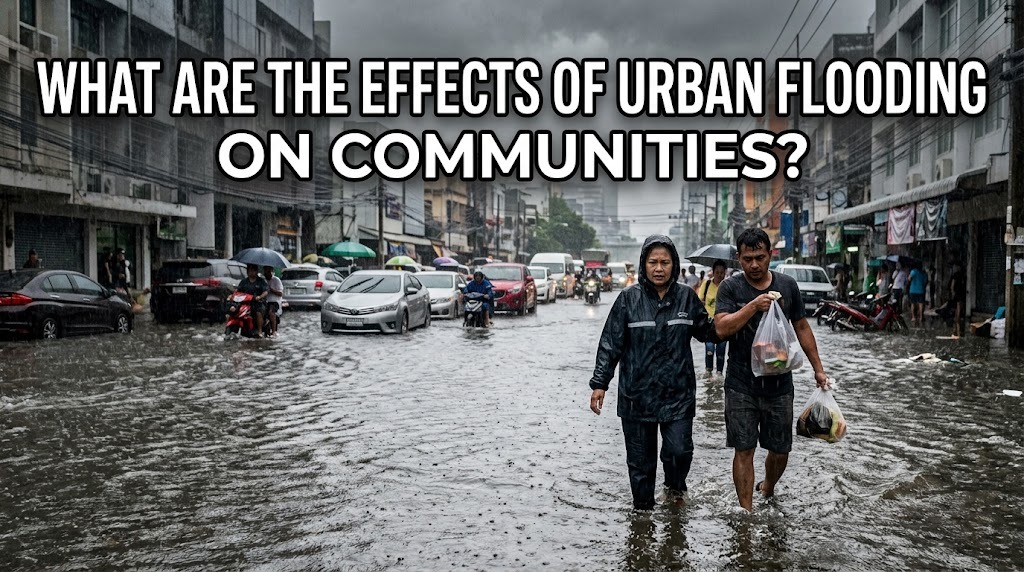
Urban flooding can have serious effects on communities by damaging homes, disrupting transportation, affecting businesses, and creating health and safety risks. Flooding can occur when heavy rainfall overwhelms drainage systems, rivers overflow, or coastal water enters developed areas. The consequences may continue long after the water disappears because residents and local authorities must repair infrastructure, replace damaged property, and restore essential services. The effects are often more severe for communities with limited resources and inadequate flood protection.
DAMAGE TO HOMES AND PROPERTY
One of the most immediate effects of urban flooding is damage to residential properties. Floodwater can enter houses through doors, windows, drainage systems, and other openings, damaging floors, walls, furniture, appliances, and electrical equipment. In severe cases, prolonged exposure to water can weaken building structures and make homes temporarily or permanently uninhabitable.
Residents may also face significant financial costs when replacing household belongings and repairing their properties. People without sufficient savings or insurance may experience greater difficulty recovering. Repeated flooding can make these financial pressures even more serious because households may have to repair the same damage several times.
DISRUPTION TO TRANSPORTATION
Flooding can make roads, bridges, railway lines, and public transportation routes difficult or impossible to use. Vehicles may become stranded, while damaged roads can prevent people from reaching workplaces, schools, hospitals, and other essential destinations.
Transportation disruptions can also slow emergency responses. Ambulances, firefighters, and rescue teams may have difficulty reaching affected neighborhoods when streets are covered by deep or fast-moving water. Even after floodwater recedes, damaged roads and public transportation infrastructure can continue to interfere with daily mobility.
BUSINESS AND ECONOMIC LOSSES
Local businesses can experience major losses during urban floods. Shops, restaurants, workshops, markets, and offices may have to close temporarily because their buildings, equipment, inventory, or electricity systems have been damaged.
Flooding can also disrupt supply chains by preventing goods from reaching businesses and customers. Employees may be unable to travel to work, while customers may avoid affected areas. Small businesses are often particularly vulnerable because they may have fewer financial resources to recover from prolonged interruptions.
PUBLIC HEALTH RISKS
Flooding can create public health problems when water becomes contaminated with sewage, household waste, chemicals, or other pollutants. People who come into contact with contaminated water may face risks of infection or skin irritation.
Standing water can also create conditions favorable to mosquitoes and other disease-carrying organisms. In addition, damp buildings can encourage mold growth, which may affect indoor air quality. Maintaining sanitation, removing stagnant water, and restoring clean water supplies are important parts of community recovery after flooding.
DAMAGE TO PUBLIC INFRASTRUCTURE
Urban floods can damage infrastructure that communities depend on every day. Roads, drainage systems, bridges, electricity networks, water facilities, schools, hospitals, and communication systems may all be affected.
Damage to public infrastructure can make recovery more difficult because multiple services may be disrupted at the same time. Repairing these facilities can require substantial public spending. Communities may also experience longer recovery periods when infrastructure damage is extensive.
DISPLACEMENT OF RESIDENTS
Severe flooding can force residents to leave their homes temporarily or permanently. Families may move to evacuation centers, stay with relatives, or relocate to other neighborhoods while repairs are completed.
Displacement can interrupt education, employment, healthcare, and social relationships. Children may have difficulty continuing school, while adults may lose income if they cannot return to work. For households whose homes are repeatedly flooded, relocation may eventually become necessary.
EFFECTS ON EDUCATION
Flooding can disrupt education when schools are damaged or roads become unsafe for students and teachers. Schools may be closed temporarily to protect people from dangerous conditions or to allow buildings to be cleaned and repaired.
Longer disruptions can affect students' learning progress, especially when educational materials and electronic equipment are damaged. Schools may also serve as evacuation or relief centers during emergencies, further affecting their ability to operate normally.
PSYCHOLOGICAL AND SOCIAL EFFECTS
Flooding can affect people's emotional well-being as well as their physical surroundings. Losing possessions, experiencing displacement, or worrying about future floods can create stress, fear, and uncertainty.
Communities may also experience social disruption when residents are temporarily separated from family members, neighbors, or familiar support networks. At the same time, disasters can encourage cooperation as residents help one another evacuate, distribute supplies, clean homes, and rebuild damaged areas.
ENVIRONMENTAL CONSEQUENCES
Urban flooding can transport waste, pollutants, sediment, and other materials into rivers, lakes, wetlands, and coastal environments. Contaminated runoff can reduce water quality and negatively affect aquatic ecosystems.
Floodwater can also erode soil and damage vegetation in parks and other green spaces. However, the environmental effects depend on the type of flooding, local geography, and substances carried by the water. Protecting waterways and improving stormwater management can help reduce these impacts.
GREATER RISKS FOR VULNERABLE COMMUNITIES
Flooding does not affect every group equally. Low-income households, older residents, people with disabilities, and communities living in flood-prone areas may face greater difficulties evacuating and recovering.
Limited access to transportation, savings, insurance, healthcare, or safe housing can increase vulnerability. Effective flood management should therefore consider social conditions as well as physical infrastructure. Emergency plans should provide accessible warnings, evacuation assistance, and recovery support for residents with different needs.
LONG-TERM EFFECTS ON URBAN DEVELOPMENT
Repeated flooding can influence how communities plan and develop their cities. Governments may invest in improved drainage, flood barriers, retention areas, stronger infrastructure, and early-warning systems after experiencing major flood events.
In highly vulnerable areas, authorities may also restrict new construction or encourage relocation. These changes can improve long-term resilience, but they may also create challenges involving housing affordability, property values, and community displacement. Successful planning should balance flood safety with the social and economic needs of residents.
CONCLUSION
Urban flooding affects communities in many ways, from damaging homes and infrastructure to disrupting transportation, education, businesses, and healthcare. It can also create public health risks, displace residents, cause financial losses, and produce long-term psychological and social effects. Vulnerable communities often face greater difficulties because they have fewer resources for preparation and recovery. Improving drainage, protecting natural water-storage areas, strengthening infrastructure, and creating inclusive emergency plans can help communities reduce the impacts of future urban flooding.
Recent Posts

Bagaimana Sistem SKS pada Program Kuliah... 22.11.2026/54 View

How Does Technology Make Daily Evaluation... 21.11.2026/83 View

Apa Strategi Menghadapi Kesenjangan antara Kompetensi... 21.11.2026/81 View

Mengapa Inventaris Aset Penting bagi Kelancaran... 21.11.2026/78 View

When Should Musicians Join a Record... 21.11.2026/83 View
