

What Are the Effects of Urban Traffic Congestion on Public Health and Productivity?
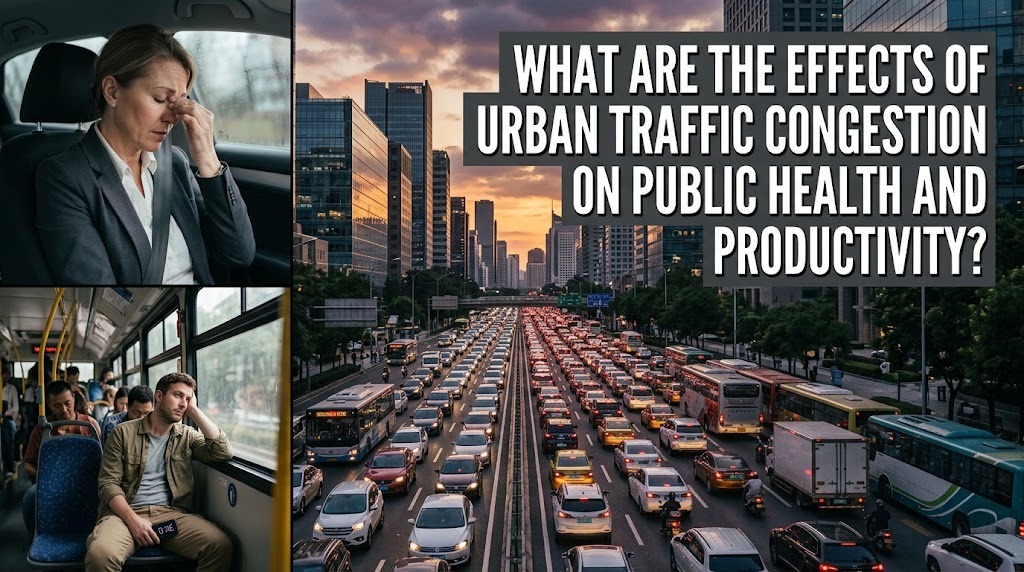
Urban traffic congestion is a growing problem in many cities around the world. As the number of vehicles increases, roads become more crowded, travel times become longer, and daily activities become less efficient. However, traffic congestion affects more than transportation because it can also influence public health, workplace productivity, mental well-being, and quality of life. Understanding these effects is important for developing better transportation systems and creating healthier urban environments.
AIR POLLUTION AND RESPIRATORY HEALTH
One of the most serious effects of urban traffic congestion is increased exposure to air pollution. Vehicles release pollutants such as nitrogen oxides and particulate matter, which can affect the quality of the air people breathe. During heavy traffic, frequent stopping, idling, and acceleration can contribute to emissions, although the amount depends on vehicle technology, fuel type, and driving conditions. People who live, work, or spend considerable time near busy roads may experience greater exposure to these pollutants.
Long-term exposure to traffic-related air pollution is associated with respiratory diseases, including asthma, and can increase the risk of cardiovascular problems. Children, older adults, and people with existing health conditions may be particularly vulnerable. Poor air quality can also cause coughing, irritation, and breathing difficulties in sensitive individuals. Improving public transportation, reducing unnecessary vehicle trips, and encouraging cleaner vehicles can help lower pollution and protect public health.
STRESS AND MENTAL HEALTH PROBLEMS
Traffic congestion can negatively affect mental health by making daily travel stressful and unpredictable. Drivers may become frustrated when they spend long periods moving slowly or waiting at intersections. Concerns about arriving late for work, missing appointments, or collecting children from school can increase emotional pressure. Over time, repeated stressful journeys may contribute to fatigue, irritability, and reduced life satisfaction.
Commuters who experience long and unpredictable travel times may also have less opportunity to relax before or after work. Noise from horns, engines, and crowded roads can add to their discomfort, particularly in densely populated neighborhoods. Although individual responses vary, persistent commuting stress can make it more difficult to maintain a healthy balance between work and personal life. Reliable public transportation, better traffic management, and flexible working arrangements can help reduce some of these pressures.
REDUCED WORKPLACE PRODUCTIVITY
Traffic congestion reduces workplace productivity when employees spend excessive time traveling instead of completing work or resting. Long commutes can cause workers to arrive late, miss meetings, or begin their working day feeling tired. These problems may affect concentration, decision-making, and the ability to complete tasks efficiently. Businesses can also experience operational delays when employees, customers, and suppliers struggle to reach their destinations on time.
Traffic congestion can affect productivity beyond individual workplaces. Delivery vehicles may take longer to transport goods, service providers may miss appointments, and businesses may need additional resources to manage transportation delays. These disruptions can increase operating costs and reduce the efficiency of supply chains. Employers can respond by offering flexible schedules, supporting remote work where appropriate, and encouraging employees to use reliable public transportation.
PHYSICAL HEALTH AND DAILY ACTIVITY
Heavy traffic can indirectly affect physical health by influencing how people move around their cities. When roads are crowded, walking and cycling may feel unsafe because of vehicle volume, poor pedestrian infrastructure, or limited protected cycling lanes. As a result, some residents may depend more heavily on motorized transportation even for relatively short trips. Reduced physical activity can contribute to health risks associated with sedentary lifestyles.
Traffic congestion may also make access to essential services more difficult. Patients can experience delays when traveling to medical appointments, while emergency vehicles may encounter obstacles on crowded roads. Although the actual impact depends on road conditions and emergency response systems, severe congestion can complicate access to timely care. Cities can address these issues by improving sidewalks, building protected bicycle lanes, maintaining clear emergency routes, and designing neighborhoods where essential services are easier to reach.
ECONOMIC LOSSES AND QUALITY OF LIFE
Traffic congestion creates economic losses by wasting time, increasing fuel consumption, and making transportation less efficient. Drivers may use more fuel when vehicles repeatedly stop and accelerate, although the exact impact depends on traffic conditions and vehicle efficiency. Businesses can face higher delivery costs, while workers lose valuable time that could otherwise be spent on productive activities, family responsibilities, or rest. These combined effects can reduce economic efficiency across an entire city.
Congestion can also reduce residents' quality of life by limiting the time available for personal interests and social relationships. People who spend several hours commuting each day may have fewer opportunities to exercise, prepare healthy meals, or spend time with their families. Noise, pollution, and crowded streets can also make urban neighborhoods less comfortable. Investing in efficient transportation systems and well-planned urban spaces can help cities become more accessible, healthier, and more enjoyable places to live.
KESIMPULAN
Urban traffic congestion affects public health and productivity in several important ways. It contributes to exposure to air pollution, increases commuting stress, reduces workplace efficiency, limits opportunities for physical activity, and creates economic losses. These effects can influence not only individual residents but also businesses and the wider urban community.
To reduce these problems, governments should improve public transportation, develop pedestrian-friendly infrastructure, manage traffic more effectively, and encourage sustainable travel choices. Employers can also support flexible working hours and remote work when suitable. Through coordinated action, cities can reduce the negative effects of congestion, protect public health, and improve productivity and overall quality of life.
Recent Posts

Bagaimana Sistem SKS pada Program Kuliah... 22.11.2026/54 View

How Does Technology Make Daily Evaluation... 21.11.2026/83 View

Apa Strategi Menghadapi Kesenjangan antara Kompetensi... 21.11.2026/81 View

Mengapa Inventaris Aset Penting bagi Kelancaran... 21.11.2026/78 View

When Should Musicians Join a Record... 21.11.2026/83 View
