

What Are the Examples of Numeracy Literacy in Daily Life?
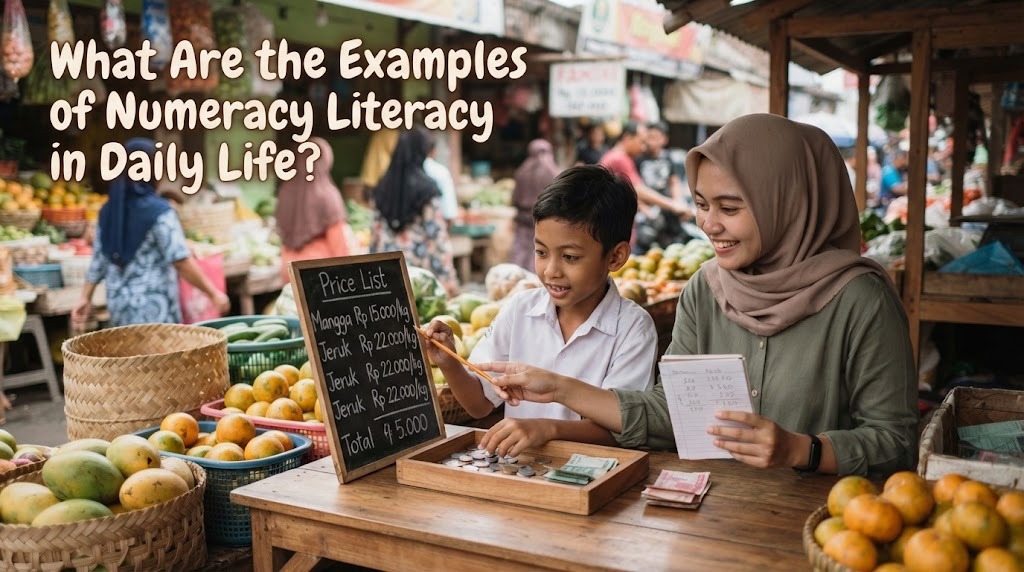
Numeracy literacy is an important skill that helps people understand and use numbers in everyday situations. It is not limited to solving mathematical problems in school, but also involves applying numerical knowledge to make practical decisions. From shopping and managing money to reading information and planning daily activities, numeracy literacy is used in many simple situations.
Many people practice numeracy literacy without realizing it. When someone compares prices, calculates travel time, measures ingredients, or checks a monthly bill, they are using numerical skills. Understanding these examples can help students and adults recognize the importance of numeracy literacy and develop it through daily activities.
CALCULATING MONEY WHILE SHOPPING
Shopping is one of the most common examples of numeracy literacy. People need to add prices, calculate the total cost, and check whether their money is sufficient. These activities require basic arithmetic and the ability to understand numerical information. Accurate calculations can also help prevent mistakes when paying or receiving change.
For example, if someone buys several products with different prices, they need to calculate the total before making a payment. They may also compare product sizes and prices to determine which option offers better value. This shows that numeracy literacy involves more than counting money because it also supports practical decision-making.
MANAGING PERSONAL FINANCES
Managing personal finances requires people to understand income, expenses, savings, and financial priorities. Students may use numeracy literacy when dividing their monthly allowance between food, transportation, school supplies, and savings. By calculating each expense, they can understand how much money remains available.
Numeracy literacy also helps people create realistic budgets and avoid unnecessary spending. For example, someone who receives a monthly income can compare total expenses with available funds. This habit encourages financial responsibility and helps people prepare for future needs.
CALCULATING DISCOUNTS AND PROMOTIONS
Discounts are another practical example of numeracy literacy. When a product has a percentage discount, shoppers need to calculate how much money will be reduced from the original price. Understanding percentages helps them identify the final price rather than relying only on promotional advertisements.
For example, a product priced at $100 with a 20% discount will cost $80 before any additional taxes or fees. Shoppers can also compare different promotions to determine which one provides greater savings. This ability helps people make more informed purchasing decisions.
MEASURING INGREDIENTS WHILE COOKING
Cooking involves measurements, quantities, and proportions. People use numeracy literacy when measuring flour, water, sugar, or other ingredients according to a recipe. Understanding units such as grams, kilograms, milliliters, and liters helps ensure that ingredients are used correctly.
Numeracy literacy is also useful when changing the number of servings. If a recipe is designed for two people but needs to serve four, the ingredient quantities may need to be doubled. These calculations help maintain the right proportions and reduce food waste.
CALCULATING TRAVEL TIME
Planning a journey requires an understanding of time, distance, and speed. People use numeracy literacy when estimating how long it will take to reach school, work, or another destination. They may also compare transportation options based on travel time and cost.
For example, someone who needs to arrive at campus by 8 a.m. must consider the departure time and expected journey duration. If traffic is likely to cause delays, they may need to leave earlier. This shows how numerical reasoning supports everyday planning and time management.
READING TABLES AND GRAPHS
Tables and graphs present information in a visual and organized form. Numeracy literacy helps people understand the meaning of the numbers, compare values, and identify patterns. These skills are useful when reading school reports, survey results, financial information, or public statistics.
For example, students may use a graph to compare their academic performance across several semesters. Workers may read a sales chart to understand changes in business performance. By interpreting the information correctly, people can draw conclusions based on data rather than guesses.
CALCULATING ELECTRICITY AND WATER USAGE
Household bills provide another example of numeracy literacy. People can compare electricity or water usage across different months to understand changes in consumption. They may also calculate the difference between current and previous bills to identify whether usage has increased or decreased.
Understanding these figures can encourage more responsible resource use. For example, a family may notice that electricity consumption increases during a particular month and review how appliances are being used. Numerical information can help them plan ways to reduce waste and manage household expenses.
UNDERSTANDING HEALTH INFORMATION
Numeracy literacy is also useful when understanding health-related information. People may need to read body temperature measurements, nutrition labels, serving sizes, or instructions that contain numerical information. Understanding these figures can help them interpret information more carefully.
For example, a nutrition label may show the amount of sugar, sodium, or calories in one serving. A person needs to understand the serving size before comparing products. For medical instructions or dosage information, it is important to follow the directions provided by qualified health professionals rather than making assumptions from calculations alone.
CALCULATING GRADES AND LEARNING PROGRESS
Students use numeracy literacy when calculating grades, understanding assessment results, and tracking academic progress. They may need to calculate averages or compare scores from different subjects. These activities help students understand their performance more clearly.
For example, a student can calculate the average of several test scores to see their overall progress. They can also identify subjects that require more attention by comparing results over time. This information can help students create more effective study plans.
COMPARING PRODUCT PRICES
Comparing product prices is not always as simple as choosing the lowest displayed number. Different products may have different sizes, quantities, or package contents. Numeracy literacy helps shoppers compare prices based on the amount of product they receive.
For example, a larger package may cost more but offer a lower price per unit. By calculating the cost per kilogram or liter, shoppers can make a fairer comparison. This skill is useful for managing budgets and choosing products based on actual value.
WHY IS NUMERACY LITERACY IMPORTANT IN DAILY LIFE?
Numeracy literacy helps people become more independent when dealing with everyday information. It supports financial planning, shopping decisions, time management, and understanding data. These skills can reduce simple calculation errors and help people respond to practical situations more confidently.
Beyond daily tasks, numeracy literacy also supports critical thinking. People can use numerical evidence to compare options, recognize patterns, and evaluate information. Developing this ability from an early age can prepare individuals for education, employment, and future challenges.
CONCLUSION
Numeracy literacy can be found in many everyday activities, including shopping, managing money, calculating discounts, cooking, planning journeys, reading graphs, and understanding bills. These examples show that numeracy literacy is not limited to classroom mathematics but is closely connected to real-life decisions.
By practicing numerical skills in daily situations, people can improve their ability to understand information and solve practical problems. Strong numeracy literacy helps individuals become more careful, confident, and responsible when using numbers in everyday life.
Recent Posts

Bagaimana Sistem SKS pada Program Kuliah... 22.11.2026/31 View

How Does Technology Make Daily Evaluation... 21.11.2026/67 View

Apa Strategi Menghadapi Kesenjangan antara Kompetensi... 21.11.2026/66 View

Mengapa Inventaris Aset Penting bagi Kelancaran... 21.11.2026/64 View

When Should Musicians Join a Record... 21.11.2026/65 View
