

What Are the Impacts of Digitalization on Election Management and Public Services?
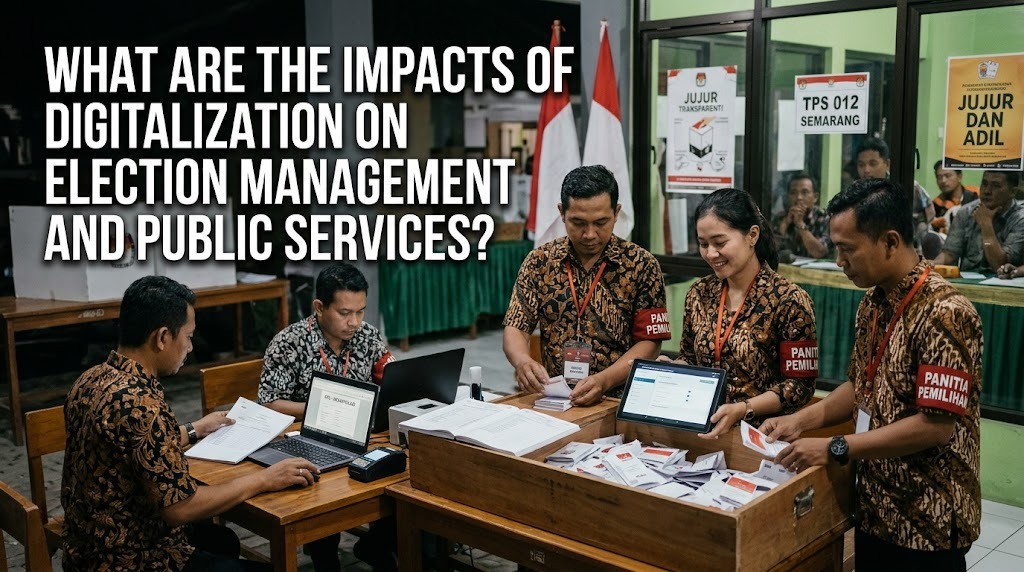
Digitalization has brought significant changes to the way elections are managed and public services are delivered in Indonesia. The General Elections Commission, known as the Komisi Pemilihan Umum (KPU), has increasingly used digital technology to support election administration, provide information, and improve communication with the public. These developments can make election processes more efficient, accessible, and transparent. Digital systems also help election organizers manage large amounts of information, including voter data, election logistics, and vote-counting reports. However, digitalization also creates challenges related to data security, internet access, and system reliability. Understanding these impacts is important to ensure that technology supports democratic processes without reducing public trust.
IMPROVING THE EFFICIENCY OF ELECTION MANAGEMENT
Digitalization can make election management more efficient by helping the KPU organize and process information through electronic systems. Tasks that previously required extensive paperwork can be supported by digital databases and online administrative tools. These systems can help election officials manage documents, monitor activities, and coordinate information across different levels of election administration. As a result, some administrative processes can become faster and easier to track. Digital technology helps reduce repetitive manual work and supports more organized election administration.
Digital systems can also improve coordination between national, provincial, and regency or municipal election offices. Information can be shared more quickly, allowing election organizers to respond to administrative needs more effectively. For example, digital reporting tools can help officials monitor the progress of election preparations and identify problems that require attention. However, technology must be supported by clear procedures and trained personnel. Without proper management, digital systems may create confusion instead of improving efficiency.
INCREASING TRANSPARENCY AND PUBLIC ACCESS TO ELECTION INFORMATION
One of the important benefits of digitalization is its ability to make election information easier for the public to access. Through official websites and digital platforms, the KPU can publish information about election schedules, voter registration, candidate lists, regulations, and election results. This allows citizens to obtain important information without always visiting election offices directly. Accessible digital information can strengthen transparency by helping the public monitor election activities and understand official procedures.
Digital publication also gives citizens more opportunities to compare information and follow election developments. For example, the public can use official election information systems to check relevant data and follow the publication of vote-counting results. Nevertheless, digital information must be presented clearly and updated consistently. The KPU also needs to explain the status and limitations of preliminary results so that the public does not confuse temporary reports with officially determined election results. Accurate communication is essential for maintaining public confidence.
SIMPLIFYING PUBLIC SERVICES FOR VOTERS
Digitalization can improve public services by making certain election-related procedures easier to access. Citizens may use online platforms to find information about voter registration, polling locations, election requirements, and other administrative matters. These services can reduce the need for repeated visits to election offices, especially for people who live far from administrative centers. Digital communication channels can also help citizens submit questions and receive information more conveniently. Online services make election information more accessible and can save time for both citizens and election administrators.
However, not every election service can be completed entirely online. Some administrative procedures may still require document verification or direct confirmation from authorized officials. Therefore, digital services should complement existing offline services rather than completely replace them. The KPU needs to ensure that citizens who do not have reliable internet access can still obtain assistance. A combination of online and direct services can make election administration more inclusive.
SUPPORTING ACCURATE VOTER DATA MANAGEMENT
Accurate voter data is essential for organizing elections because it helps determine who is eligible to vote and supports the preparation of polling arrangements. Digital systems can assist election officials in collecting, processing, updating, and checking voter information. These tools may help identify duplicate records, incomplete information, or changes in voter circumstances that require verification. Reliable digital data management supports more accurate voter registration and helps reduce administrative problems during elections.
Despite these benefits, voter data management requires careful procedures and human supervision. Digital systems cannot automatically resolve every data problem because some information must be checked against official documents or verified through field activities. Personal information must also be protected from unauthorized access and misuse. The KPU should apply appropriate security measures and ensure that only authorized personnel can access sensitive data. Maintaining accurate and secure voter records is important for protecting citizens' rights and supporting credible elections.
STRENGTHENING VOTE COUNTING AND ELECTION REPORTING
Digital technology can support vote counting and election reporting by helping election officials document and communicate information more efficiently. For example, the KPU uses digital information systems to publish vote-counting data from polling stations and provide public access to election developments. These systems allow citizens to follow the reporting process without relying entirely on printed documents or television broadcasts. Digital reporting can improve public access to election information, but it must not replace the official procedures for determining election results.
The accuracy of digital election reports depends on the quality of the information entered and the procedures used to verify it. Errors in data entry, technical problems, or misunderstandings about preliminary results can create public confusion. Therefore, digital reporting systems must be supported by verification, clear explanations, and proper supervision. The public should understand the difference between preliminary vote-counting information and legally determined election results. With careful implementation, digital reporting can support transparency while maintaining the integrity of official election procedures.
ADDRESSING DIGITAL SECURITY AND ACCESSIBILITY CHALLENGES
Although digitalization offers many benefits, it also introduces challenges that the KPU must address. Cybersecurity threats, unauthorized access, system disruptions, and technical failures can affect the reliability of digital election services. Personal voter information must be protected because misuse or exposure of such data can harm citizens and reduce public trust. Strong cybersecurity measures and responsible data management are essential for protecting digital election systems.
Another challenge is the unequal availability of internet access and digital skills across different communities. People living in remote areas may experience limited connectivity, while some citizens may have difficulty using online services. The KPU should therefore maintain alternative information channels and provide assistance for people who need help accessing digital services. Election officials also require regular training to operate digital systems correctly and respond to technical problems. By improving security, infrastructure, and digital literacy, the KPU can ensure that digitalization benefits a wider range of citizens.
CONCLUSION
Digitalization has a significant impact on election management and public services in Indonesia. It can improve administrative efficiency, increase access to election information, simplify voter services, support voter data management, and strengthen election reporting. However, these benefits depend on reliable technology, accurate information, effective supervision, and strong data protection. Digital systems should support democratic procedures rather than replace the legal responsibilities and verification processes of election organizers. By addressing cybersecurity risks and unequal digital access, the KPU can use technology to create election services that are more transparent, efficient, and inclusive.
Recent Posts

Bagaimana Sistem SKS pada Program Kuliah... 22.11.2026/46 View

How Does Technology Make Daily Evaluation... 21.11.2026/74 View

Apa Strategi Menghadapi Kesenjangan antara Kompetensi... 21.11.2026/75 View

Mengapa Inventaris Aset Penting bagi Kelancaran... 21.11.2026/72 View

When Should Musicians Join a Record... 21.11.2026/75 View
