

What Are the Judging Criteria in Language Competitions?
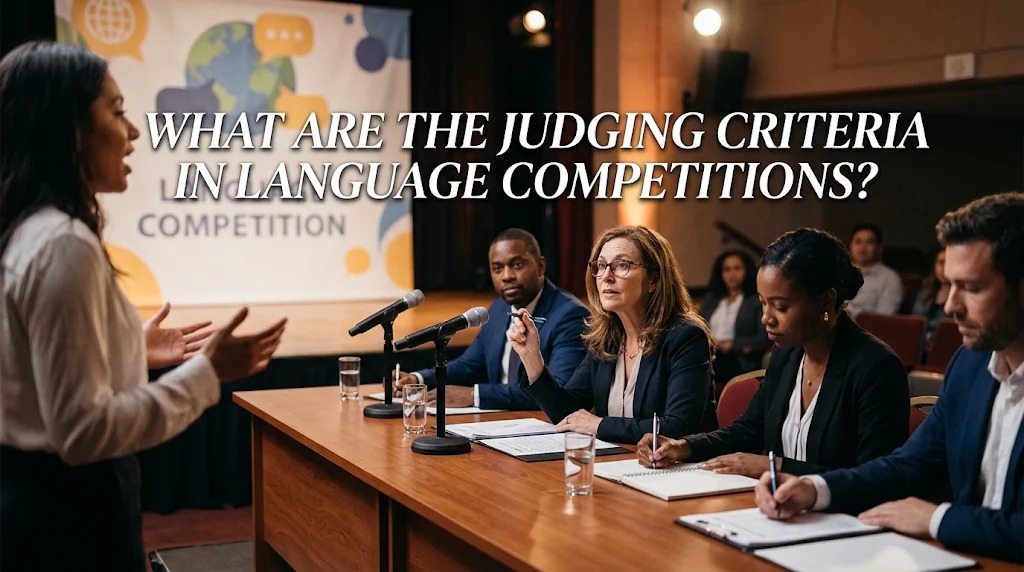
Language competitions are educational activities that assess students' abilities to use a language effectively and confidently. These competitions may include speech contests, storytelling, poetry reading, debates, spelling bees, and other language-based activities. To ensure fair results, judges use specific criteria to evaluate each participant's performance.
Understanding the judging criteria in language competitions helps students prepare more effectively. By knowing what judges usually consider, participants can improve their pronunciation, vocabulary, grammar, fluency, and presentation skills. Although the assessment may differ depending on the competition, several common criteria are used to determine the quality of a participant's performance.
LANGUAGE ACCURACY AND GRAMMAR
Language accuracy is one of the most important judging criteria in language competitions. Judges evaluate whether participants use correct grammar, sentence structures, and language expressions. Proper grammar helps participants communicate their ideas clearly and prevents misunderstandings.
Participants are also expected to choose appropriate words and expressions according to the topic and situation. Frequent grammatical mistakes or incorrect word usage may affect their overall scores. Therefore, students should practice constructing sentences, reviewing grammar rules, and using the language correctly before entering a competition.
PRONUNCIATION AND CLARITY
Pronunciation refers to how clearly participants produce words and sounds when speaking. Judges usually assess whether participants pronounce words correctly and make their speech easy to understand. Clear pronunciation is particularly important in speech, storytelling, poetry reading, and other speaking competitions.
In addition to correct pronunciation, participants should pay attention to their speaking clarity. Speaking too quickly, mumbling, or producing unclear sounds can make it difficult for the audience to understand the message. Regular speaking practice, listening exercises, and learning from accurate language examples can help students improve this aspect.
FLUENCY AND CONFIDENCE
Fluency is another important factor in language competition assessments. It refers to the ability to communicate smoothly without excessive pauses, unnecessary repetition, or frequent hesitation. Judges consider whether participants can deliver their ideas naturally while maintaining an appropriate speaking pace.
Confidence also influences how participants present themselves during a competition. Students who maintain composure, speak audibly, and communicate without excessive nervousness can create a stronger impression. However, confidence does not mean speaking loudly or quickly. Participants should focus on delivering their messages naturally and comfortably.
VOCABULARY AND CONTENT QUALITY
Judges also assess vocabulary because word selection affects the quality of communication. Participants are expected to use words that are appropriate, varied, and relevant to the competition topic. A good vocabulary helps students express ideas more accurately and avoid repeating the same words throughout their presentations.
Content quality is equally important, especially in speech, storytelling, and debate competitions. Judges may evaluate the relevance of the topic, organization of ideas, originality, and strength of arguments. Participants should present information logically and ensure that their messages are meaningful, easy to follow, and suitable for the audience.
EXPRESSION AND PRESENTATION SKILLS
Presentation skills help participants deliver their performances in an engaging and effective way. Judges may evaluate facial expressions, gestures, eye contact, posture, and interaction with the audience. These elements can make a presentation more interesting and help communicate emotions or important messages.
For example, storytelling participants should use suitable expressions to make their stories more engaging. Meanwhile, speech participants should maintain appropriate eye contact and use natural gestures to support their messages. Good presentation skills demonstrate preparation and help participants connect with the audience.
CONCLUSION
Judging criteria in language competitions generally include language accuracy, pronunciation, fluency, confidence, vocabulary, content quality, and presentation skills. Each criterion helps judges evaluate different aspects of a participant's ability to communicate effectively. However, the exact scoring system may vary depending on the competition type and organizer.
Students who understand these criteria can prepare more strategically and identify the skills they need to improve. Consistent practice, proper preparation, and confidence are important factors in achieving better results. By focusing on overall language development rather than winning alone, students can gain valuable experience from every competition.
Recent Posts

How Does Technology Make Daily Evaluation... 21.11.2026/62 View

Apa Strategi Menghadapi Kesenjangan antara Kompetensi... 21.11.2026/63 View

Mengapa Inventaris Aset Penting bagi Kelancaran... 21.11.2026/59 View

When Should Musicians Join a Record... 21.11.2026/58 View

Daily Evaluation or Daily Planning Which... 21.11.2026/66 View
