

What Are the Long Term Solutions to Reduce the Effects of Global Warming?
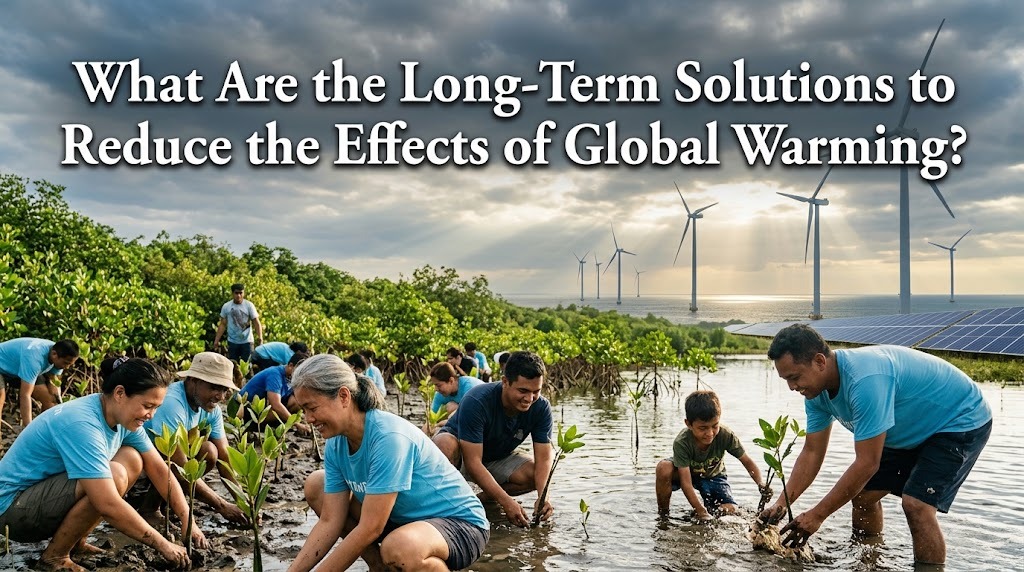
Global warming is a long-term increase in the Earth's average surface temperature, primarily caused by greenhouse gas emissions from human activities. Its effects include rising sea levels, increasing temperatures, changing rainfall patterns, and growing risks to ecosystems and human communities. Addressing these challenges requires more than temporary environmental campaigns because reducing global warming depends on sustained changes in energy production, transportation, industry, land management, and daily consumption.
Long-term solutions to global warming focus on reducing greenhouse gas emissions, protecting natural carbon stores, and preparing communities for climate impacts that cannot be avoided entirely. These efforts require cooperation among governments, businesses, researchers, and the public. By combining effective policies with practical technologies and responsible resource management, societies can limit future warming and strengthen environmental resilience.
TRANSITIONING FROM FOSSIL FUELS TO RENEWABLE ENERGY
One of the most important long-term solutions is reducing dependence on fossil fuels such as coal, oil, and natural gas. Burning these fuels releases carbon dioxide, which contributes to the greenhouse effect and rising global temperatures. Replacing fossil fuel energy with renewable energy sources, including solar, wind, and hydropower where appropriate, can substantially reduce emissions from electricity generation.
The transition also requires modern electricity networks, reliable energy storage, and better energy management to support changing energy demand. Governments can encourage this process through suitable policies, infrastructure investment, and research into cleaner technologies. Households and businesses can contribute by improving energy efficiency and choosing lower-emission energy options when available. A sustained shift toward cleaner energy can help build a low-carbon economy while supporting long-term energy security.
PROTECTING FORESTS AND RESTORING NATURAL ECOSYSTEMS
Forests, wetlands, mangroves, and other natural ecosystems help regulate the climate by storing carbon and supporting biodiversity. When forests are cleared or burned, stored carbon can be released into the atmosphere, while the loss of vegetation reduces the landscape's ability to absorb carbon dioxide in the future. Protecting existing ecosystems is therefore an essential part of climate change mitigation.
Long-term conservation measures can include preventing illegal deforestation, improving land-use planning, restoring degraded forests, and protecting peatlands and mangroves. Restoration should be designed around the natural characteristics of each location, rather than assuming that planting trees is suitable everywhere. Healthy ecosystems can also help protect water resources, reduce soil erosion, and support wildlife. Combining forest conservation with lower emissions from energy and industry can strengthen efforts to limit global warming.
DEVELOPING SUSTAINABLE TRANSPORTATION AND INDUSTRY
Transportation and industrial production contribute to greenhouse gas emissions through fuel consumption, electricity use, manufacturing processes, and supply chains. Long-term solutions include improving public transportation, supporting walking and cycling, increasing vehicle efficiency, and adopting electric vehicles where appropriate. These measures can reduce reliance on petrol and diesel, especially when combined with cleaner electricity generation.
Industries can also lower emissions by improving production efficiency, using lower-emission energy, reducing material waste, and developing cleaner manufacturing processes. Some sectors may require specialized solutions because their emissions come from chemical reactions or other processes that are difficult to eliminate through electrification alone. Governments can support progress through research funding, appropriate regulations, and investment in modern infrastructure. Together, these changes can help reduce transportation and industrial emissions while supporting more sustainable economic development.
IMPROVING WASTE MANAGEMENT AND RESPONSIBLE CONSUMPTION
The way people produce, purchase, use, and discard goods affects greenhouse gas emissions. Manufacturing products requires raw materials and energy, while food waste sent to landfills can produce methane under certain conditions. Reducing unnecessary consumption and preventing waste can therefore help lower emissions across the product life cycle.
Long-term waste solutions include designing durable products, repairing and reusing items, improving recycling systems, and composting suitable organic waste. Businesses can support these efforts by reducing excessive packaging and designing products that are easier to repair or recycle. Households can plan meals, avoid unnecessary purchases, and separate waste according to local requirements. These practices support a circular economy, in which materials remain useful for longer and fewer resources are wasted.
STRENGTHENING CLIMATE POLICIES, EDUCATION, AND ADAPTATION
Effective climate action requires long-term policies that establish clear goals and support measurable emissions reductions. Governments can develop climate plans, improve energy standards, protect natural environments, and monitor progress over time. International cooperation is also necessary because greenhouse gas emissions affect the global climate regardless of where they originate.
Education and public awareness can help people understand climate science and make informed environmental decisions. At the same time, societies must prepare for climate impacts that cannot be prevented entirely through emissions reductions. Measures such as improving flood protection, developing heat action plans, strengthening early warning systems, and protecting water supplies can support climate change adaptation. By combining effective governance, public participation, and resilient infrastructure, communities can reduce climate risks while working toward a lower-emission future.
CONCLUSION
The long-term solutions to reduce the effects of global warming include expanding renewable energy, protecting forests, developing sustainable transportation, improving industrial efficiency, reducing waste, and strengthening climate policies. These measures address major sources of greenhouse gas emissions while supporting more responsible resource use and environmental protection.
However, no single solution can address global warming on its own. Meaningful progress requires coordinated action from governments, businesses, communities, and individuals, along with consistent evaluation of results. Combining emissions reductions with climate change adaptation can help limit future warming and protect people and ecosystems from climate-related risks. Sustained commitment to these solutions is essential for building a more resilient and sustainable future.
Recent Posts

Bagaimana Sistem SKS pada Program Kuliah... 22.11.2026/49 View

How Does Technology Make Daily Evaluation... 21.11.2026/77 View

Apa Strategi Menghadapi Kesenjangan antara Kompetensi... 21.11.2026/78 View

Mengapa Inventaris Aset Penting bagi Kelancaran... 21.11.2026/74 View

When Should Musicians Join a Record... 21.11.2026/79 View
