

What Are the Main Causes of Inflation in Developing Countries?
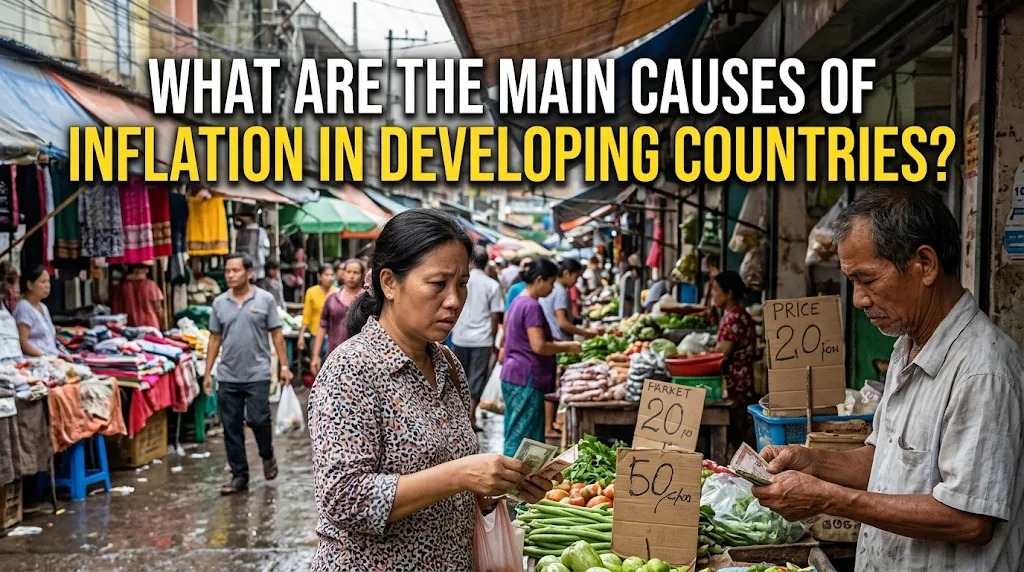
Inflation is a major economic challenge faced by many developing countries. It occurs when the general prices of goods and services increase over time, reducing the purchasing power of money. In developing economies, inflation can be influenced by various factors, including rising production costs, limited domestic supply, currency depreciation, and changes in consumer demand. These challenges can become more complicated when countries depend heavily on imported goods or experience unstable economic conditions. Understanding the main causes of inflation in developing countries is important because it helps governments, businesses, and communities recognize the factors behind rising prices and identify appropriate economic policies.
INCREASING DEMAND FOR GOODS AND SERVICES
One common cause of inflation in developing countries is an increase in consumer demand. When household incomes rise, employment opportunities expand, or access to credit becomes easier, people may spend more money on goods and services. If domestic production cannot increase quickly enough to meet this demand, businesses may raise prices because available supplies become limited.
This situation is known as demand-pull inflation. It can occur in countries experiencing rapid economic growth, population increases, or significant changes in consumer spending patterns. For example, growing demand for housing, food, transportation, and electronic products may put pressure on available supplies.
Developing countries may experience additional difficulties because their production capacity and distribution systems are sometimes unable to respond immediately to rising demand. Limited infrastructure, insufficient investment, and production constraints can prevent businesses from increasing their output efficiently. As a result, demand may grow faster than supply, contributing to higher prices.
RISING PRODUCTION AND DISTRIBUTION COSTS
Higher production costs are another important factor that contributes to inflation. Businesses need raw materials, electricity, fuel, labor, machinery, and transportation services to produce and distribute goods. When the prices of these resources increase, companies may face higher operating expenses and adjust their selling prices to cover some of the additional costs.
This condition is commonly called cost-push inflation. It can be particularly challenging for developing countries with limited access to affordable raw materials, advanced technology, or reliable energy supplies. For example, an increase in fuel prices can raise transportation expenses, making it more expensive to distribute food and other essential products across different regions.
Agricultural production can also contribute to rising costs. Changes in weather conditions, limited access to fertilizers, and disruptions to farming activities may reduce agricultural output. When food supplies become limited while demand remains high, food prices may increase significantly. Since food represents a major part of household spending in many developing economies, these increases can have a substantial effect on the cost of living.
CURRENCY DEPRECIATION AND IMPORT DEPENDENCE
Many developing countries rely on imported goods, including fuel, machinery, medicine, industrial materials, and electronic components. When a country's currency loses value against major international currencies, imported products generally become more expensive in domestic currency. This situation is known as currency depreciation.
For example, businesses that purchase raw materials from overseas may need to spend more local currency to obtain the same quantity of imported supplies. These higher expenses can increase production costs, especially for companies that depend heavily on international suppliers. Eventually, businesses may transfer part of these additional costs to consumers through higher selling prices.
Import dependence can make developing economies more vulnerable to international economic changes. Rising global commodity prices, disruptions to international trade, and changes in exchange rates can affect the availability and cost of imported products. Countries with limited domestic production alternatives may find it difficult to reduce these pressures quickly, allowing external price increases to influence domestic inflation.
GOVERNMENT POLICIES AND MONETARY CONDITIONS
Government policies and monetary conditions can also influence inflation. When public spending increases significantly without a corresponding improvement in productive capacity, overall demand in the economy may rise. If businesses cannot provide enough goods and services to meet that demand, prices may increase.
Monetary conditions are also important. When the money supply and credit expand rapidly relative to the economy's ability to produce goods and services, additional spending may contribute to inflationary pressure. However, an increase in the money supply does not automatically cause inflation because its effects also depend on economic growth, productivity, consumer behavior, and the availability of products.
Central banks play an important role in maintaining price stability through monetary policy. They may adjust interest rates and use other policy instruments to influence borrowing, spending, and inflation expectations. When monetary policy is not sufficiently effective or economic conditions become unstable, controlling inflation can become more difficult. Coordination between fiscal authorities and central banks is therefore important for maintaining a stable economic environment.
SUPPLY CHAIN DISRUPTIONS AND ECONOMIC INSTABILITY
Supply chain disruptions can create significant inflationary pressure in developing countries. Goods often pass through several stages of production, storage, transportation, and distribution before reaching consumers. Problems at any stage can reduce the availability of products and increase their final prices.
For example, natural disasters, extreme weather, transportation difficulties, and international trade disruptions can delay the delivery of essential goods. Agricultural products may be especially vulnerable because their availability depends on weather conditions, harvest periods, and distribution infrastructure. When supplies decline, consumers may face higher prices, particularly for essential commodities.
Economic instability can make these problems more difficult to manage. Political uncertainty, unexpected policy changes, and disruptions to business activities may reduce investment and weaken confidence among producers and consumers. If these conditions affect domestic production and distribution, they can contribute to persistent price increases. Improving infrastructure, strengthening domestic industries, and maintaining predictable economic policies can help developing countries become more resilient to these challenges.
CONCLUSION
Inflation in developing countries can result from several interconnected factors, including increasing consumer demand, rising production costs, currency depreciation, monetary conditions, and supply chain disruptions. These challenges may become more serious when domestic production is limited and economies depend heavily on imported goods. Managing inflation requires coordinated economic policies, stronger production capacity, reliable infrastructure, and effective monetary management. By understanding the causes of inflation, governments can develop more appropriate strategies to maintain price stability and support sustainable economic growth.
Recent Posts

Bagaimana Sistem SKS pada Program Kuliah... 22.11.2026/35 View

How Does Technology Make Daily Evaluation... 21.11.2026/69 View

Apa Strategi Menghadapi Kesenjangan antara Kompetensi... 21.11.2026/69 View

Mengapa Inventaris Aset Penting bagi Kelancaran... 21.11.2026/67 View

When Should Musicians Join a Record... 21.11.2026/68 View
