

What Are the Main Causes of Urban Traffic Congestion and How Can They Be Solved?
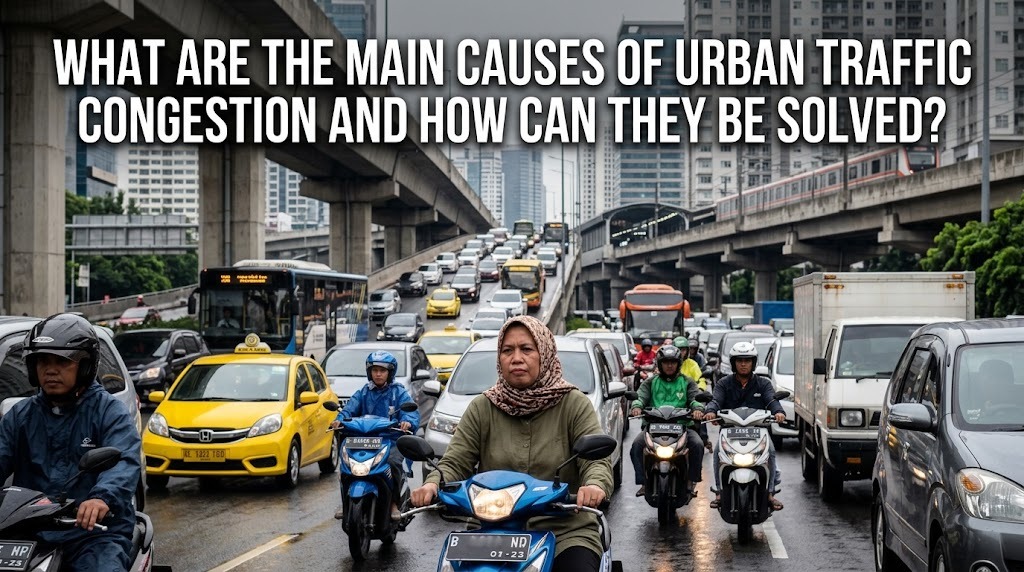
Urban traffic congestion is one of the most common problems in modern cities. It occurs when the number of vehicles exceeds the capacity of available roads, causing slow movement, long delays, and crowded streets. Urban traffic congestion affects daily activities, reduces productivity, increases fuel consumption, and contributes to air pollution. As cities grow and more people depend on private vehicles, traffic problems become increasingly difficult to manage. Understanding the main causes of traffic congestion and applying effective solutions can help create safer, more comfortable, and sustainable urban environments.
MAIN CAUSES OF URBAN TRAFFIC CONGESTION
One of the main causes of urban traffic congestion is the increasing number of private vehicles, including cars and motorcycles. When too many vehicles use the same roads at the same time, traffic flow becomes slower, especially in busy commercial areas and city centers. Population growth and urbanization also increase the demand for transportation as more people travel to workplaces, schools, shopping centers, and public facilities. In many cities, road infrastructure has not developed quickly enough to accommodate this growing demand.
Another important cause is the limited availability of reliable public transportation. When buses and trains are inconvenient, overcrowded, or unavailable in certain areas, people often choose private vehicles. Poor road management, illegal parking, road construction, and traffic accidents can make congestion even worse. In addition, poorly planned urban development may place residential areas far from workplaces and essential services, forcing residents to travel longer distances every day.
THE EFFECTS OF TRAFFIC CONGESTION ON DAILY LIFE
Traffic congestion creates several problems for individuals, businesses, and communities. Long travel times can cause employees to arrive late, students to miss lessons, and workers to experience additional stress before starting their activities. Spending too much time on the road also reduces opportunities for family activities, rest, and personal development. Over time, daily commuting difficulties may negatively affect people's quality of life.
Traffic congestion also contributes to air pollution and carbon emissions. Vehicles that frequently stop and accelerate can consume additional fuel, depending on traffic conditions and vehicle technology. Exhaust emissions can worsen urban air quality and increase exposure to pollutants that harm human health. Businesses may also experience higher transportation costs because deliveries take longer and vehicle operating expenses increase. Therefore, reducing traffic congestion is important not only for improving mobility but also for supporting public health, economic efficiency, and environmental sustainability.
IMPROVING PUBLIC TRANSPORTATION AND ALTERNATIVE MOBILITY
One effective solution to traffic congestion is improving the quality and accessibility of public transportation. Cities can provide reliable bus services, expand suitable rail networks, improve connections between transportation routes, and make ticketing systems easier to use. Affordable fares, comfortable vehicles, clear schedules, and safe stations can encourage more people to leave their private vehicles at home. When public transportation serves residential areas, workplaces, and educational institutions efficiently, fewer individual vehicles may be needed on busy roads.
Cities should also encourage walking, cycling, and shared transportation. Safe sidewalks, protected bicycle lanes, and convenient pedestrian crossings make short journeys easier without motor vehicles. Carpooling allows several people traveling in the same direction to share one vehicle, reducing the number of cars on the road. Employers and educational institutions can support these alternatives by providing bicycle parking, flexible schedules, or shuttle services. Combining different transportation options can make urban mobility more efficient and accessible to a wider range of residents.
SMART TECHNOLOGY AND BETTER URBAN PLANNING
Modern technology can help cities manage traffic more effectively. Intelligent traffic light systems can adjust signal timing according to traffic volume, helping reduce unnecessary waiting at intersections. Traffic monitoring cameras, road sensors, and navigation applications can provide information about congestion and suggest alternative routes. However, these technologies work best when supported by reliable data, appropriate maintenance, and coordinated traffic management. Technology cannot eliminate every traffic problem, but it can improve the use of existing road infrastructure.
Better urban planning is equally important for long-term traffic reduction. Cities can develop mixed-use neighborhoods where housing, workplaces, shops, schools, and public services are located closer together. This approach can reduce the need for long daily journeys and make walking or cycling more practical. Governments can also introduce parking management, encourage development near public transportation, and review vehicle restrictions in heavily congested areas. These measures should be designed carefully to ensure that residents, workers, and businesses retain reasonable access to essential destinations.
GOVERNMENT POLICIES AND LONG-TERM SOLUTIONS
Governments play a major role in reducing urban traffic congestion through effective transportation policies and infrastructure investment. They can improve public transportation services, enforce parking regulations, maintain roads, and establish clear rules for traffic management. In some locations, congestion pricing, parking charges, or restrictions on certain vehicles during peak hours may help reduce unnecessary trips. However, these policies should consider the needs of people who have limited access to alternative transportation. Affordable and reliable public transportation should be available before strict vehicle restrictions are introduced.
Long-term solutions require cooperation among governments, businesses, transportation operators, and the public. Employers can introduce flexible working hours or remote work where appropriate, helping reduce the number of people traveling at the same time. Residents can contribute by planning journeys, following traffic rules, maintaining safe driving habits, and considering alternatives to private vehicles. Governments should also evaluate transportation policies regularly using data on travel times, road safety, public transportation use, and air quality. A combination of infrastructure improvements, responsible behavior, and sustainable planning offers a stronger approach than relying on road expansion alone.
CONCLUSION
Urban traffic congestion is caused by several connected factors, including the growing number of private vehicles, inadequate public transportation, poor urban planning, and inefficient traffic management. Its effects extend beyond long travel times to include air pollution, economic losses, stress, and reduced quality of life. Effective solutions include improving public transportation, encouraging walking and cycling, applying smart traffic technology, and developing well-connected urban neighborhoods. Governments must also implement fair transportation policies and provide practical alternatives to private vehicles. With consistent planning and cooperation, cities can reduce congestion and build transportation systems that are more efficient, accessible, and environmentally sustainable.
Recent Posts

Bagaimana Sistem SKS pada Program Kuliah... 22.11.2026/54 View

How Does Technology Make Daily Evaluation... 21.11.2026/83 View

Apa Strategi Menghadapi Kesenjangan antara Kompetensi... 21.11.2026/81 View

Mengapa Inventaris Aset Penting bagi Kelancaran... 21.11.2026/78 View

When Should Musicians Join a Record... 21.11.2026/83 View
