

What Are The Main Challenges Of Conducting Applied Research In Indonesia?
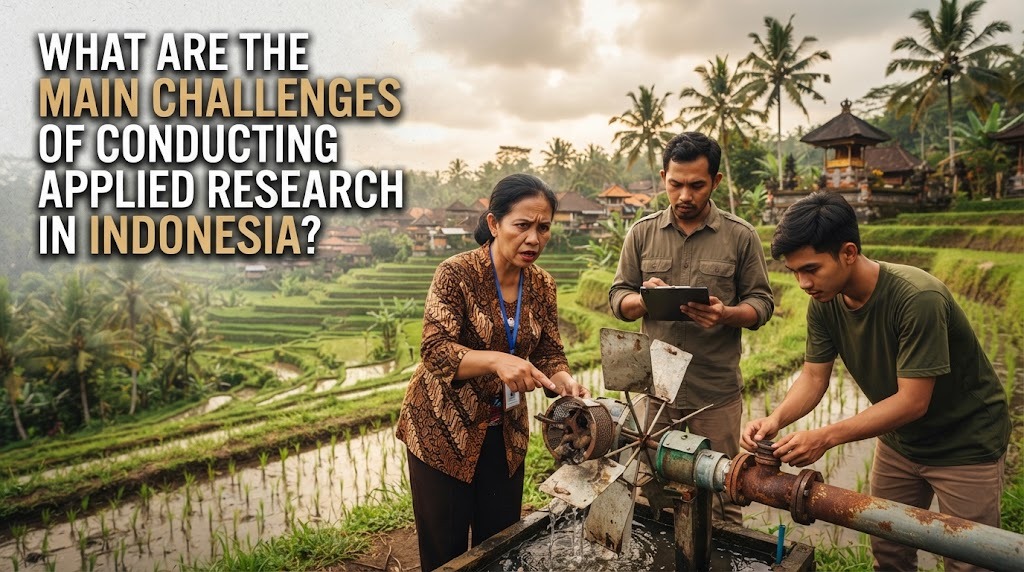
Applied research plays an important role in solving practical problems and supporting national development. In Indonesia, it can help improve education, healthcare, agriculture, technology, industry, and environmental management. However, conducting applied research is not always easy because researchers must deal with financial limitations, unequal access to facilities, difficulties in collecting data, and gaps between research and practical implementation. These challenges can affect the quality, speed, and usefulness of research projects. Understanding the main challenges of applied research in Indonesia is essential for developing better strategies and ensuring that research findings provide real benefits to society.
LIMITED RESEARCH FUNDING
One of the main challenges of conducting applied research in Indonesia is the availability of sufficient and sustainable funding. Research often requires laboratory equipment, field surveys, skilled personnel, materials, and long-term testing. However, researchers may face limited budgets, especially when working on projects that require expensive technology or extensive data collection. Funding applications can also involve administrative requirements and competition among research teams. When financial support is insufficient, researchers may need to reduce the scope of their studies or postpone important activities. Stable and well-managed research funding is therefore necessary to support high-quality research and turn promising ideas into practical solutions.
UNEQUAL ACCESS TO RESEARCH FACILITIES AND TECHNOLOGY
Access to modern research facilities and technology remains an important concern in a country as geographically diverse as Indonesia. Some universities and research institutions have advanced laboratories, digital infrastructure, and specialized equipment, while others have more limited resources. This difference can make it difficult for researchers in less-developed areas to conduct experiments or compete for research opportunities. Limited internet access in some locations can also affect communication, data collection, and access to scientific publications. As a result, research capabilities may vary between institutions and regions. More equal access to research infrastructure, technology, and shared facilities can help researchers across Indonesia conduct more effective and reliable studies.
SHORTAGE OF SPECIALIZED RESEARCHERS
Applied research requires people with suitable scientific knowledge, technical skills, and practical experience. However, some research fields in Indonesia may face shortages of specialists, particularly in areas involving advanced technology, data analysis, biotechnology, and industrial innovation. Researchers may also need additional training to use modern equipment, manage complex projects, or apply new research methods. Collaboration between different disciplines can be difficult when experts have limited opportunities to work together. These issues may slow research progress and reduce the ability to develop advanced solutions. Investing in researcher training, professional development, and interdisciplinary collaboration can strengthen Indonesia's research capabilities over time.
DIFFICULTIES IN COLLECTING RELIABLE DATA
Reliable data is essential for producing accurate research findings. In Indonesia, researchers may encounter difficulties when collecting information across remote islands, rural communities, and areas with limited infrastructure. Travel costs, geographical distance, inconsistent records, and limited access to certain populations can make data collection more complicated. Some respondents may also be reluctant to participate because of privacy concerns or a lack of understanding about the purpose of a study. In addition, researchers must check whether collected data is accurate, relevant, and representative of the population being studied. Reliable data collection and careful verification are crucial to ensuring that research findings reflect real conditions and support appropriate decisions.
THE GAP BETWEEN RESEARCH AND INDUSTRY NEEDS
Another major challenge is the gap between academic research and the practical needs of businesses or industries. Universities and research institutions may produce useful findings, but companies do not always have the resources or interest to adopt them. Researchers and businesses can also have different priorities, timelines, and expectations regarding research outcomes. For example, a university may focus on developing a new agricultural technology, while farmers need a solution that is affordable, easy to maintain, and suitable for local conditions. Without early cooperation, a promising innovation may remain in a laboratory instead of being used in the field. Stronger partnerships between universities, businesses, government agencies, and communities can help ensure that research addresses real problems and leads to practical results.
COMPLEX ADMINISTRATIVE AND REGULATORY PROCESSES
Research projects may require approvals, permits, ethical reviews, funding documentation, and coordination among several institutions. These processes are important because they help protect participants, maintain research standards, and ensure legal compliance. However, complicated procedures or unclear responsibilities can delay project implementation. Researchers working with human participants, health information, biological materials, or sensitive data may face additional requirements that need careful preparation. Administrative delays can become especially challenging when a project depends on a specific research schedule or limited funding period. Clear guidelines, efficient administration, and timely coordination can reduce unnecessary delays while preserving ethical and legal standards.
LOW COMMERCIALIZATION OF RESEARCH RESULTS
Producing research findings does not automatically mean that they will become useful products, services, or technologies. In Indonesia, some research outcomes may struggle to reach the market because of limited investment, a lack of business expertise, intellectual property concerns, or difficulties in scaling up production. A successful laboratory prototype may still require further testing, certification, manufacturing facilities, and market validation before it can be sold. Small businesses may also find it difficult to afford new technologies or adopt unfamiliar production methods. Without a clear pathway from research to implementation, the potential economic and social benefits may remain limited. Technology transfer, business mentoring, and support for commercialization can help bridge the gap between scientific discoveries and practical use.
GEOGRAPHICAL AND SOCIAL DIVERSITY
Indonesia's diverse geography, languages, cultures, and economic conditions create additional challenges for applied research. A solution that works well in one region may not be suitable for another because communities have different resources, traditions, infrastructure, and needs. Researchers must therefore understand local conditions before recommending a particular policy, technology, or service. Communication barriers can also arise when research involves communities that speak different local languages or have limited access to formal education. Involving local stakeholders from the beginning can improve trust and help researchers understand problems more accurately. Locally appropriate research solutions are essential for ensuring that innovations can be adopted and provide meaningful benefits across different Indonesian communities.
CONCLUSION
Conducting applied research in Indonesia involves several challenges, including limited funding, unequal research facilities, shortages of specialized skills, difficulties in collecting reliable data, and weak connections between research and industry. Administrative barriers, commercialization problems, and the country's geographical and social diversity can also affect research outcomes. Addressing these issues requires stronger funding support, better research infrastructure, skilled researchers, and closer collaboration among universities, businesses, government institutions, and local communities. Research policies should also encourage practical implementation while maintaining ethical standards and scientific quality. With sustained investment and effective cooperation, applied research in Indonesia can contribute more significantly to innovation, economic development, and solutions to real-world problems.
Recent Posts

Bagaimana Sistem SKS pada Program Kuliah... 22.11.2026/44 View

How Does Technology Make Daily Evaluation... 21.11.2026/73 View

Apa Strategi Menghadapi Kesenjangan antara Kompetensi... 21.11.2026/75 View

Mengapa Inventaris Aset Penting bagi Kelancaran... 21.11.2026/70 View

When Should Musicians Join a Record... 21.11.2026/74 View
