

What Are the Main Challenges of Organizing Lecturer Seminars in the Digital Era?
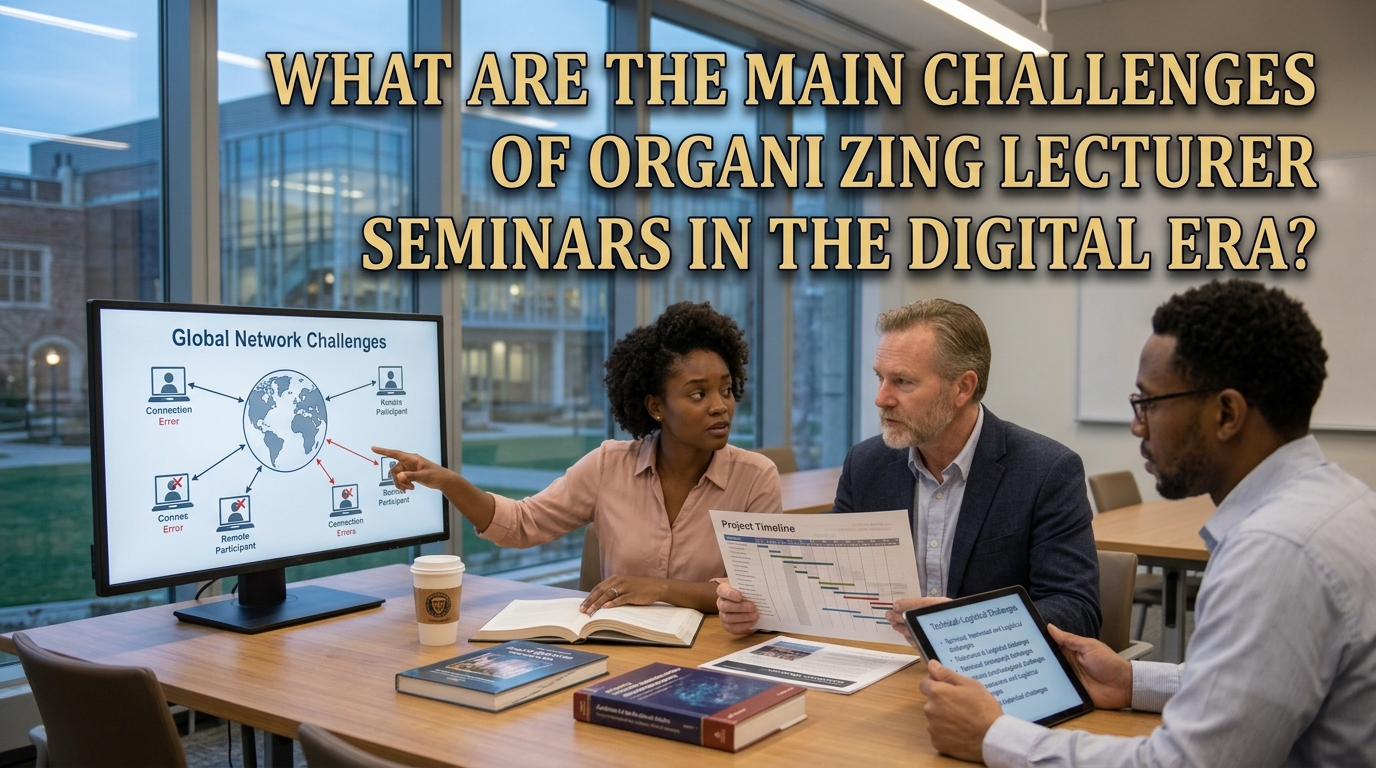
Lecturer seminars in the digital era have become an important way for universities to share knowledge, discuss research, and improve teaching practices. Digital platforms allow lecturers to participate in academic events without always traveling to a physical location. However, organizing successful seminars requires more than choosing an online meeting application. Universities must address technical issues, participant engagement, budget limitations, data security, and the quality of academic discussions. Understanding these challenges helps organizers create effective, accessible, and productive lecturer seminars.
TECHNICAL PROBLEMS AND INTERNET CONNECTIVITY
One of the main challenges of organizing lecturer seminars in the digital era is ensuring reliable technology. Poor internet connections, audio interruptions, camera problems, and platform errors can disrupt presentations and discussions. These issues may prevent participants from understanding important information or asking questions at the right time. Technical difficulties can also affect the confidence of speakers and reduce the overall quality of the event.
Universities can reduce these problems by testing the platform and equipment before the seminar begins. Organizers should prepare backup communication methods, provide clear joining instructions, and assign technical support staff. Speakers should also check their microphones, cameras, presentations, and internet connections in advance. Reliable technical preparation helps create a smoother experience for both speakers and participants.
MAINTAINING PARTICIPANT ENGAGEMENT
Keeping participants interested during online lecturer seminars can be difficult. Long presentations, limited interaction, and distractions at home or in the workplace may reduce concentration. Unlike face-to-face events, online seminars can make it harder for speakers to read body language and recognize when participants are confused. As a result, some attendees may remain passive throughout the session.
To improve engagement, organizers should include question-and-answer sessions, live polls, short discussions, and relevant case studies. Speakers can divide long presentations into manageable sections and encourage participants to share their perspectives. Moderators can also monitor questions in the chat and invite contributions from attendees. Interactive seminar activities make academic discussions more engaging and encourage active learning.
CHOOSING THE RIGHT DIGITAL PLATFORM
Selecting a suitable platform is another challenge when organizing lecturer seminars. Different applications offer different features, including screen sharing, breakout rooms, participant management, recording, and accessibility support. A platform that works well for a small discussion may not be suitable for a large international seminar. Organizers must consider the event's objectives, the number of participants, and the technical skills of the intended audience.
Cost is also an important consideration because some platforms require paid subscriptions for advanced features or larger meetings. Universities should compare available options based on security, usability, reliability, accessibility, and budget. They should also check whether participants can access the platform using their devices and internet connections. Choosing the right technology helps prevent unnecessary complications and supports effective communication.
MANAGING BUDGET AND ORGANIZATIONAL RESOURCES
Although digital seminars can reduce travel and venue expenses, they still require resources. Universities may need to pay for software subscriptions, technical support, speaker fees, digital materials, and promotional activities. Hybrid seminars can require additional equipment and staff to coordinate online and in-person participants. Without careful planning, these costs can exceed the available budget.
Organizers should prepare a realistic budget based on the seminar's objectives and expected attendance. They can prioritize essential technology, use existing university facilities, and compare service providers before making financial decisions. Responsibilities should also be assigned clearly so that each team member understands their tasks. Effective resource management helps universities deliver valuable seminars without unnecessary spending.
ENSURING DATA SECURITY AND PRIVACY
Digital lecturer seminars may involve personal information, registration records, research documents, presentation files, and recorded discussions. If these materials are handled carelessly, unauthorized people may gain access to information that should remain private. Security problems can damage participants' trust and create risks for the university. Recorded sessions may also contain confidential information or copyrighted materials.
Organizers should use appropriate security settings, restrict access when necessary, and follow institutional data protection policies. They should explain whether sessions will be recorded and obtain the required permissions before recording or distributing materials. Participants should avoid sharing meeting links publicly when access is restricted. Data privacy and cybersecurity must be considered from the planning stage through the end of the event.
ADDRESSING DIGITAL ACCESSIBILITY AND DIGITAL LITERACY
Not all lecturers have the same level of digital literacy or access to technology. Some participants may be unfamiliar with online meeting platforms, while others may have limited internet bandwidth or outdated devices. These differences can prevent people from participating fully, even when the seminar content is relevant to them. Accessibility barriers can also affect participants who need captions, screen-reader compatibility, or other accommodations.
Universities can address these challenges by providing simple technical guides and optional orientation sessions before the event. Organizers should select accessible platforms, provide captions where possible, and share materials in formats that participants can use easily. Offering flexible participation options may also help lecturers with different circumstances. Digital inclusion ensures that more participants can benefit from academic seminars regardless of their technical background.
COORDINATING SPEAKERS AND PARTICIPANTS
Coordinating speakers, moderators, and participants can become complicated when a seminar involves several institutions or different time zones. Speakers may have conflicting schedules, different presentation styles, or varying levels of experience with digital platforms. Delays, unclear instructions, and last-minute changes can disrupt the agenda. These problems may also reduce the time available for questions and discussion.
Organizers should communicate schedules, presentation requirements, technical instructions, and deadlines well in advance. A detailed agenda should identify the order of presentations, time limits, and responsibilities of each speaker and moderator. A rehearsal can help presenters become familiar with the platform and identify possible problems. Clear communication and careful coordination help keep lecturer seminars organized and professional.
MEASURING SEMINAR QUALITY AND EFFECTIVENESS
Another challenge is determining whether a digital lecturer seminar has achieved its objectives. High attendance does not necessarily mean that participants have learned something useful or improved their academic skills. Organizers need to consider the quality of presentations, the level of engagement, and the practical value of the information shared. Without evaluation, it can be difficult to identify what should be improved in future events.
Universities can collect feedback through surveys, discussion summaries, and post-seminar evaluations. They can assess whether participants gained new knowledge, found the content relevant, or identified ideas they can apply to teaching and research. For seminars with practical learning objectives, organizers may also review assignments or follow-up activities. Meaningful evaluation helps universities improve seminar quality and demonstrate the value of academic development programs.
HOW UNIVERSITIES CAN OVERCOME DIGITAL SEMINAR CHALLENGES
Universities can address many digital seminar challenges by developing a clear plan before the event. This plan should define the objectives, target audience, platform, budget, speaker responsibilities, and technical support arrangements. Organizers should also prepare backup solutions for internet failures and platform disruptions. These steps reduce uncertainty and help the team respond more effectively when problems occur.
After the seminar, organizers should review participant feedback and discuss what worked well or needs improvement. They can use this information to refine technical procedures, presentation formats, accessibility arrangements, and engagement strategies. Cooperation between academic departments and information technology teams can also improve future events. Continuous improvement and strategic planning help universities organize digital lecturer seminars that meet academic needs.
CONCLUSION
Organizing lecturer seminars in the digital era involves several challenges, including technical problems, limited participant engagement, platform selection, budget management, data security, and digital accessibility. Universities must also coordinate speakers effectively and evaluate whether each event achieves its academic objectives. These challenges require careful planning, appropriate technology, and clear communication.
By providing technical support, encouraging interaction, protecting participant information, and evaluating results, universities can make their seminars more effective. Digital technology offers valuable opportunities for academic collaboration, but its success depends on how well it is managed. Well-organized lecturer seminars can support knowledge sharing, professional development, and research collaboration across higher education institutions.
Recent Posts

Bagaimana Sistem SKS pada Program Kuliah... 22.11.2026/49 View

How Does Technology Make Daily Evaluation... 21.11.2026/76 View

Apa Strategi Menghadapi Kesenjangan antara Kompetensi... 21.11.2026/78 View

Mengapa Inventaris Aset Penting bagi Kelancaran... 21.11.2026/74 View

When Should Musicians Join a Record... 21.11.2026/78 View
