

What Are The Main Challenges Of Using Secondary Data In Indonesia?
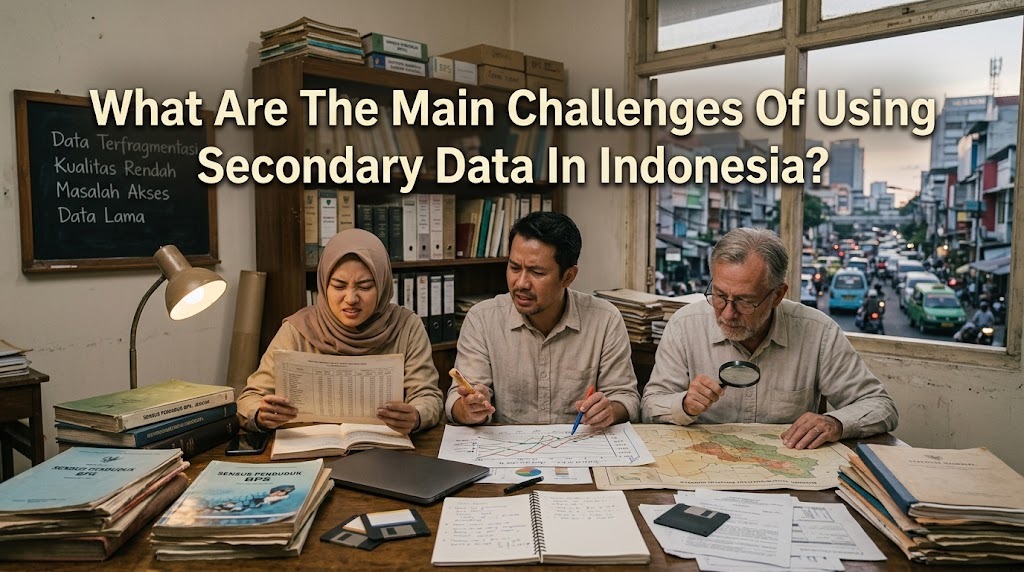
Secondary data is information that has already been collected, processed, or published by other people or organizations for a previous purpose. In Indonesia, this data can come from government agencies, academic journals, research institutions, company reports, and public databases. Researchers, students, businesses, and policymakers use secondary data to understand social, economic, educational, and business conditions. It can save time and research costs because users do not need to collect all the information themselves. However, data quality, accessibility, and relevance can create challenges when using secondary data in Indonesia.
Indonesia has a large and diverse population spread across many islands, with different economic conditions, languages, and levels of infrastructure. Because of this diversity, information collected in one region may not accurately represent conditions in another. For example, data about internet access in major cities may not reflect the situation in remote areas. Researchers must understand the background and coverage of their data before using it. Careful evaluation helps ensure that conclusions are based on appropriate evidence.
LIMITED ACCESS TO RELIABLE DATA SOURCES
One major challenge is finding reliable and accessible data sources. Although Indonesia has official statistics and public research publications, some information may be difficult to locate or available only in specific reports. Researchers may need to search several websites, databases, and institutional publications before finding suitable information. Some datasets may also require registration, formal requests, or special permission. These difficulties can slow down research and make the data collection process more complicated.
To address this problem, researchers should begin with trusted sources such as Statistics Indonesia, government ministries, universities, and recognized research institutions. They should check whether the information is publicly available and whether its use is permitted. It is also important to record the original source and publication details for future verification. Using official and transparent sources can reduce the risk of relying on inaccurate or misleading information.
OUTDATED AND INCOMPLETE INFORMATION
Another important challenge is that secondary data may be outdated or incomplete. Some reports take time to publish, meaning their findings may not reflect current economic or social conditions. This can be a problem when studying rapidly changing topics, such as digital business, online shopping, employment, or technology use. Incomplete datasets may also lack important details about certain groups or regions. As a result, researchers may find it difficult to develop an accurate picture of the issue being studied.
For example, a business analyzing consumer preferences may use a report published several years ago. However, customer habits and purchasing patterns may have changed significantly since the report was released. Researchers should check the publication date, the period covered by the data, and the frequency of updates. When possible, they should compare older information with more recent statistics or conduct additional research. This approach helps improve data accuracy and relevance.
DIFFERENCES IN DATA COLLECTION METHODS
Secondary data from different Indonesian institutions may use different collection methods, definitions, and measurement standards. One institution may define a category differently from another, making direct comparisons difficult. For example, two reports about employment may use different criteria for classifying workers or measuring unemployment. Differences in survey questions, sample sizes, and research periods can also affect the results. Without careful examination, researchers may mistakenly treat different measurements as directly comparable.
To reduce this problem, researchers should read the methodology section of each report before using its findings. They need to understand how the data was collected, which population was studied, and what definitions were applied. When comparing multiple datasets, they should identify differences and explain any limitations in their analysis. Using consistent definitions and measurement periods can make comparisons more meaningful. Methodological consistency is essential for producing accurate research conclusions.
REGIONAL AND DEMOGRAPHIC REPRESENTATION
Indonesia's geographical and demographic diversity creates another challenge for secondary data users. Conditions in Java may differ considerably from those in eastern Indonesia, while urban and rural communities may have different access to education, healthcare, and technology. If a dataset focuses mainly on certain regions, it may not represent the entire country. Differences in age, income, occupation, and educational background can also affect how well the data represents a target population. Therefore, researchers must consider regional and demographic representation before drawing conclusions.
For example, a study based mainly on urban consumers may not accurately explain the shopping habits of people living in rural communities. Similarly, research conducted in a limited number of schools may not represent educational conditions throughout Indonesia. Researchers should examine the sample, geographical coverage, and characteristics of the population included in the original study. They should avoid generalizing findings beyond the data's actual scope. When national conclusions are necessary, datasets with appropriate coverage should be prioritized.
DATA PRIVACY AND ACCESS RESTRICTIONS
Data privacy and access restrictions can also limit the use of secondary data in Indonesia. Some datasets contain personal, financial, educational, or business information that cannot be shared freely. Researchers must consider applicable privacy rules, confidentiality agreements, and the terms under which the information was provided. Even when data is available online, its availability does not automatically mean that every use is permitted. Ignoring these requirements can create ethical and legal problems.
Researchers should prioritize anonymized or aggregated datasets when individual identification is unnecessary. They must also follow the conditions established by the data provider and comply with applicable Indonesian regulations, including the Personal Data Protection Law where relevant. If access requires permission, researchers should obtain authorization before using the information. Proper handling protects individuals and organizations while supporting responsible research. Ethical data use is an important part of maintaining research credibility.
LANGUAGE BARRIERS AND DIGITAL ACCESS
Language and digital access can make secondary data more difficult to use. Some Indonesian reports are published in Bahasa Indonesia, while others are available in English or use technical terms that require additional explanation. International researchers may need translation support to understand local publications accurately. In addition, some datasets are presented in formats that require statistical software or specialized technical skills. These barriers can increase the time and effort needed to analyze the information.
Digital infrastructure can also affect access to online data, especially for researchers working in areas with limited internet connectivity. Large datasets may take time to download, and some websites may be difficult to navigate. Researchers can address these challenges by using appropriate translation tools, learning basic data analysis skills, and seeking help from libraries or research institutions. They should verify translated terminology against the original source whenever possible. Improving digital literacy and data accessibility can make secondary research more effective.
HOW TO OVERCOME SECONDARY DATA CHALLENGES
Researchers can overcome many secondary data challenges by following a systematic process. First, they should define their research questions clearly so they know what information is needed. Second, they should prioritize credible sources and check the original publication whenever possible. Third, they should evaluate the data's age, coverage, collection methods, and limitations. These steps help researchers determine whether the information is suitable for their studies.
Researchers should also compare multiple sources instead of relying on a single report. If the available data is incomplete or outdated, they can supplement it with surveys, interviews, observations, or other forms of primary research. All sources should be cited properly, and privacy requirements must be respected. By documenting their methods and acknowledging limitations, researchers can make their findings more transparent and trustworthy. These practices help improve the overall quality of research using secondary data in Indonesia.
CONCLUSION
The main challenges of using secondary data in Indonesia include limited data access, outdated information, inconsistent collection methods, regional representation, privacy restrictions, and language barriers. The country's geographical and social diversity also means that some datasets may not represent every population equally. Despite these challenges, secondary data remains valuable for academic research, business planning, and public policy. Researchers can improve its usefulness by checking source credibility, evaluating methodology, comparing datasets, and respecting privacy requirements. With careful selection and analysis, secondary data can support more reliable and informed decisions in Indonesia.
Recent Posts

Bagaimana Sistem SKS pada Program Kuliah... 22.11.2026/46 View

How Does Technology Make Daily Evaluation... 21.11.2026/74 View

Apa Strategi Menghadapi Kesenjangan antara Kompetensi... 21.11.2026/75 View

Mengapa Inventaris Aset Penting bagi Kelancaran... 21.11.2026/72 View

When Should Musicians Join a Record... 21.11.2026/75 View
