

What Are the Main Components of an Effective Business Logistics System?
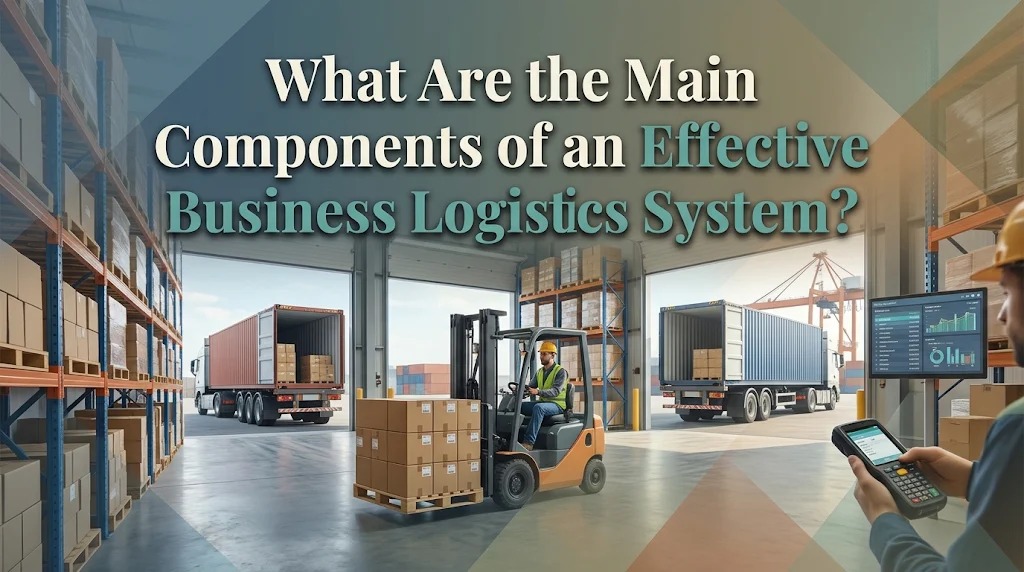
An effective business logistics system plays an important role in ensuring that company operations run smoothly and efficiently. Every business needs a well-organized logistics process to manage the movement of products, control inventory, and deliver orders to customers. Without proper coordination, companies may experience distribution delays, increased operating expenses, and difficulties maintaining product availability. Each component of logistics has a specific responsibility, but all components must work together to achieve the company's operational goals. Understanding the main components of business logistics helps organizations develop better distribution strategies, improve productivity, and maintain customer satisfaction.
TRANSPORTATION MANAGEMENT
Transportation management is one of the most important components of an effective business logistics system. It involves planning and controlling how products move from suppliers to warehouses, distribution centers, and final customers. Companies must select suitable transportation methods based on delivery distance, product characteristics, delivery time, and operational costs.
Different transportation options include trucks, ships, airplanes, and trains. Each method offers different advantages depending on business requirements. For example, trucks are commonly used for domestic deliveries because they provide flexible transportation, while ships are suitable for moving large quantities of goods across international destinations. Effective transportation planning helps companies reduce delivery expenses, avoid unnecessary delays, and ensure products reach their destinations safely.
INVENTORY AND WAREHOUSE MANAGEMENT
Inventory management focuses on controlling the quantity, availability, and movement of products within a business. Companies must maintain sufficient stock to meet customer demand without storing excessive quantities that increase storage expenses. Accurate inventory records also help businesses identify which products need to be reordered and prevent unexpected shortages.
Meanwhile, warehouse management involves organizing storage facilities, arranging products, and controlling the movement of goods inside warehouses. A well-managed warehouse makes it easier for employees to locate, prepare, and distribute products efficiently. Businesses can use warehouse management systems to monitor stock levels, organize storage locations, and reduce errors during order preparation. Combining inventory and warehouse management helps companies maintain stable operations and improve distribution performance.
ORDER PROCESSING AND PACKAGING
Order processing is the activity of receiving, recording, verifying, and preparing customer orders before delivery. This process requires accurate information about product types, quantities, customer addresses, and delivery requirements. An organized order processing system helps companies minimize mistakes, prevent incorrect shipments, and handle customer requests more efficiently.
Packaging and product handling are also essential parts of logistics operations. Proper packaging protects goods from damage during storage, loading, transportation, and unloading. Companies should select packaging materials according to product size, weight, fragility, and transportation conditions. Efficient packaging can also improve storage utilization and make products easier to identify. When order processing and packaging are properly managed, businesses can provide more reliable delivery services.
INFORMATION AND TECHNOLOGY MANAGEMENT
Information management supports communication and coordination between suppliers, warehouses, transportation providers, employees, and customers. Accurate information allows companies to monitor product movements, check inventory availability, and make decisions based on current operational conditions. Without reliable information, businesses may experience communication problems, incorrect records, and difficulties coordinating deliveries.
Modern companies increasingly use digital logistics technology to improve operational performance. Examples include transportation management systems, warehouse management systems, barcode scanners, and real-time tracking applications. These technologies help businesses monitor deliveries, record inventory changes, and organize distribution activities more accurately. Some organizations also use artificial intelligence and data analytics to predict customer demand and identify more efficient delivery routes. By using appropriate technology, companies can improve visibility, reduce manual errors, and strengthen logistics coordination.
SUPPLIER COORDINATION AND DISTRIBUTION MANAGEMENT
Supplier coordination is another important component of an effective business logistics system. Companies need reliable relationships with suppliers to ensure that raw materials and finished products are available when required. Good communication helps businesses confirm delivery schedules, monitor product quality, and respond to possible supply disruptions. Establishing clear agreements with suppliers can also reduce uncertainty and support consistent business operations.
Distribution management focuses on moving finished products from warehouses or distribution centers to customers and retail locations. Companies must determine suitable delivery routes, select distribution channels, and organize delivery schedules according to customer needs. An effective distribution strategy helps reduce transportation costs while maintaining timely product delivery. Regular performance evaluations can also identify problems in the distribution process and create opportunities for improvement. When supplier coordination and distribution management work together, businesses can establish a more reliable logistics system and improve customer satisfaction.
CONCLUSION
An effective business logistics system consists of several interconnected components, including transportation management, inventory control, warehouse management, order processing, packaging, information technology, supplier coordination, and distribution management. Each component contributes to the smooth movement and storage of products throughout business operations. Companies must coordinate these activities to reduce operating costs, prevent delivery problems, and maintain product availability. By improving logistics management and adopting suitable digital technologies, businesses can increase productivity, strengthen distribution performance, and build a more competitive position in the marketplace.
Recent Posts

How Does Technology Make Daily Evaluation... 21.11.2026/62 View

Apa Strategi Menghadapi Kesenjangan antara Kompetensi... 21.11.2026/63 View

Mengapa Inventaris Aset Penting bagi Kelancaran... 21.11.2026/59 View

When Should Musicians Join a Record... 21.11.2026/58 View

Daily Evaluation or Daily Planning Which... 21.11.2026/66 View
