

What Are the Main Functions of Operations Management in a Company?
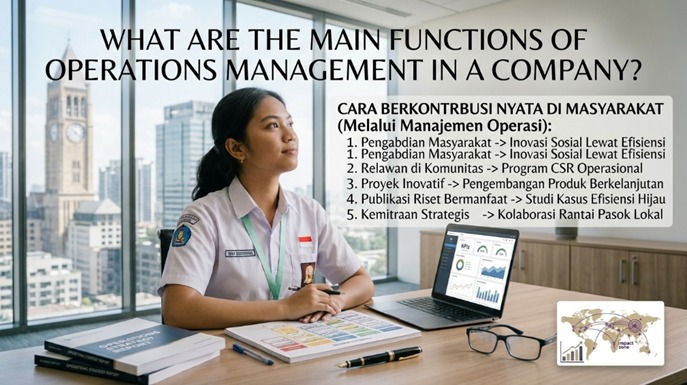
Every company needs an organized system to ensure that its daily activities run effectively and achieve business objectives. From managing employees and raw materials to producing goods and delivering services, each activity requires proper planning and coordination. Without an effective management system, businesses may experience delays, unnecessary expenses, and inconsistent product or service quality.
This is where Operations Management becomes essential. Operations management is responsible for organizing, managing, and controlling the processes that transform business resources into products or services. Its main purpose is to ensure that company activities operate efficiently while meeting customer expectations.
Understanding the main functions of operations management can help business owners, managers, and employees recognize how each operational activity contributes to organizational success. Here are the most important functions of operations management in a company.
1. PRODUCTION PLANNING
Production planning is one of the most important functions of operations management. It involves determining what products or services a company needs to produce, how much should be produced, and when production activities should take place. Proper planning helps businesses prepare the resources needed to complete their operational activities.
Managers must consider customer demand, available materials, production capacity, and delivery schedules when creating production plans. For example, a food manufacturing company needs to estimate product demand and prepare sufficient ingredients before starting production. Effective production planning helps prevent shortages, reduce delays, and maintain a consistent workflow.
2. RESOURCE MANAGEMENT
Every business depends on resources such as employees, raw materials, equipment, technology, and financial capital. Resource management ensures that these resources are allocated and used effectively to support company operations.
Operations managers need to determine how many employees are required, which equipment should be used, and how materials should be distributed. They also need to monitor resource usage to avoid unnecessary waste. By managing resources properly, companies can improve productivity, control operational expenses, and achieve better business results.
3. QUALITY CONTROL
Quality control is the function of checking and maintaining the quality of products or services according to established standards. Companies must ensure that their outputs meet customer expectations and comply with relevant requirements.
This function involves inspecting raw materials, monitoring production activities, testing finished products, and evaluating service performance. For example, a clothing manufacturer may inspect fabric quality, stitching, and product sizes before distributing its products. Effective quality control reduces defects, prevents customer complaints, and helps businesses maintain a positive reputation.
4. INVENTORY MANAGEMENT
Inventory management focuses on controlling the availability and movement of materials, supplies, and finished products. Businesses need sufficient inventory to support production and fulfill customer orders without creating excessive storage costs.
Operations managers monitor stock levels, organize purchasing schedules, and record incoming and outgoing goods. They may also use inventory management software to track stock movements more accurately. With proper inventory management, companies can reduce the risk of shortages, prevent overstocking, and maintain smoother business operations.
5. SUPPLY CHAIN MANAGEMENT
Supply chain management involves coordinating the flow of materials, information, and products from suppliers to customers. This function is important because business operations often depend on cooperation between multiple parties, including suppliers, manufacturers, warehouses, distributors, and retailers.
Operations managers need to maintain good relationships with suppliers, monitor delivery schedules, and ensure that materials arrive when required. They must also identify potential supply chain problems, such as transportation delays or material shortages. Effective supply chain management helps companies maintain product availability, control distribution costs, and deliver orders on time.
6. WORKFORCE MANAGEMENT
Employees play an essential role in maintaining business productivity. Workforce management focuses on organizing employee responsibilities, working schedules, training, and performance to ensure that daily operations run effectively.
Managers need to assign tasks according to employees' skills and experience. They should also provide appropriate training, establish clear working procedures, and monitor employee performance. Good workforce management creates a more organized working environment, improves teamwork, and supports higher productivity.
7. PROCESS DESIGN AND IMPROVEMENT
Process design involves determining how business activities should be organized to produce goods or deliver services effectively. Companies need to establish workflows that make it easier for employees to complete tasks while minimizing unnecessary activities.
Operations managers regularly evaluate existing procedures to identify delays, repeated tasks, and inefficient processes. They can introduce better working methods, reorganize production stages, or adopt suitable technologies to improve performance. Continuous process improvement helps businesses reduce waste, increase efficiency, and adapt to changing operational needs.
8. COST CONTROL AND BUDGET MANAGEMENT
Cost control is an important function because operational expenses directly affect company profitability. Businesses need to monitor spending related to raw materials, employee wages, equipment maintenance, transportation, and other operational activities.
Operations managers work with financial departments to evaluate expenses and identify opportunities for savings. They may reduce material waste, improve equipment utilization, and simplify unnecessary procedures. Effective cost control allows companies to use their budgets wisely while maintaining the quality of their products and services.
9. SCHEDULING AND TIME MANAGEMENT
Scheduling ensures that business activities are completed in the correct order and within the planned time. It includes arranging production schedules, employee shifts, equipment usage, and delivery timelines.
Without proper scheduling, companies may experience overlapping activities, idle resources, and delayed orders. Operations managers must coordinate different activities so that employees and equipment are available when needed. Effective scheduling improves time utilization, supports smooth workflows, and helps companies meet customer deadlines.
10. PERFORMANCE MONITORING AND EVALUATION
Operations management also involves measuring and evaluating how well business activities are performing. Companies need accurate information to determine whether their operational targets are being achieved.
Managers can use Key Performance Indicators (KPIs) such as production output, defect rates, delivery times, inventory turnover, and operating costs. By reviewing these measurements, they can identify operational weaknesses and determine which improvements are necessary. Regular performance evaluation helps businesses maintain accountability and make better management decisions.
11. TECHNOLOGY AND INFORMATION MANAGEMENT
Technology supports modern operations management by making business activities faster, more accurate, and easier to monitor. Companies can use digital systems to manage inventory, organize production schedules, process transactions, and share information between departments.
For example, Enterprise Resource Planning (ERP) software can integrate information from different business functions into one system. Automation tools can also reduce repetitive manual work and minimize certain operational errors. By selecting technology that matches their needs, companies can improve operational accuracy, productivity, and decision-making.
CONCLUSION
The main functions of operations management in a company include production planning, resource management, quality control, inventory management, supply chain coordination, and workforce management. Other important functions involve process improvement, cost control, scheduling, performance evaluation, and technology utilization.
All these functions work together to ensure that business activities operate effectively and support organizational objectives. When implemented properly, operations management helps companies improve productivity, reduce unnecessary expenses, maintain quality, and increase customer satisfaction. Therefore, understanding and applying these functions is essential for businesses that want to achieve sustainable growth and remain competitive.
Recent Posts

Bagaimana Sistem SKS pada Program Kuliah... 22.11.2026/21 View

How Does Technology Make Daily Evaluation... 21.11.2026/63 View

Apa Strategi Menghadapi Kesenjangan antara Kompetensi... 21.11.2026/65 View

Mengapa Inventaris Aset Penting bagi Kelancaran... 21.11.2026/62 View

When Should Musicians Join a Record... 21.11.2026/60 View
