

What Are The Main Sources Of Secondary Data In Research?
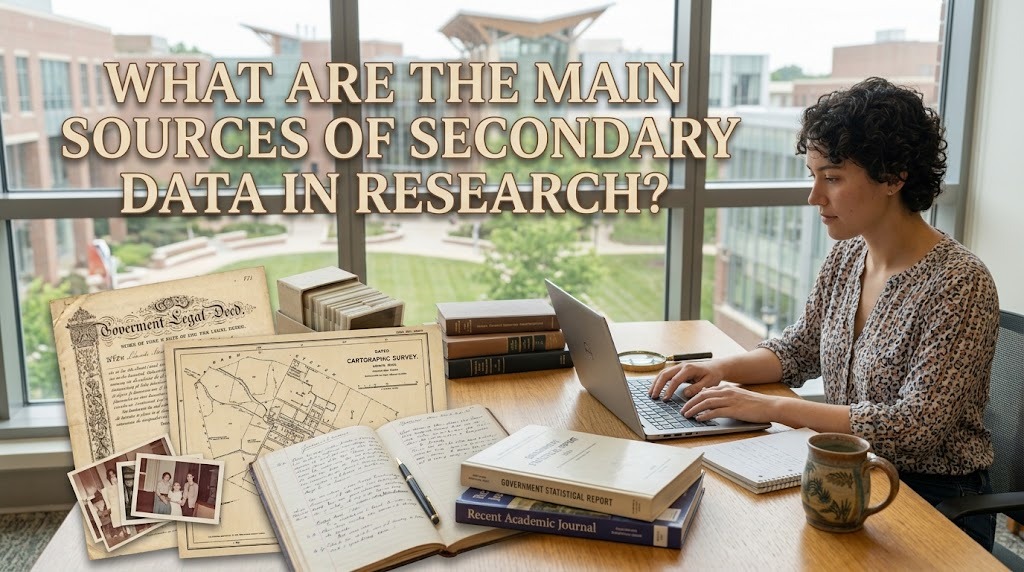
Secondary data is an important resource in research because it allows researchers to use information that has already been collected by other people or organizations. Instead of gathering all the information from the beginning, researchers can analyze existing data to answer research questions, identify trends, and support conclusions. This approach can save time, reduce costs, and provide access to information from different periods and locations. However, the quality of research depends on choosing appropriate and trustworthy sources. Understanding the main sources of secondary data helps researchers collect relevant information and produce more reliable findings.
ACADEMIC JOURNALS AND RESEARCH PAPERS
Academic journals and research papers are important sources of secondary data because they contain findings from previous studies. Researchers can use published articles to understand existing knowledge, compare results, and identify research gaps. Many academic journals use a peer-review process, in which experts evaluate articles before publication. These publications are particularly useful for students, lecturers, and researchers who need evidence to support academic arguments. However, readers should still examine the research methods, publication date, and quality of each study before using its findings.
GOVERNMENT REPORTS AND OFFICIAL STATISTICS
Government reports provide valuable information about population, education, employment, public health, economic conditions, and other social issues. National statistical agencies and government departments often publish official datasets and statistical reports based on surveys, censuses, administrative records, and other data collection activities. For example, researchers studying unemployment can examine official labor statistics to understand changes in employment rates. These sources can offer broad coverage of populations and regions that would be difficult to study independently. Nevertheless, researchers should check the reporting period, definitions, and collection methods to ensure that the statistics match their research objectives.
BOOKS AND EDUCATIONAL PUBLICATIONS
Books and educational publications are useful sources for understanding theories, concepts, historical information, and established research findings. Academic textbooks often explain complex subjects in a structured and accessible way, making them suitable for students and beginners. Research books may also summarize findings from multiple studies and provide references for further investigation. These materials can help researchers develop a theoretical framework and establish background knowledge before analyzing a topic. However, they should consider whether the book is current enough for their subject and verify important claims using original studies when necessary.
ONLINE DATABASES AND DIGITAL REPOSITORIES
Online databases and digital repositories make secondary data easier to search, access, and organize. Platforms such as Google Scholar, university repositories, and academic databases help users find research articles, theses, dissertations, and other scholarly publications. Some repositories also provide access to datasets collected by researchers, institutions, or research projects. These digital resources can save time because users can search by keywords, authors, publication dates, and research topics. However, information found online must be evaluated carefully because easy access does not automatically guarantee accuracy or credibility.
INTERNATIONAL ORGANIZATIONS AND RESEARCH INSTITUTIONS
International organizations publish reports and datasets covering global issues, including poverty, education, public health, climate change, and economic development. Organizations such as the United Nations, the World Bank, and the World Health Organization provide information that researchers can use to compare countries and examine international trends. Research institutions and independent research centers also publish studies, surveys, and analytical reports on specific topics. These sources are useful when a study requires information across different regions or populations. Researchers should still review the methodology, definitions, publication dates, and limitations because data collected by different institutions may not be directly comparable.
COMPANY RECORDS AND ORGANIZATIONAL DOCUMENTS
Companies and other organizations produce records that can serve as secondary data for business, management, marketing, and economic research. Examples include annual reports, financial statements, sales records, customer statistics, and internal performance reports. Researchers can analyze these documents to understand business performance, customer behavior, market changes, and organizational development. For example, a researcher studying retail sales trends may compare published annual reports from several companies. However, access to internal records may be restricted, and researchers must respect confidentiality, privacy, and applicable data protection requirements.
NEWSPAPERS AND MEDIA PUBLICATIONS
Newspapers, magazines, and reputable digital news platforms can provide useful secondary data about public events, social changes, business developments, and historical situations. Researchers may examine news articles to study how an event was reported or how public issues developed over time. Archived news reports are particularly helpful for historical research and media analysis. However, media sources may contain incomplete information, editorial opinions, or differences in reporting quality. Researchers should compare reports from multiple credible outlets and distinguish verified facts from opinions or unconfirmed claims.
SURVEYS AND DATASETS FROM PREVIOUS STUDIES
Data collected through earlier surveys, interviews, experiments, and observational studies can be reused for new research questions. These materials may be available through public data repositories, research institutions, or authorized data-sharing agreements. For example, a researcher may analyze an existing education survey to investigate differences in student achievement across regions. Reusing existing datasets can save time and research costs while allowing researchers to explore questions that were not the main focus of the original study. Before using these materials, researchers should check the sample characteristics, original research methods, data completeness, usage permissions, and ethical restrictions.
HOW TO CHOOSE THE RIGHT SOURCE OF SECONDARY DATA
Choosing the right source begins with defining the research question and identifying the type of information required. Researchers should prioritize relevance, credibility, accuracy, and timeliness when comparing available sources. They should also examine who collected the data, how it was obtained, and whether the information represents the population or subject being studied. Whenever possible, checking the original publication or dataset is better than relying only on summaries from other sources. Finally, researchers should document their sources and provide appropriate citations to maintain transparency and academic integrity.
CONCLUSION
The main sources of secondary data in research include academic journals, government reports, books, online databases, international organizations, company records, media publications, and datasets from previous studies. Each source offers different types of information that can support specific research objectives. However, not every source is equally reliable or suitable for every project. Researchers must evaluate the credibility, relevance, accuracy, and limitations of the information before using it. By selecting appropriate sources and citing them correctly, researchers can develop stronger arguments and produce more trustworthy findings.
KEYWORDS
- Secondary Data
- Data Sources
- Research Methods
- Academic Journals
- Government Reports
- Online Databases
- Research Quality
META DESCRIPTION
Secondary Data sources include academic journals, government reports, books, and online databases to help researchers find reliable information for research.
Add A Practical Source Selection ChecklistClarify Primary And Secondary Data Differences
Recent Posts

Bagaimana Sistem SKS pada Program Kuliah... 22.11.2026/46 View

How Does Technology Make Daily Evaluation... 21.11.2026/74 View

Apa Strategi Menghadapi Kesenjangan antara Kompetensi... 21.11.2026/75 View

Mengapa Inventaris Aset Penting bagi Kelancaran... 21.11.2026/72 View

When Should Musicians Join a Record... 21.11.2026/75 View
