

What Are the Main Stages of State Budget Preparation?
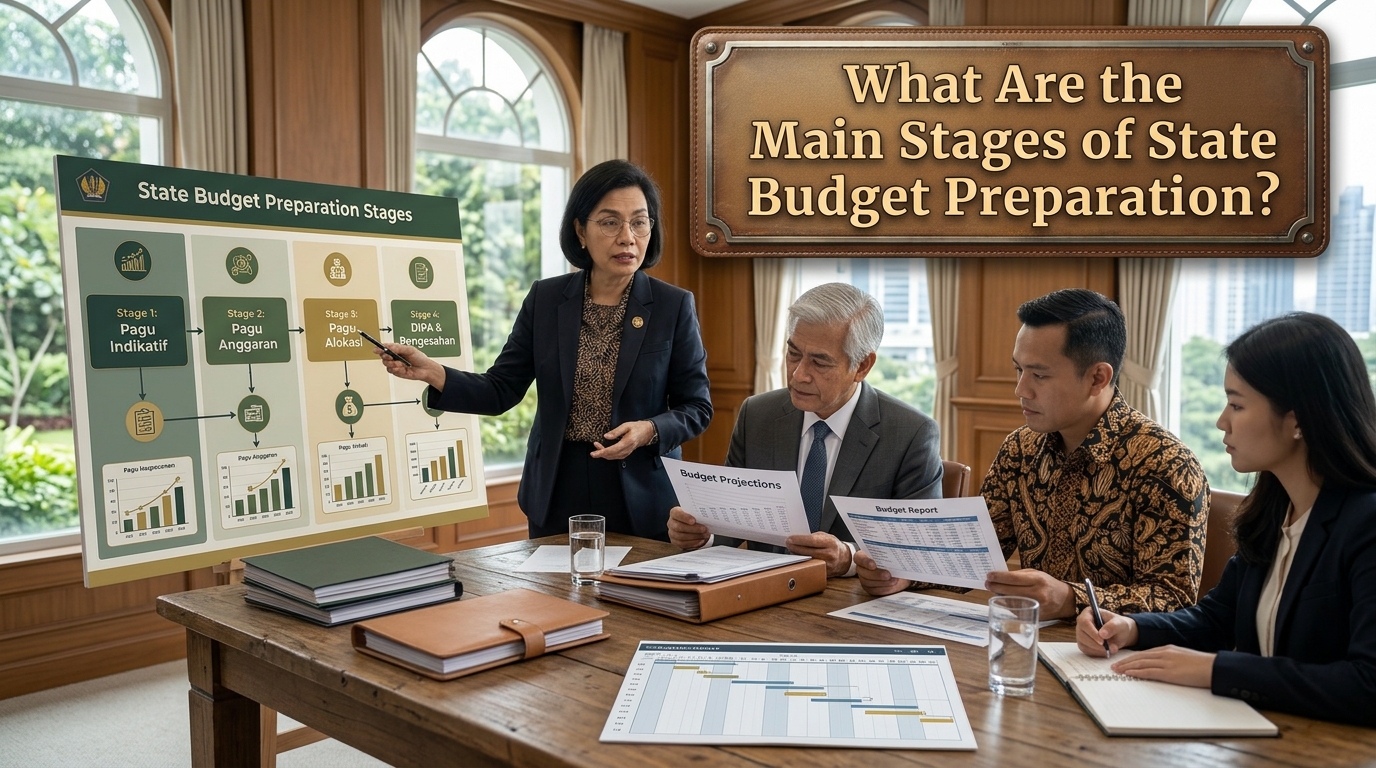
State budget preparation is an important process that determines how a government collects revenue, allocates public spending, and finances national development. It helps ensure that public money is used responsibly to support education, healthcare, infrastructure, social assistance, and other essential services. The process involves several stages, including economic planning, budget proposals, legislative approval, implementation, and evaluation. Each stage has a specific purpose and requires coordination among government institutions. Understanding the main stages of state budget preparation helps explain how governments manage public finances and work toward economic stability.
1. ECONOMIC PLANNING AND SETTING PRIORITIES
The first stage of state budget preparation involves assessing economic conditions and establishing government priorities for the upcoming fiscal year. The government examines factors such as economic growth, inflation, employment, tax revenue, and public needs. These factors help determine which sectors require funding and how much financial support may be available. Government leaders also establish development targets to guide public spending decisions. This planning stage creates a foundation for a realistic and effective budget.
In Indonesia, the government coordinates national development planning through the Ministry of National Development Planning, known as Bappenas, and fiscal planning through the Ministry of Finance. These institutions help align development targets with available financial resources. Their work supports the preparation of the Government Work Plan (Rencana Kerja Pemerintah or RKP) and the government's fiscal policy framework. By establishing clear priorities early, the government can focus its resources on programs that provide meaningful public benefits.
2. ESTIMATING GOVERNMENT REVENUE
The second stage is estimating how much money the government expects to collect during the fiscal year. Revenue may come from taxes, non-tax state revenue, and grants, depending on the country's financial system. In Indonesia, tax revenue is a major source of funding for public services and development programs. The government analyzes economic forecasts, tax collection trends, commodity prices, and other relevant factors when preparing its estimates. Accurate revenue projections help determine how much the government can reasonably spend.
If revenue is overestimated, the government may face funding shortages during budget implementation. If estimates are too conservative, important programs may receive less funding than could reasonably be provided. For this reason, revenue forecasting must be based on reliable data and realistic economic assumptions. The government may also consider alternative economic scenarios to prepare for uncertainty. Careful estimates help maintain fiscal discipline and reduce financial risks.
3. PREPARING BUDGET PROPOSALS
After establishing priorities and estimating revenue, ministries and government institutions prepare their proposed budgets. Each institution identifies the programs it plans to implement, the funding required, and the results it expects to achieve. For example, education authorities may propose funding for schools, teacher development, and learning facilities. Health authorities may request funding for hospitals, medical services, and public health programs. These proposals translate national priorities into practical government activities.
In Indonesia, ministries and institutions prepare their Work Plans and Budget Proposals (RKA-K/L) according to applicable procedures and funding guidelines. The Ministry of Finance and Bappenas review the proposals to assess their financial feasibility and alignment with development targets. Institutions may need to revise requests that exceed available resources or lack clear objectives. This review helps prevent unnecessary spending and overlapping programs. As a result, budget proposals become more focused, measurable, and consistent with national priorities.
4. REVIEWING AND CONSOLIDATING THE BUDGET
The next stage involves reviewing individual proposals and combining them into a comprehensive government budget. The government evaluates whether proposed spending is affordable and whether it supports national development goals. It also examines the balance between expected revenue, planned expenditure, and financing needs. If necessary, spending allocations are adjusted to reflect available resources and urgent priorities. This process helps establish a more coherent and financially sustainable budget.
In Indonesia, the Ministry of Finance plays a central role in coordinating fiscal estimates and consolidating the proposed APBN, while Bappenas helps ensure alignment with development plans. The government considers both short-term public needs and long-term investment priorities. It must also account for existing obligations, such as public employee salaries and debt payments. Careful review helps ensure that public expenditure is directed toward appropriate and achievable objectives. Once the draft is ready, it proceeds to the legislative discussion and approval stage.
5. DISCUSSING AND APPROVING THE STATE BUDGET
The fifth stage is legislative review and approval, which allows elected representatives to examine the government's financial plans. In Indonesia, the President submits the Draft State Budget, known as the Rancangan Anggaran Pendapatan dan Belanja Negara (RAPBN), to the House of Representatives (DPR). The proposal is generally submitted in August before the relevant fiscal year. During discussions, lawmakers examine revenue projections, expenditure allocations, and the government's financing plans. They can question government officials and discuss whether the proposed budget adequately addresses public needs.
The government and the DPR work through the required legislative procedures before the budget is approved. Under Indonesia's state finance framework, the DPR must decide on the draft APBN no later than two months before the fiscal year begins. Once approved and established under the applicable legal process, the budget provides the basis for government revenue collection and spending. This stage strengthens public accountability by ensuring that the government's financial plan receives legislative scrutiny. It also establishes the legal foundation for budget implementation.
6. IMPLEMENTING THE APPROVED BUDGET
After approval, the government begins implementing the budget during the relevant fiscal year. In Indonesia, the fiscal year runs from January 1 to December 31. Ministries and government institutions carry out authorized programs using the funds allocated to them. These activities may include constructing infrastructure, delivering healthcare services, supporting education, and providing eligible social assistance. Government institutions must follow financial regulations and use public money for approved purposes.
The Ministry of Finance monitors revenue collection and expenditure, while each institution is responsible for managing its programs. Procurement procedures, spending schedules, and operational requirements can affect when individual projects begin and finish. Regular monitoring helps identify delays, underspending, or other implementation problems. If adjustments become necessary, they must follow applicable laws and procedures. Effective budget implementation helps turn financial plans into tangible public services and development outcomes.
7. MONITORING, AUDITING, AND EVALUATING RESULTS
The final major stage involves monitoring financial performance and evaluating whether the budget achieves its objectives. The government compares actual revenue and expenditure with the targets established in the approved budget. This comparison helps identify financial differences and assess whether public programs are delivering their expected benefits. Government institutions also prepare financial reports to explain how public funds have been used. These activities support budget monitoring and improve the quality of financial management.
In Indonesia, the Audit Board of Indonesia (BPK) examines state financial management and government financial reports in accordance with its authority. Audit findings can identify weaknesses, irregularities, and opportunities to improve spending practices. The government can use these findings to strengthen financial controls and improve future budget proposals. Evaluation also helps determine whether programs should be continued, revised, or given different levels of funding. This creates a continuous cycle of planning, implementation, and improvement.
WHY ARE THE STAGES OF STATE BUDGET PREPARATION IMPORTANT?
Each stage of state budget preparation contributes to responsible financial management. Economic planning establishes clear priorities, revenue forecasting identifies available resources, and budget proposals translate government goals into practical programs. Reviewing and approving the budget helps ensure that spending is realistic and receives appropriate oversight. Implementation then delivers approved programs, while monitoring and auditing assess financial performance. Together, these stages support transparency, efficiency, and accountability.
A well-organized budget process can also support economic stability and sustainable development. It helps governments manage public debt, fund essential services, and respond to changing economic conditions. Clear procedures reduce the risk of waste and improve coordination between government institutions. Public reporting and legislative oversight further strengthen confidence in financial decisions. Therefore, effective state budget preparation is essential for ensuring that public resources deliver meaningful benefits.
CONCLUSION
The main stages of state budget preparation include economic planning, revenue estimation, preparation of budget proposals, budget review, legislative approval, implementation, and evaluation. Each stage serves a different purpose but contributes to the same goal of managing public money responsibly. In Indonesia, the process involves institutions such as the Ministry of Finance, Bappenas, government ministries, the DPR, and BPK in their respective roles. Careful coordination helps ensure that spending priorities match available resources and national development goals. Ultimately, a transparent and well-managed state budget process supports economic stability, stronger public services, and long-term national progress.
Recent Posts

Bagaimana Sistem SKS pada Program Kuliah... 22.11.2026/47 View

How Does Technology Make Daily Evaluation... 21.11.2026/75 View

Apa Strategi Menghadapi Kesenjangan antara Kompetensi... 21.11.2026/76 View

Mengapa Inventaris Aset Penting bagi Kelancaran... 21.11.2026/73 View

When Should Musicians Join a Record... 21.11.2026/76 View
