

What Are the Most Common Challenges in Logistics Management?
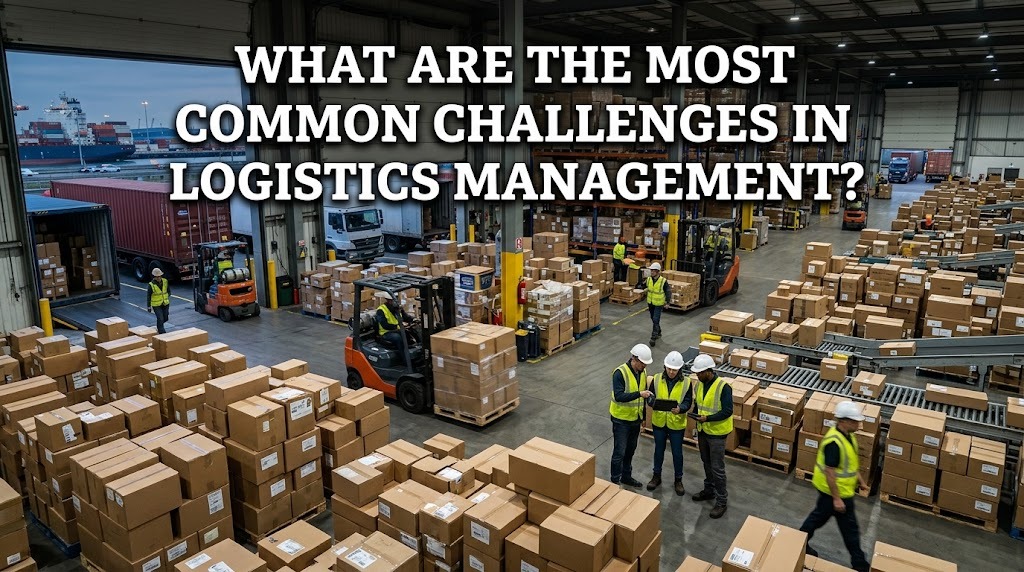
Logistics management plays an important role in ensuring that products move efficiently from suppliers to customers. It involves transportation, warehousing, inventory control, order processing, and product distribution. However, businesses often face various challenges that can disrupt these activities and increase operational costs. Problems such as delivery delays, inaccurate inventory records, rising fuel prices, and poor communication can affect overall business performance. Understanding these challenges helps companies develop effective strategies to improve logistics efficiency, reduce risks, and maintain customer satisfaction.
TRANSPORTATION AND DELIVERY DELAYS
Transportation delays are among the most common challenges in logistics management. Traffic congestion, unfavorable weather, vehicle breakdowns, road closures, and unexpected transportation disruptions can prevent products from arriving on schedule. These delays may affect production schedules, interrupt business operations, and disappoint customers who depend on timely deliveries. Businesses that operate across long distances may face additional difficulties because transportation conditions can vary between locations. Therefore, reliable transportation planning is essential for maintaining consistent delivery performance.
Companies can reduce delivery delays by selecting suitable transportation providers and planning alternative routes. Using real-time tracking systems allows logistics teams to monitor shipments and identify potential problems earlier. Businesses should also maintain regular communication with drivers, suppliers, and customers when delivery schedules change. Preparing backup transportation arrangements can help companies respond to unexpected disruptions. These measures improve delivery reliability and reduce the negative effects of transportation problems.
RISING OPERATIONAL AND TRANSPORTATION COSTS
High operational costs create significant challenges for businesses managing logistics activities. Expenses may include fuel, vehicle maintenance, warehouse rent, employee salaries, packaging materials, and shipping fees. When fuel prices increase or transportation capacity becomes limited, companies may need to spend more money to deliver the same quantity of products. These additional expenses can reduce profit margins, especially for small businesses with limited budgets. Without proper cost management, logistics expenses may become difficult to control.
To address this problem, companies should regularly evaluate their transportation methods and warehouse operations. Route optimization can reduce unnecessary travel distances, fuel consumption, and delivery time. Businesses can also consolidate shipments, negotiate competitive rates with logistics providers, and use warehouse space more efficiently. Monitoring expenses through digital reporting systems helps managers identify activities that generate unnecessary costs. With careful planning, companies can maintain service quality while improving financial efficiency.
INVENTORY MANAGEMENT PROBLEMS
Inventory management is another major challenge because businesses must maintain the right amount of stock to meet customer demand. Excessive inventory increases storage costs and creates a risk of damaged, expired, or outdated products. On the other hand, insufficient inventory can cause stockouts, delayed orders, and lost sales opportunities. Inaccurate records may also make employees believe that products are available when they are actually out of stock. These problems can disrupt distribution activities and weaken customer confidence.
Companies can improve inventory accuracy by conducting regular stock checks and updating inventory records whenever products enter or leave a warehouse. Inventory management software can help track stock levels and provide alerts when supplies become too low. Businesses should also analyze historical sales data and seasonal demand to determine appropriate inventory levels. Clear procedures for receiving, storing, and dispatching products can further reduce recording errors. By maintaining accurate inventory information, companies can improve order fulfillment and control storage expenses.
POOR COMMUNICATION AND COORDINATION
Poor communication between departments, suppliers, transportation providers, and customers can create serious logistics problems. For example, a warehouse may prepare an order based on outdated information, while the delivery team follows a different schedule. These misunderstandings can result in incorrect shipments, duplicated work, and unnecessary delays. Businesses that rely on multiple suppliers or distribution centers may face additional coordination difficulties. Without consistent information sharing, it becomes harder to manage logistics activities effectively.
To improve coordination, companies should establish clear communication procedures and use centralized information systems. Digital logistics platforms can help different teams access updated order details, inventory records, and delivery schedules. Regular meetings and performance reviews can also help identify recurring communication problems. Employees should understand their responsibilities and know whom to contact when unexpected issues occur. Better coordination enables businesses to respond faster, minimize errors, and maintain smoother operations.
TECHNOLOGY AND DATA SECURITY CHALLENGES
Modern logistics increasingly depends on digital tools for shipment tracking, inventory control, route planning, and operational reporting. However, implementing new technology can be difficult because software systems may require significant investment, employee training, and changes to existing procedures. Small businesses may struggle to afford advanced logistics platforms or hire employees with the necessary technical skills. Incompatible systems can also prevent information from being shared accurately between business partners. These difficulties may reduce the benefits that technology is expected to provide.
Another important concern is data security. Logistics systems often store sensitive information about customers, suppliers, orders, and transportation activities. Cyberattacks, unauthorized access, and system failures can disrupt operations and expose confidential information. Businesses should use secure access controls, regular software updates, reliable data backups, and appropriate employee training. They should also evaluate technology providers before adopting new systems. With proper planning and security measures, companies can use digital technology more safely and effectively.
UNEXPECTED DISRUPTIONS AND RISK MANAGEMENT
Logistics operations can be affected by unexpected events such as natural disasters, political conflicts, supplier failures, and sudden changes in customer demand. These disruptions may interrupt transportation routes, limit product availability, or increase shipping costs. Businesses that depend on a single supplier or transportation provider can be particularly vulnerable when that partner experiences difficulties. Without preparation, companies may struggle to maintain normal operations and fulfill customer orders. Supply chain resilience is therefore essential for managing uncertainty.
Companies can strengthen their resilience by identifying potential risks and preparing alternative solutions. Working with multiple suppliers, maintaining appropriate safety stock, and selecting backup transportation providers can reduce dependence on a single source. Businesses should also create emergency procedures and review them regularly to ensure employees understand how to respond to disruptions. Data analysis and demand forecasting can help managers recognize changing conditions and make timely adjustments. By developing effective risk management strategies, companies can protect their logistics operations and recover more quickly from unexpected problems.
CONCLUSION
The most common challenges in logistics management include transportation delays, rising operational costs, inventory inaccuracies, poor communication, technology limitations, and unexpected disruptions. These problems can increase expenses, reduce productivity, and negatively affect customer satisfaction. Businesses can address them through better planning, accurate inventory records, effective communication, appropriate technology, and proactive risk management. Regular performance monitoring also helps companies identify weaknesses and make continuous improvements. Ultimately, effective logistics management enables businesses to operate more efficiently, respond to changing conditions, and maintain a competitive position in the market.
Recent Posts

Bagaimana Sistem SKS pada Program Kuliah... 22.11.2026/60 View

How Does Technology Make Daily Evaluation... 21.11.2026/87 View

Apa Strategi Menghadapi Kesenjangan antara Kompetensi... 21.11.2026/85 View

Mengapa Inventaris Aset Penting bagi Kelancaran... 21.11.2026/83 View

When Should Musicians Join a Record... 21.11.2026/87 View
