

What Are the Most Common Challenges in Operations Management?
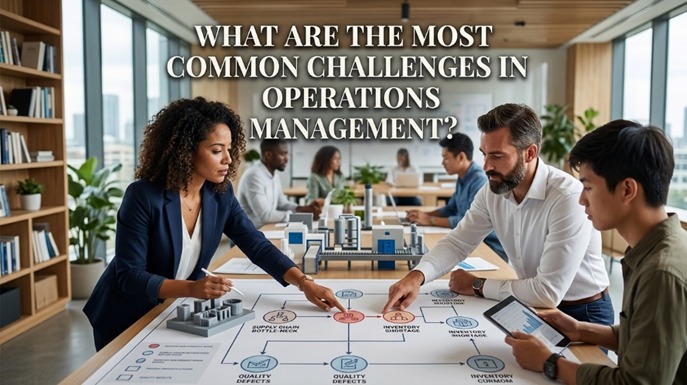
Operations management plays an important role in ensuring that business activities run efficiently and consistently. It involves planning, organizing, and controlling resources such as employees, materials, equipment, technology, and time. Effective operations management helps companies maintain product quality, control costs, and meet customer expectations. However, managing business operations is not always easy because companies must deal with various internal and external challenges.
These challenges can affect productivity, customer satisfaction, and overall business performance if they are not handled properly. From limited resources to supply chain disruptions, managers need to identify problems and develop practical solutions. Understanding the most common challenges in operations management can help businesses improve their processes and achieve long-term success.
1. POOR RESOURCE MANAGEMENT
One of the most common challenges in operations management is managing limited resources effectively. Every business depends on resources such as employees, raw materials, equipment, money, and time to complete its activities. When these resources are not allocated properly, companies may experience delays, unnecessary expenses, or reduced productivity. For example, a manufacturing company may struggle to meet production targets if it does not have enough materials or workers.
To overcome this challenge, managers need to understand operational requirements and distribute resources according to business priorities. They should also monitor resource usage regularly to identify waste and areas that need improvement. Effective resource management helps businesses maintain productivity while avoiding unnecessary costs. Proper planning also ensures that important activities receive sufficient support.
2. SUPPLY CHAIN DISRUPTIONS
Supply chain disruptions can make it difficult for businesses to obtain the materials and products they need. These disruptions may result from transportation problems, supplier failures, natural disasters, geopolitical conflicts, or unexpected changes in demand. When essential materials arrive late, production schedules can be interrupted, and customer orders may not be completed on time.
Businesses can reduce this risk by working with reliable suppliers and developing alternative sourcing options. Maintaining appropriate safety stock for critical materials can also help companies handle temporary shortages. Strong supply chain management improves business resilience and reduces the impact of unexpected disruptions. Regular communication with suppliers is equally important to ensure that potential problems are identified early.
3. MAINTAINING CONSISTENT PRODUCT QUALITY
Maintaining consistent product quality is another major challenge in operations management. Customers expect products to meet certain standards every time they make a purchase. However, quality problems can occur because of defective materials, equipment failures, human errors, or inconsistent production procedures. If these problems continue, businesses may face customer complaints, product returns, and damage to their reputation.
Companies need to establish clear quality standards and conduct inspections throughout the production process. Employee training, equipment maintenance, and regular process evaluations can also help prevent defects. Quality control should be applied at every important stage, not only when finished products are ready for distribution. This approach helps businesses identify problems earlier and maintain customer trust.
4. RISING OPERATIONAL COSTS
Operational costs can increase because of higher material prices, energy expenses, transportation fees, labor costs, and equipment maintenance. When expenses rise faster than revenue, businesses may experience lower profit margins. This challenge is particularly difficult for companies that operate with limited budgets or face strong market competition.
Managers need to monitor expenses and identify activities that consume resources without creating sufficient value. They can improve production schedules, reduce material waste, negotiate with suppliers, and use energy more efficiently. Cost control does not simply mean spending less; it means using resources more effectively without reducing essential quality. Regular budget evaluations help businesses maintain financial stability.
5. EMPLOYEE PRODUCTIVITY AND SKILL GAPS
Employees are essential to successful business operations, but managing workforce productivity can be challenging. Some companies face problems such as insufficient training, unclear responsibilities, low motivation, employee turnover, and skill shortages. These issues can slow down workflows and increase the likelihood of mistakes. They may also create additional pressure on other employees.
To address these problems, businesses should provide relevant training and establish clear performance expectations. Managers should also create a supportive working environment where employees can communicate concerns and receive constructive feedback. A skilled, motivated, and well-organized workforce contributes directly to operational efficiency. Workforce planning is also important to ensure that the right number of employees with suitable skills are available when needed.
6. INEFFICIENT INVENTORY MANAGEMENT
Inventory management involves maintaining the right amount of materials, products, and supplies to support business activities. One common challenge is balancing inventory availability with storage and purchasing costs. Excessive inventory can increase storage expenses and create the risk of damaged or outdated products. On the other hand, insufficient inventory can cause production delays and missed sales opportunities.
Businesses can improve inventory management by monitoring stock levels, analyzing demand patterns, and setting appropriate reorder points. Inventory management software can also provide more accurate information about available stock and purchasing needs. Effective inventory control helps companies avoid both overstocking and stock shortages. This creates smoother operations and supports better customer service.
7. ADAPTING TO TECHNOLOGICAL CHANGES
Technology continues to change how businesses manage their operations. Digital systems, automation, artificial intelligence, and data analytics can improve efficiency, but adopting them may create several challenges. Some companies face high implementation costs, limited technical knowledge, employee resistance, and difficulties integrating new systems with existing processes.
Businesses should evaluate their actual needs before investing in new technology. They also need to provide employee training and introduce new systems gradually when necessary. Successful technology adoption requires more than purchasing advanced equipment; it also requires proper planning and employee readiness. Companies should regularly assess whether technological investments deliver meaningful improvements.
8. MEETING CHANGING CUSTOMER EXPECTATIONS
Customer expectations can change because of market trends, new technology, competitors, and changes in purchasing behavior. Customers may demand faster delivery, better product quality, competitive prices, and more personalized services. Businesses that cannot respond to these expectations may lose customers to competitors.
Operations managers need to monitor customer feedback and understand changes in market demand. They should also coordinate with marketing, sales, and production teams to ensure that operational processes support customer needs. Flexible operations allow businesses to respond more effectively to changing customer expectations. Companies must balance responsiveness with production capacity and cost efficiency.
9. POOR COMMUNICATION AND DEPARTMENT COORDINATION
Business operations often involve several departments that depend on one another. When communication is unclear, employees may receive inconsistent instructions, important information may be delayed, and tasks may be repeated unnecessarily. For example, if the sales department does not communicate demand changes to the production team, the company may produce too many or too few products.
To prevent these problems, businesses should establish clear communication channels and define responsibilities across departments. Regular meetings, shared information systems, and standardized reporting procedures can improve coordination. Effective communication helps departments work toward common objectives and reduces operational misunderstandings. It also allows managers to identify and resolve problems more quickly.
10. MANAGING RISKS AND UNEXPECTED EVENTS
Unexpected events can interrupt business activities and create serious operational difficulties. These events may include equipment breakdowns, cyberattacks, natural disasters, sudden supplier problems, or changes in government regulations. Without preparation, companies may struggle to maintain essential services and meet customer commitments.
Risk management helps businesses identify possible threats and prepare suitable responses. Companies can develop contingency plans, maintain backup systems, establish emergency procedures, and review operational risks regularly. A well-prepared business can respond to disruptions more quickly and reduce their potential impact. Risk management should be treated as an ongoing activity rather than a one-time task.
11. ENSURING CONTINUOUS PROCESS IMPROVEMENT
Business processes can become inefficient over time because of outdated procedures, changing customer needs, and new operational requirements. Companies that rely on existing methods without evaluating their performance may miss opportunities to improve productivity and quality. This can make it harder to compete in changing markets.
Managers should regularly review operational performance using measurable indicators such as production time, defect rates, operating costs, and customer satisfaction. They can apply improvement methods such as Kaizen and Lean Management to identify inefficiencies and reduce unnecessary activities. Continuous improvement helps businesses maintain effective processes and adapt to new challenges. Employee participation is also valuable because workers often understand the practical problems within daily operations.
CONCLUSION
Operations management involves many challenges, including resource limitations, supply chain disruptions, rising costs, quality problems, employee productivity, and changing customer expectations. These issues can affect business performance if companies do not identify and manage them properly.
To overcome these challenges, businesses need effective planning, clear communication, reliable technology, skilled employees, and continuous performance evaluation. They should also remain flexible when facing unexpected changes. By addressing operational problems systematically, companies can improve efficiency, maintain product quality, satisfy customers, and achieve sustainable business growth.
Recent Posts

Bagaimana Sistem SKS pada Program Kuliah... 22.11.2026/12 View

How Does Technology Make Daily Evaluation... 21.11.2026/63 View

Apa Strategi Menghadapi Kesenjangan antara Kompetensi... 21.11.2026/64 View

Mengapa Inventaris Aset Penting bagi Kelancaran... 21.11.2026/61 View

When Should Musicians Join a Record... 21.11.2026/59 View
