

What Are the Most Common Mistakes in Writing Official Memos?
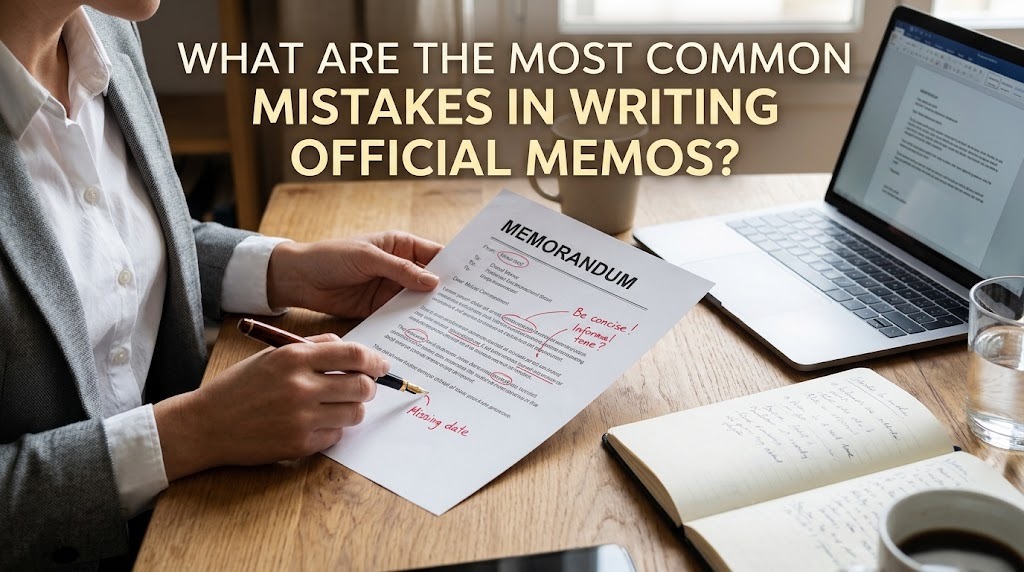
In the modern corporate and administrative landscape, official memos remain an indispensable tool for internal communication, policy enforcement, and operational coordination. However, because memos are created frequently during busy workdays, professionals often rush through drafting them, leading to errors that compromise clarity, professionalism, and legal authority. A poorly written memo can cause widespread confusion among team members, delay critical project execution, and reflect negatively on the author’s professional standing.
Identifying and avoiding common drafting pitfalls is essential for anyone seeking to maintain high administrative standards. From formatting blunders and ambiguous subject lines to overly emotional language and incomplete distribution records, even small errors can significantly diminish a document's impact. This comprehensive guide outlines the most common mistakes made when writing official memos and offers actionable strategies to ensure your internal messaging remains clear, accurate, and authoritative.
USING AMBIGUOUS OR GENERIC SUBJECT LINES
One of the most frequent mistakes in memo writing occurs before the reader even reaches the body text: drafting a vague, generic, or overly broad subject line. Headers that simply state "Update," "Important," or "Meeting" fail to provide immediate context, causing busy executives and staff members to deprioritize or misfile the document.
A professional subject line must be specific, concise, and indicative of the exact topic or required action. For example, replacing a vague phrase like "Policy Changes" with "Action Required: Updated Remote Work Policy Effective November 1" ensures recipients grasp the urgency and scope of the message instantly.
FAILING TO ADHERE TO STANDARD MEMO FORMATTING
Memos follow a specific structural layout designed for rapid reading and efficient organizational archiving. A common blunder is treating an official memo like an informal email or a formal external letter by adding unnecessary salutations like "Dear Team" or complimentary closes like "Sincerely."
Omitting mandatory header fields—such as the TO, FROM, DATE, and SUBJECT lines—or failing to align them properly creates an unorganized appearance that undermines administrative authority. Adhering strictly to standardized header blocks and logical paragraph divisions guarantees that your memo looks professional and conforms to institutional protocol.
INCLUDING TOO MUCH IRRELEVANT INFORMATION
An official memo is designed to address a single, specific issue or topic directly. A major mistake made by inexperienced writers is cluttering the document with background noise, excessive historical context, or multiple unrelated announcements.
When a memo attempts to cover too many topics at once, key directives get buried, leading to reader confusion and missed deadlines. Senders should focus strictly on the core message, keeping sentences short, using bullet points for readability, and separating unrelated topics into distinct individual memos.
ADOPTING AN INAPPROPRIATE TONE OR CASUAL LANGUAGE
Maintaining an objective, neutral, and professional tone is critical when issuing official internal correspondence. A common pitfall is adopting an overly conversational tone filled with workplace slang, informal jargon, or excessive emotional language, especially when addressing sensitive policy changes or disciplinary matters.
Conversely, using overly dense academic prose or confusing legal jargon can alienate team members and obscure the primary message. An effective memo strikes a balance by using clear, direct, and active voice while remaining completely objective, respectful, and fact-focused throughout.
OMITS CLEAR CALLS TO ACTION AND DEADLINES
A memo may present accurate facts and thorough background analysis, but if it fails to state clearly what action the reader must take next, the document loses its practical utility. Senders frequently make the mistake of assuming recipients will automatically know how to proceed without explicit instruction.
Every operational memo should conclude with a distinct call to action that specifies who is responsible for what task, the exact deadline for completion, and the point of contact for questions. Providing precise follow-up instructions eliminates ambiguity and establishes complete operational accountability across departments.
NEGLECTING PROOFREADING AND VERIFICATION PROCEDURES
Releasing a memo containing spelling errors, incorrect dates, flawed financial figures, or misspelled employee names severely damages the sender's professional credibility and can lead to costly operational mistakes. Skipping the final review phase is a dangerous shortcut that frequently results in miscommunication.
Before distributing any internal notice, writers must thoroughly proofread the draft, verify all cited facts and dates, and confirm that all necessary supporting files are attached. Ensuring complete accuracy before sending protects the organization’s operational flow and reinforces trust between management and staff.
CONCLUSION
Writing an effective official memo requires discipline, attention to detail, and strict adherence to administrative formatting standards. By avoiding common mistakes—such as vague subject lines, non-standard layouts, topic clutter, inappropriate tone, missing deadlines, and unverified data—you can ensure your internal messaging achieves maximum clarity and compliance. Mastering these writing principles enhances departmental efficiency, reduces workplace misunderstandings, and strengthens overall administrative productivity.
Recent Posts

Bagaimana Sistem SKS pada Program Kuliah... 22.11.2026/53 View

How Does Technology Make Daily Evaluation... 21.11.2026/82 View

Apa Strategi Menghadapi Kesenjangan antara Kompetensi... 21.11.2026/81 View

Mengapa Inventaris Aset Penting bagi Kelancaran... 21.11.2026/77 View

When Should Musicians Join a Record... 21.11.2026/82 View
