

What Are the Most Common Types of Color Blindness Tests?
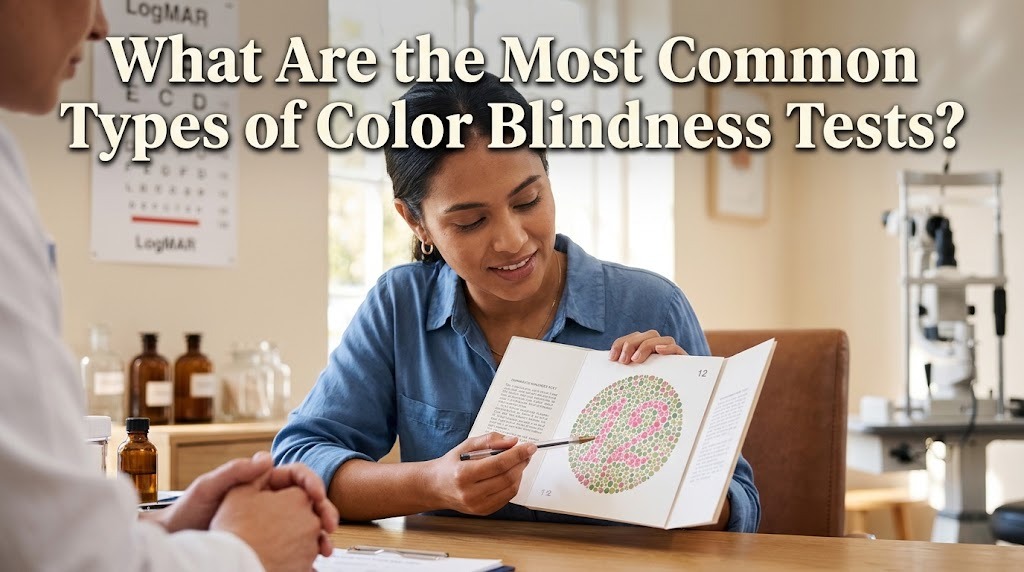
Color blindness tests are important examinations used to identify whether someone has difficulty distinguishing certain colors. These tests help determine the type and severity of color vision deficiency, which can affect everyday activities such as reading colored signs, recognizing traffic lights, choosing clothes, and performing certain jobs. Some people are born with color blindness, while others develop color vision problems because of eye diseases, medical conditions, or certain medications.
There are several types of color blindness tests used in eye examinations. Each test has a different method and purpose, ranging from identifying common color vision deficiencies to evaluating more complex visual problems. Understanding these tests can help people know what to expect during an eye examination and why accurate testing is important.
ISHIHARA COLOR TEST
The Ishihara Color Test is one of the most widely used methods for detecting color blindness, particularly red-green color vision deficiency. This test uses specially designed circular plates containing colored dots arranged in different patterns. Within these patterns, numbers, letters, or shapes are formed using dots that differ in color from the surrounding background. People with normal color vision can usually recognize the hidden figures, while individuals with certain color vision deficiencies may see different numbers or have difficulty identifying them.
During the examination, the person is asked to identify the numbers or patterns displayed on each plate. The examiner evaluates the answers to determine whether there are signs of red-green color vision deficiency. The Ishihara test is relatively quick, simple, and non-invasive, making it suitable for routine eye examinations. However, it mainly focuses on red-green color blindness and is not designed to identify every type of color vision deficiency.
ANOMALOSCOPE TEST
The Anomaloscope Test is a specialized examination used to evaluate color vision more precisely, especially red-green color vision abnormalities. This test uses an optical instrument that displays two different areas of colored light. The person being examined must adjust the colors until both areas appear to match. The examiner then evaluates the adjustments to understand how the individual perceives different color combinations.
Anomaloscopes are particularly useful for distinguishing between different forms of red-green color blindness, including protan-type and deutan-type deficiencies. They can also help determine the severity of these conditions more accurately than some basic screening tests. Although this examination provides detailed information, it requires specialized equipment and trained professionals. Therefore, it is more commonly used in specialist eye clinics and research settings than in ordinary vision screenings.
FARNWORTH D-15 TEST
The Farnsworth D-15 Test is a color arrangement examination designed to identify and classify certain types of color vision deficiencies. It consists of 15 colored caps that the participant must arrange according to their similarities in color. The person is instructed to place the caps in an order that creates a gradual transition between different shades. The examiner then studies the arrangement to identify patterns that may indicate difficulty distinguishing particular colors.
This test can help identify red-green and blue-yellow color vision deficiencies. It is also useful for understanding the severity of certain color discrimination problems and determining whether someone has difficulty distinguishing specific color groups. Unlike the Ishihara test, which focuses mainly on recognizing hidden numbers, the Farnsworth D-15 evaluates how accurately someone can compare and arrange colors. However, it may not detect very mild color vision deficiencies, so additional examinations may sometimes be necessary.
FARNsworth MUNSELL 100 HUE TEST
The Farnsworth Munsell 100 Hue Test is a more comprehensive examination used to assess a person's ability to distinguish small differences between colors. It contains multiple colored caps arranged into several groups, with each cap representing a slightly different shade. Participants must arrange the caps in a logical sequence based on gradual changes in color. The examiner evaluates the final arrangement to identify errors and patterns associated with color vision deficiencies.
This examination can provide detailed information about color discrimination, including difficulties involving red, green, blue, and yellow shades. It is particularly useful for evaluating people who need accurate color perception for specific professional or technical activities. For example, certain occupations involving graphic design, painting, printing, and quality control may require strong color discrimination skills. However, the test takes longer than basic screening methods and requires careful attention from the participant.
COLOR VISION TEST USING DIGITAL SCREENS
Digital color vision tests are increasingly available through computers, tablets, and smartphones. These tests generally display colored patterns, numbers, symbols, or images that participants must identify. Some digital examinations use methods similar to the Ishihara test, while others provide different color recognition activities. They can be convenient for preliminary screening because people can access them without visiting an eye clinic.
However, digital color blindness tests have limitations that should be considered. Screen brightness, display quality, color calibration, and lighting conditions can influence how colors appear. As a result, the same test may produce different results on different devices. Online examinations should therefore be considered preliminary screening tools rather than definitive medical diagnoses. Anyone who suspects a color vision deficiency should undergo a proper examination by an eye care professional.
WHICH COLOR BLINDNESS TEST IS THE MOST ACCURATE?
The accuracy of a color blindness test depends on the type of color vision deficiency being examined and the purpose of the assessment. The Ishihara test is commonly used for initial screening because it is quick and effective at identifying many cases of red-green color vision deficiency. Meanwhile, the Anomaloscope Test provides more detailed information about red-green color perception and can help distinguish between different types of abnormalities.
The Farnsworth D-15 and Farnsworth Munsell 100 Hue tests are useful for evaluating color discrimination through different shades and color arrangements. No single test is necessarily the best choice for every individual. Eye care professionals select examinations based on symptoms, age, examination requirements, and suspected color vision problems. In some cases, several tests may be combined to obtain a more complete understanding of a person's color vision.
CONCLUSION
There are several common types of color blindness tests, including the Ishihara Color Test, Anomaloscope Test, Farnsworth D-15 Test, Farnsworth Munsell 100 Hue Test, and digital color vision examinations. Each method has different functions and levels of detail in identifying color vision deficiencies. Some tests are suitable for basic screening, while others provide more comprehensive assessments of color discrimination.
Understanding these examinations can help individuals recognize the importance of checking their color vision. Although digital tests can provide an initial indication, professional eye examinations remain important for obtaining reliable results. Early identification also helps individuals understand their visual condition and find appropriate ways to manage its effects on daily activities.
Recent Posts

Bagaimana Sistem SKS pada Program Kuliah... 22.11.2026/42 View

How Does Technology Make Daily Evaluation... 21.11.2026/72 View

Apa Strategi Menghadapi Kesenjangan antara Kompetensi... 21.11.2026/74 View

Mengapa Inventaris Aset Penting bagi Kelancaran... 21.11.2026/70 View

When Should Musicians Join a Record... 21.11.2026/73 View
