

What Are the Most Effective Presentation Techniques for Beginners?
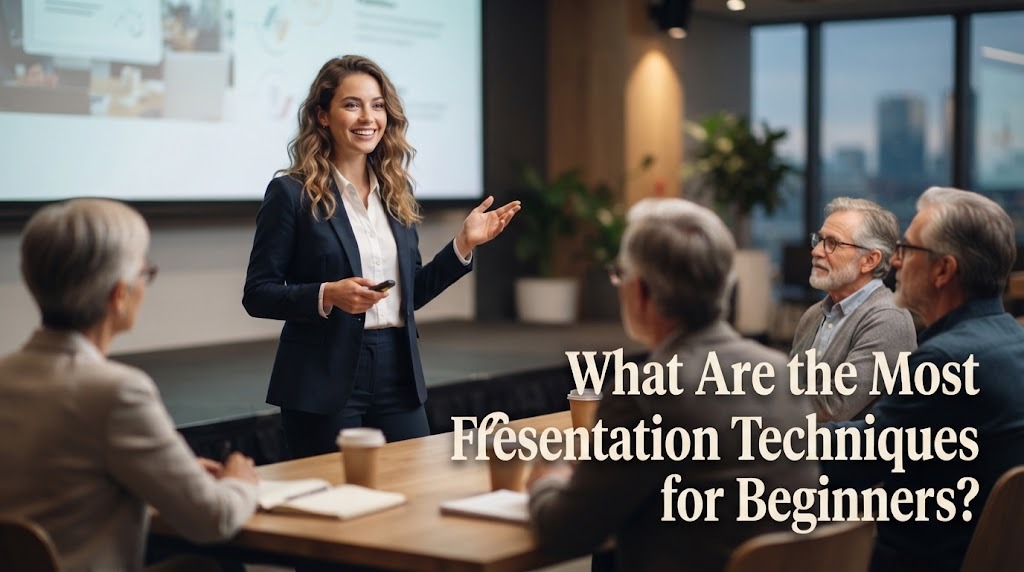
Giving a presentation can feel difficult for beginners, especially when they are not used to speaking in front of an audience. Nervousness, lack of preparation, and uncertainty about what to say can make a presentation less effective. However, presentation skills can be learned and improved through proper preparation and regular practice. Beginners do not need to become perfect speakers immediately because small improvements can make a significant difference.
Effective presentation techniques help speakers organize their ideas, communicate clearly, and maintain the audience’s attention. These techniques can be useful for students, employees, and anyone who needs to explain information to other people. By understanding the basic principles of a good presentation, beginners can become more confident and professional. The most important step is to practice consistently and learn from every presentation experience.
UNDERSTAND YOUR PRESENTATION TOPIC
The first effective presentation technique for beginners is to understand the topic thoroughly. Speakers should know the main ideas, important details, and purpose of the presentation before standing in front of the audience. Understanding the topic makes it easier to explain information naturally instead of simply memorizing a script. It also helps speakers respond more confidently when the audience asks questions.
Beginners should identify the most important information and avoid including unnecessary details. A presentation should have a clear purpose, such as explaining an idea, providing information, or convincing the audience. When the purpose is clear, it becomes easier to decide which information should be included. Strong knowledge of the topic also reduces the risk of becoming confused during the presentation.
ORGANIZE THE PRESENTATION CLEARLY
A clear structure makes a presentation easier to understand. Beginners can organize their presentation into an introduction, main discussion, and conclusion. The introduction should explain the topic and give the audience a reason to pay attention. The main discussion should present the key information in a logical order, while the conclusion should summarize the main message.
A well-organized presentation also helps the speaker remember the flow of the material. Instead of memorizing every sentence, beginners can remember the main points and explain them using their own words. This approach usually sounds more natural and reduces the pressure of remembering a long script. A simple structure can make both the speaker and the audience feel more comfortable.
CREATE SIMPLE AND EFFECTIVE SLIDES
Presentation slides should support the speaker rather than replace the speaker. Beginners should avoid filling slides with long paragraphs because audiences may focus on reading instead of listening. Short phrases, clear headings, relevant images, and simple visual elements can make information easier to understand. Each slide should communicate one main idea whenever possible.
The design should also remain consistent throughout the presentation. Beginners can use readable fonts, appropriate spacing, and a simple layout to make slides look professional. Charts or diagrams can be useful when information is easier to understand visually. However, visual elements should only be used when they help explain the topic rather than simply decorating the slides.
PRACTICE BEFORE PRESENTING
Practice is one of the most effective presentation techniques for beginners. Rehearsing helps speakers become familiar with the material and identify parts that are difficult to explain. Beginners can practice alone, in front of friends, or by recording themselves. Watching a practice recording can reveal problems with speaking speed, pronunciation, posture, or unclear explanations.
Practice should focus on understanding the flow rather than memorizing every word. Speakers can prepare keywords or short notes to guide them through the presentation. Repeated practice can also reduce nervousness because the situation becomes more familiar. The goal is not to make the presentation sound completely memorized, but to make the delivery confident and natural.
SPEAK CLEARLY AND AT A MODERATE PACE
Clear speech is essential for effective presentations. Beginners should pronounce words clearly and avoid speaking too quickly because nervousness can naturally increase speaking speed. A moderate pace gives the audience enough time to understand the information. It also gives the speaker time to think before moving to the next idea.
Voice volume should be appropriate for the room and audience. Important information can be emphasized through changes in tone, pauses, and vocal energy. Speaking in exactly the same tone from beginning to end can make a presentation feel monotonous. A natural variation in voice can make the presentation more engaging without requiring exaggerated performance.
USE CONFIDENT BODY LANGUAGE
Body language can influence how a presentation is perceived. Beginners should maintain a comfortable posture and avoid constantly looking at the floor or reading directly from the slides. Natural eye contact can help create a stronger connection with the audience. Simple gestures can also be used to emphasize important information.
There is no need to use dramatic movements to appear confident. The most effective body language is usually natural and appropriate to the situation. Beginners should also avoid distracting habits such as repeatedly touching their hair, moving unnecessarily, or hiding behind a desk. Practicing posture and gestures can gradually make body language feel more comfortable.
ENGAGE THE AUDIENCE
A presentation becomes more effective when the audience feels involved. Beginners can start by asking a simple question, sharing an interesting fact, or presenting a situation related to the topic. These techniques can create curiosity and encourage people to pay attention. Audience engagement does not always require complicated activities.
Speakers can also use eye contact, brief questions, or short examples during the presentation. Relating the topic to everyday experiences can make difficult information easier to understand. However, interaction should remain relevant to the presentation goal. The purpose is to create a connection with the audience rather than interrupt the flow of the presentation.
CONCLUSION
The most effective presentation techniques for beginners include understanding the topic, organizing information clearly, creating simple slides, practicing regularly, and speaking at a comfortable pace. Confident body language, audience engagement, relevant examples, and preparation for questions can also improve presentation quality. Beginners should focus on communicating ideas clearly rather than trying to deliver a perfect performance.
Presentation skills develop through consistent practice and experience. Every presentation provides an opportunity to identify weaknesses and improve future performance. With proper preparation and a willingness to learn, beginners can gradually become more confident and effective speakers. The key is to start with simple techniques, practice them consistently, and continue improving over time.
Recent Posts

Bagaimana Sistem SKS pada Program Kuliah... 22.11.2026/37 View

How Does Technology Make Daily Evaluation... 21.11.2026/70 View

Apa Strategi Menghadapi Kesenjangan antara Kompetensi... 21.11.2026/73 View

Mengapa Inventaris Aset Penting bagi Kelancaran... 21.11.2026/68 View

When Should Musicians Join a Record... 21.11.2026/71 View
