

What Are the Most Effective Solutions for Traffic Congestion Near Offices and Schools?
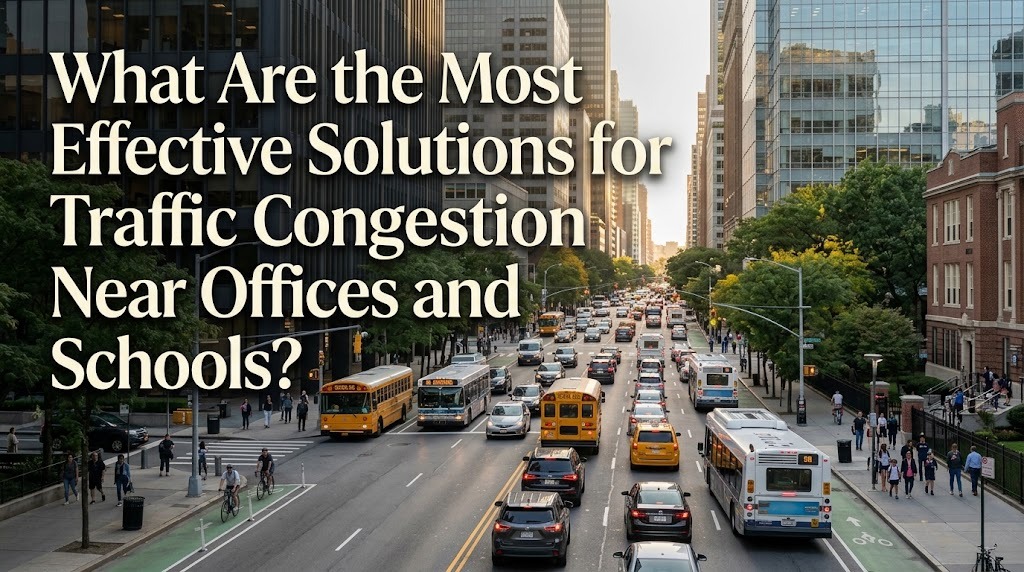
Traffic congestion near offices and schools is a common problem in growing cities, especially during morning arrival times and afternoon dismissal periods. Large numbers of employees, students, parents, and public transportation vehicles often use the same roads within a short period. This situation can create long queues, increase travel times, and make roads less safe for pedestrians. Effective solutions require better traffic management, improved transportation options, and cooperation between local governments, schools, businesses, and road users.
IMPROVING TRAFFIC MANAGEMENT AROUND BUSY AREAS
One effective way to reduce congestion near offices and schools is to improve traffic management around entrances, exits, and nearby intersections. Traffic officers can help direct vehicles during peak hours, prevent illegal stopping, and keep intersections clear. Properly timed traffic signals can also improve vehicle movement and reduce unnecessary waiting. These measures are especially useful at locations where several busy roads meet or where vehicles frequently turn into school and office entrances.
Cities should also establish clear pickup and drop-off zones to prevent vehicles from stopping in the middle of busy roads. Schools can organize separate entry and exit points where space permits, while offices can manage parking access to prevent queues from extending onto public streets. Authorities should enforce parking regulations and remove obstructions that reduce road capacity. With consistent planning and enforcement, these measures can improve traffic flow and make busy areas safer.
INTRODUCING FLEXIBLE WORKING AND SCHOOL SCHEDULES
Many traffic problems occur because employees and students travel at almost the same time. When schools begin classes and offices start working during the same morning period, road demand can rise sharply. Flexible working hours and staggered school schedules can help distribute these journeys across a longer period. Even modest differences in starting times may reduce the number of vehicles arriving simultaneously at busy locations.
Employers can allow suitable employees to start earlier or later, while schools can consider adjusting arrival and dismissal schedules based on local traffic conditions. Remote work may also reduce commuting demand for jobs that can be performed outside the office. However, schedule changes should consider family responsibilities, public transportation timetables, and employees' working conditions. Coordinated scheduling can provide a practical way to reduce congestion without requiring expensive road construction.
ENCOURAGING PUBLIC TRANSPORTATION AND CARPOOLING
Public transportation can reduce congestion by moving many passengers using fewer vehicles. Buses and trains can transport large numbers of commuters who would otherwise travel separately by car or motorcycle. However, these services must be reliable, affordable, safe, and convenient to encourage regular use. Direct routes to business districts and educational areas can make public transportation a practical alternative for daily travel.
Carpooling is another useful option, particularly for employees who live near one another or students whose families follow similar routes. Sharing a vehicle reduces the number of separate trips needed to transport the same group of people. Offices can support carpooling through designated parking spaces, while schools can coordinate safe arrangements for families who choose to share rides. Combining these options with convenient pedestrian access can reduce the number of vehicles around busy entrances.
DEVELOPING SAFE PICKUP ZONES AND PEDESTRIAN FACILITIES
Poorly organized pickup and drop-off activities can cause serious congestion near schools and offices. Parents may stop along narrow roads while waiting for students, while ride-hailing vehicles and taxis may occupy valuable road space. These activities can block moving traffic and create unsafe conditions for pedestrians. Establishing designated pickup and drop-off zones helps separate waiting vehicles from through traffic and makes passenger movement more orderly.
Schools and local authorities should also provide safe sidewalks, pedestrian crossings, clear signs, and suitable waiting areas. Where possible, separate pedestrian routes can prevent students from walking between moving vehicles. Staff members or trained crossing guards can assist children at busy crossing points during arrival and dismissal times. These improvements help reduce traffic conflicts while encouraging people to walk short distances instead of using vehicles for every journey.
USING SMART TECHNOLOGY AND DATA-BASED PLANNING
Modern technology can help authorities identify congestion patterns and respond more effectively. Intelligent traffic management systems can monitor vehicle movements, coordinate traffic signals, and provide real-time information about road conditions. Cameras and traffic sensors may help identify bottlenecks, while navigation applications can inform drivers about delays and alternative routes. These tools allow traffic managers to make decisions based on actual conditions rather than relying entirely on fixed schedules.
Schools and offices can also use digital systems to manage vehicle access, communicate arrival instructions, and reduce unnecessary waiting. For example, schools can notify parents when students are ready for pickup, helping reduce the time vehicles spend waiting near entrances. Traffic data collected over several weeks can reveal the busiest periods and locations, supporting better scheduling and infrastructure decisions. Technology works best when combined with effective enforcement, public transportation improvements, and clear communication with road users.
KESIMPULAN
The most effective solutions for traffic congestion near offices and schools combine better traffic management, flexible schedules, reliable public transportation, organized pickup zones, and smart technology. These measures address different causes of congestion and can be adapted to the needs of each location. Improving pedestrian safety is equally important because crowded entrances often create risks for students, employees, and other road users.
Governments, school administrators, employers, and communities should work together to implement practical and consistent solutions. Instead of relying only on wider roads, cities can reduce unnecessary vehicle trips and manage existing road space more efficiently. With proper planning and cooperation, areas around offices and schools can become safer, less congested, and easier to access.
Recent Posts

Bagaimana Sistem SKS pada Program Kuliah... 22.11.2026/54 View

How Does Technology Make Daily Evaluation... 21.11.2026/83 View

Apa Strategi Menghadapi Kesenjangan antara Kompetensi... 21.11.2026/82 View

Mengapa Inventaris Aset Penting bagi Kelancaran... 21.11.2026/78 View

When Should Musicians Join a Record... 21.11.2026/84 View
