

What Are the Most Famous Examples of Indonesian Cultural Heritage?
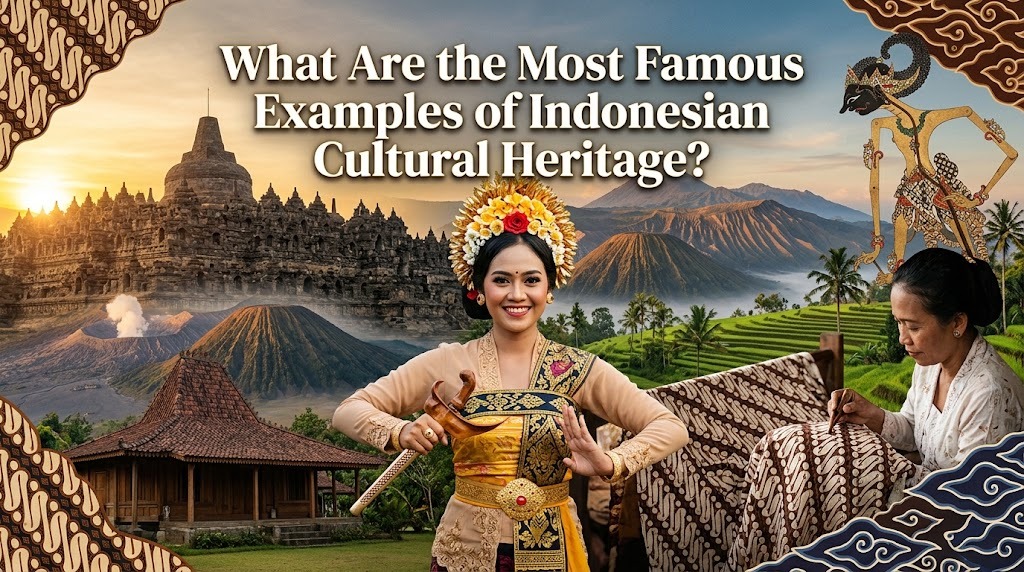
Indonesian cultural heritage reflects the country's rich history, diverse ethnic groups, and unique traditions. As an archipelago with thousands of islands, Indonesia has developed a wide variety of cultural expressions, including traditional dances, music, architecture, clothing, ceremonies, and local cuisine. These cultural treasures represent the identity and values of communities that have preserved their traditions for generations.
Some Indonesian cultural heritage has gained international recognition, while other traditions remain deeply rooted in local communities. Understanding these examples helps people appreciate Indonesia's cultural diversity and recognize the importance of protecting it for future generations.
WHAT IS INDONESIAN CULTURAL HERITAGE?
Indonesian cultural heritage refers to traditions, knowledge, artistic expressions, historical sites, and objects passed down from one generation to another. It includes tangible heritage, such as temples, traditional houses, historical buildings, and ancient artifacts. It also includes intangible heritage, such as traditional dances, music, languages, oral traditions, and customary ceremonies.
Cultural heritage is important because it connects people with their history and strengthens their sense of identity. It also provides knowledge about how earlier generations lived, worked, and understood the world around them. In Indonesia, cultural heritage reflects the influence of local traditions, religious beliefs, trade, migration, and interactions with other cultures. These influences have created a diverse cultural landscape that continues to shape Indonesian society today.
BATIK AS A FAMOUS INDONESIAN TEXTILE TRADITION
Batik is one of the most recognizable examples of Indonesian cultural heritage. It is a textile art that uses wax-resist dyeing techniques to create patterns on fabric. Traditional batik motifs often carry symbolic meanings related to nature, social values, philosophy, and local customs. Different regions have developed their own styles, colors, and patterns, including the well-known batik traditions of Yogyakarta, Solo, and Pekalongan.
In 2009, UNESCO recognized Indonesian batik as an Intangible Cultural Heritage of Humanity. This recognition highlighted the importance of batik as both an artistic tradition and a part of Indonesian social life. Today, batik is worn during formal occasions, cultural celebrations, and everyday activities. Its continued use by younger generations, designers, and local artisans helps keep this traditional craft alive.
WAYANG AS A TRADITIONAL PUPPET THEATER
Wayang is a traditional Indonesian performing art that combines storytelling, music, dialogue, and moral lessons. Two well-known forms are wayang kulit, which uses flat leather puppets, and wayang golek, which uses three-dimensional wooden puppets. Performances often feature stories from the Ramayana and Mahabharata, alongside local legends and narratives. A traditional wayang performance may involve a puppeteer known as a dalang, musicians, and a gamelan orchestra.
Wayang is especially associated with Java and Bali, although different communities have developed their own forms of puppet theater. The performances entertain audiences while exploring themes such as honesty, responsibility, loyalty, and the struggle between good and evil. UNESCO recognized Indonesian wayang as a Masterpiece of the Oral and Intangible Heritage of Humanity in 2003, and it was subsequently included in the Representative List of the Intangible Cultural Heritage of Humanity. Its preservation remains important because it combines artistic skills, oral traditions, music, and cultural knowledge.
GAMELAN AS A DISTINCTIVE TRADITIONAL MUSIC
Gamelan is a traditional musical ensemble found in several parts of Indonesia, particularly Java and Bali. It commonly features instruments such as metallophones, gongs, drums, and other percussion instruments. Some ensembles also include string instruments, flutes, and singers. The instruments work together to create layered rhythms and distinctive melodies that accompany ceremonies, dances, theater, and other cultural events.
Gamelan music differs between regions, with Javanese traditions often associated with a more subtle and flowing sound, while Balinese gamelan is widely known for its energetic rhythms and dynamic changes. Learning gamelan also teaches cooperation because musicians must listen carefully and coordinate their playing. The tradition is passed down through practice, community activities, and formal music education. In December 2021, UNESCO inscribed gamelan on its Representative List of the Intangible Cultural Heritage of Humanity, recognizing its cultural and artistic significance.
ANGKLUNG AS A UNIQUE BAMBOO MUSICAL INSTRUMENT
Angklung is a traditional musical instrument made from bamboo and strongly associated with West Java. It produces sound when its bamboo tubes are shaken, causing them to vibrate. Different angklung instruments produce different notes, so players often perform together to create complete melodies. This makes angklung a distinctive example of how natural materials can be transformed into musical instruments.
Angklung is frequently used in cultural performances, school activities, and community celebrations. Playing it in a group encourages teamwork because each participant contributes specific notes to the overall melody. UNESCO recognized Indonesian angklung as an Intangible Cultural Heritage of Humanity in 2010. This recognition has helped increase international awareness of the instrument and the traditional knowledge associated with its production and performance.
BOROBUDUR TEMPLE AS A HISTORICAL CULTURAL LANDMARK
Borobudur Temple is one of Indonesia's most famous historical monuments. Located in Magelang, Central Java, it is a large Buddhist temple complex built during the Sailendra dynasty, generally dated to the eighth and ninth centuries. Its structure features multiple levels, detailed stone reliefs, stupas, and numerous Buddha statues. The reliefs illustrate Buddhist teachings and provide valuable information about religious beliefs and aspects of life in the past.
Borobudur is recognized as a UNESCO World Heritage Site and attracts visitors from Indonesia and other countries. It represents the achievements of ancient Indonesian architecture, sculpture, and religious art. The monument is also an important place for Buddhist observances, including celebrations associated with Vesak. Protecting Borobudur requires careful conservation, responsible tourism, and cooperation among heritage authorities, local communities, and visitors.
PRAMBANAN TEMPLE AS A MASTERPIECE OF HINDU ARCHITECTURE
Prambanan is a major Hindu temple complex located near Yogyakarta and the border of Central Java. Built primarily during the ninth century, it is famous for its tall, pointed temple structures dedicated to Hindu deities, including Shiva, Vishnu, and Brahma. Its stone reliefs depict stories from Hindu epics, particularly the Ramayana. These carvings demonstrate the artistic skills and religious influences that shaped ancient Javanese civilization.
Prambanan is another Indonesian UNESCO World Heritage Site and an important destination for cultural tourism. Beyond its architectural value, the complex provides insight into the religious and political history of the region. The Ramayana ballet, which is performed in the surrounding area on selected occasions, introduces audiences to traditional storytelling through dance, music, and costumes. Conservation efforts are essential to protect the temples from environmental damage and ensure that future generations can appreciate their historical significance.
TRADITIONAL DANCES AS EXPRESSIONS OF REGIONAL IDENTITY
Traditional dances are important examples of Indonesia's intangible cultural heritage. Each region has developed distinctive movements, costumes, music, and performance styles that reflect local history and values. Examples include Saman dance from Aceh, Kecak from Bali, and Pendet from Bali. These performances are often presented during cultural festivals, welcoming ceremonies, religious events, and community celebrations.
Saman dance is especially known for its synchronized movements, rhythmic handclapping, and coordinated group performance. UNESCO inscribed Saman dance on the List of Intangible Cultural Heritage in Need of Urgent Safeguarding in 2011, highlighting the need to strengthen its transmission. Meanwhile, Balinese dances often combine expressive gestures, elaborate costumes, and music to communicate stories or religious meanings. Preserving traditional dance requires opportunities for young people to learn from experienced performers and participate in cultural activities.
TRADITIONAL HOUSES AS SYMBOLS OF INDONESIAN ARCHITECTURE
Traditional houses represent the architectural knowledge and cultural values of Indonesia's many ethnic communities. Their designs often respond to local climates, available materials, family structures, and social customs. Examples include Rumah Gadang from the Minangkabau people of West Sumatra, Tongkonan from Toraja in South Sulawesi, and the traditional houses of the Batak communities in North Sumatra. Each has distinctive architectural features and cultural meanings.
Rumah Gadang is known for its dramatic curved roof and its connection to Minangkabau matrilineal traditions. Tongkonan features a distinctive boat-shaped roof and serves as an important center for family identity and customary ceremonies. Traditional houses may also express social status, community relationships, and beliefs about the relationship between people and their environment. Protecting these buildings involves maintaining traditional construction skills and encouraging communities to preserve their architectural heritage while adapting to modern needs.
TRADITIONAL CEREMONIES AND LOCAL CUSTOMS
Traditional ceremonies are another significant part of Indonesian cultural heritage. They mark important stages of life, express gratitude, strengthen community relationships, and preserve local beliefs. Examples include the Ngaben cremation ceremony in Bali, the Sekaten celebration in Yogyakarta and Surakarta, and the Rambu Solo funeral tradition among the Toraja people. Each ceremony has its own procedures, symbolism, and relationship with local history and religious practices.
These customs are often organized through community participation and involve traditional clothing, music, food, and ritual objects. Rambu Solo, for example, is an elaborate Toraja funeral tradition that honors the deceased and brings relatives together. Ngaben is associated with Balinese Hindu beliefs about death and the spiritual journey. Although ceremonies may change over time, respectful documentation and continued community participation can help preserve their cultural meaning.
TRADITIONAL CUISINE AS PART OF INDONESIAN CULTURAL HERITAGE
Indonesian traditional cuisine reflects the country's regional diversity, agricultural resources, and historical connections through trade. Rice, spices, coconut, fish, and locally available vegetables are common ingredients in many regional dishes. Famous examples include rendang from West Sumatra, gudeg from Yogyakarta, pempek from Palembang, and papeda from parts of eastern Indonesia. Each dish has distinctive ingredients, preparation methods, and connections to local food traditions.
Rendang is known for its slow cooking process and rich mixture of spices, while gudeg is traditionally prepared using young jackfruit. Pempek is made primarily from fish and starch and is commonly served with a distinctive sweet, sour, and spicy sauce. Papeda is a sago-based staple food associated with communities in Papua and Maluku. Traditional cuisine deserves preservation because recipes and cooking knowledge can communicate family histories, regional identities, and relationships with local environments.
WHY IS INDONESIAN CULTURAL HERITAGE IMPORTANT TO PRESERVE?
Indonesian cultural heritage helps maintain national identity while recognizing the diversity of the country's communities. It allows younger generations to understand their history, learn traditional skills, and appreciate the experiences of earlier generations. Cultural heritage can also support local economies through responsible tourism, traditional crafts, cultural performances, and heritage-related businesses. When managed carefully, these activities create opportunities for local communities without reducing cultural traditions to commercial products.
However, cultural heritage faces several challenges, including environmental damage, urban development, declining interest among younger generations, and the loss of traditional knowledge. Historical buildings may deteriorate without proper maintenance, while traditional crafts and performances can disappear if fewer people learn them. Communities, educational institutions, governments, and cultural organizations can work together to document traditions, support practitioners, and provide learning opportunities. Digital archives and social media can also help share cultural knowledge, provided that communities' rights and cultural sensitivities are respected.
HOW CAN PEOPLE HELP PRESERVE INDONESIAN CULTURAL HERITAGE?
People can help preserve Indonesian cultural heritage by learning about local traditions and participating in cultural activities. Visiting museums, historical sites, and traditional craft centers can increase understanding of the country's history. Buying authentic products directly from local artisans can support traditional skills and provide income for the people who maintain them. Visitors should also respect local rules, religious practices, and restrictions when attending ceremonies or entering heritage sites.
Schools and families can introduce younger generations to regional languages, traditional music, dance, cooking, and oral histories. Communities can organize workshops and cultural festivals that encourage knowledge-sharing between older and younger participants. Governments and heritage organizations can contribute through conservation programs, documentation, education, and financial support for cultural practitioners. Most importantly, preservation should involve the communities that own and practice these traditions so that cultural heritage remains meaningful rather than simply becoming an attraction for visitors.
CONCLUSION
The most famous examples of Indonesian cultural heritage include batik, wayang, gamelan, angklung, Borobudur Temple, Prambanan Temple, traditional dances, traditional houses, local ceremonies, and regional cuisine. Each example represents a different aspect of Indonesia's history, creativity, beliefs, and community life. Some have received international recognition from UNESCO, while many others remain important within their local communities.
Preserving Indonesian cultural heritage is essential for maintaining cultural identity, sharing historical knowledge, and supporting future generations. Everyone can contribute by learning about traditions, respecting historical sites, supporting local artisans, and encouraging cultural education. Through cooperation between communities, governments, educational institutions, and individuals, Indonesia's cultural treasures can continue to thrive in a changing world.
Recent Posts

Bagaimana Sistem SKS pada Program Kuliah... 22.11.2026/47 View

How Does Technology Make Daily Evaluation... 21.11.2026/75 View

Apa Strategi Menghadapi Kesenjangan antara Kompetensi... 21.11.2026/77 View

Mengapa Inventaris Aset Penting bagi Kelancaran... 21.11.2026/73 View

When Should Musicians Join a Record... 21.11.2026/77 View
