

What Are the Most Famous Historic Buildings in Indonesia?
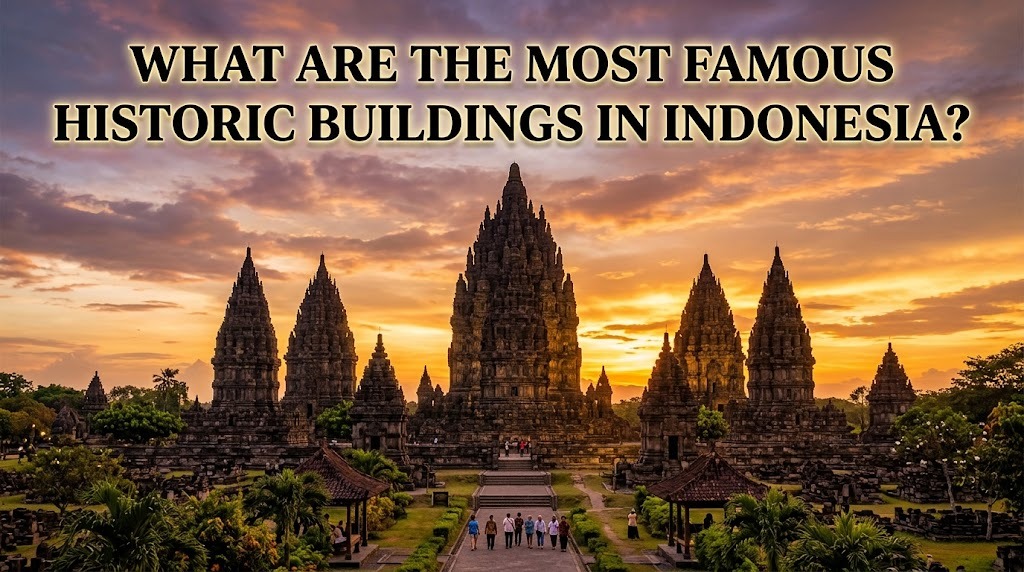
Indonesia has a rich history shaped by ancient kingdoms, religious traditions, colonial rule, and the development of the modern nation. These historical periods have left behind many remarkable structures, including temples, palaces, government buildings, and traditional architectural landmarks. Today, historic buildings in Indonesia help people understand the country's cultural diversity, architectural achievements, and historical development.
Some of Indonesia's most famous historic landmarks attract visitors because of their distinctive designs, historical significance, and cultural value. Places such as Borobudur Temple, Prambanan Temple, Lawang Sewu, and Gedung Sate represent different periods and architectural traditions. Exploring these famous historic buildings in Indonesia provides an opportunity to learn about the past while appreciating the importance of preserving cultural heritage.
BOROBUDUR TEMPLE: A MASTERPIECE OF BUDDHIST ARCHITECTURE
Borobudur Temple is one of Indonesia's most internationally recognized historical landmarks. Located in Magelang, Central Java, this large Buddhist monument was built around the eighth and ninth centuries during the Sailendra dynasty. Its stone structure features multiple terraces, sculpted relief panels, and numerous stupas arranged in a distinctive design.
The temple's reliefs illustrate Buddhist teachings and stories, making the monument valuable for understanding religious beliefs and artistic traditions from its period. Borobudur is also recognized as a UNESCO World Heritage Site. Today, it attracts visitors interested in history, architecture, spirituality, and cultural tourism. Its preservation helps protect an important part of Indonesia's ancient architectural heritage.
PRAMBANAN TEMPLE: A SYMBOL OF HINDU CULTURAL HERITAGE
Prambanan Temple is a major Hindu temple complex located near the border of Central Java and the Special Region of Yogyakarta. Built mainly in the ninth century, the complex is known for its tall, pointed temple structures and detailed stone carvings. The central temples are dedicated to Hindu deities, including Shiva, Vishnu, and Brahma.
Prambanan demonstrates the artistic skills and religious traditions that developed in Java during the period of ancient kingdoms. Its reliefs include stories associated with Hindu epics, providing insight into the cultural influences of the time. Like Borobudur, Prambanan is included on the UNESCO World Heritage List. The site remains an important destination for people who want to explore Indonesia's Hindu heritage and historic temple architecture.
LAWANG SEWU: A HISTORIC LANDMARK IN SEMARANG
Lawang Sewu is a well-known historic building in Semarang, Central Java. Its name means "a thousand doors" in Javanese, referring to the many doors and openings that characterize the building. Constructed during the Dutch colonial period for the Netherlands Indies railway administration, it reflects the development of railway infrastructure in Indonesia.
The building is recognized for its large windows, arched openings, spacious corridors, and distinctive colonial-era architecture. Its history is also connected to events surrounding Indonesia's struggle for independence. Today, Lawang Sewu functions as a historical attraction where visitors can learn about railway development and the city's past. Its continued preservation supports historical tourism in Semarang and helps maintain an important architectural landmark.
GEDUNG SATE: AN ICONIC BUILDING IN BANDUNG
Gedung Sate is one of Bandung's most recognizable architectural landmarks. Completed in 1924, the building was originally developed as an administrative complex during the Dutch colonial period. Its design combines European architectural influences with elements inspired by local and regional traditions.
The building's central tower is topped by a decorative ornament resembling a skewer of satay, which contributed to its popular name. Its balanced facade, open spaces, and carefully designed details make it a distinctive example of colonial-era architecture in Indonesia. Gedung Sate now serves as the office of the West Java provincial government and remains a prominent symbol of Bandung. Its continued use illustrates how historic government buildings can retain practical functions while preserving their architectural significance.
JAKARTA OLD TOWN: A WINDOW INTO THE COLONIAL PAST
Jakarta Old Town, also known as Kota Tua Jakarta, is a historic district containing buildings associated with the city's colonial-era development. During the Dutch colonial period, the area served as an important administrative and commercial center. Its historic structures reflect the influence of European urban planning and the development of trade in the region.
Several buildings in the district now serve as museums, cultural spaces, and public attractions. Fatahillah Square is a central gathering point surrounded by historic architecture, while museums provide information about Jakarta's history and cultural development. Although the district contains buildings with different histories and preservation conditions, it remains an important area for understanding the city's past. Protecting Jakarta's historic buildings helps maintain the district's character and supports cultural tourism.
CONCLUSION
The most famous historic buildings in Indonesia include Borobudur Temple, Prambanan Temple, Lawang Sewu, Gedung Sate, and the historic structures of Jakarta Old Town. Each landmark represents a different aspect of the country's history, from ancient religious traditions to colonial-era administration and urban development. Their architecture and historical associations provide valuable information about the people, beliefs, and events that shaped Indonesia.
Preserving these landmarks is essential for maintaining cultural identity and supporting historical education. Governments, local communities, heritage organizations, and visitors all have a role in protecting historic structures from damage and neglect. Through responsible conservation and sustainable tourism, Indonesia's cultural heritage can continue to be appreciated by future generations.
Recent Posts

Bagaimana Sistem SKS pada Program Kuliah... 22.11.2026/50 View

How Does Technology Make Daily Evaluation... 21.11.2026/80 View

Apa Strategi Menghadapi Kesenjangan antara Kompetensi... 21.11.2026/79 View

Mengapa Inventaris Aset Penting bagi Kelancaran... 21.11.2026/75 View

When Should Musicians Join a Record... 21.11.2026/80 View
