

What Are The Most Important Archaeological Discoveries In Indonesia?
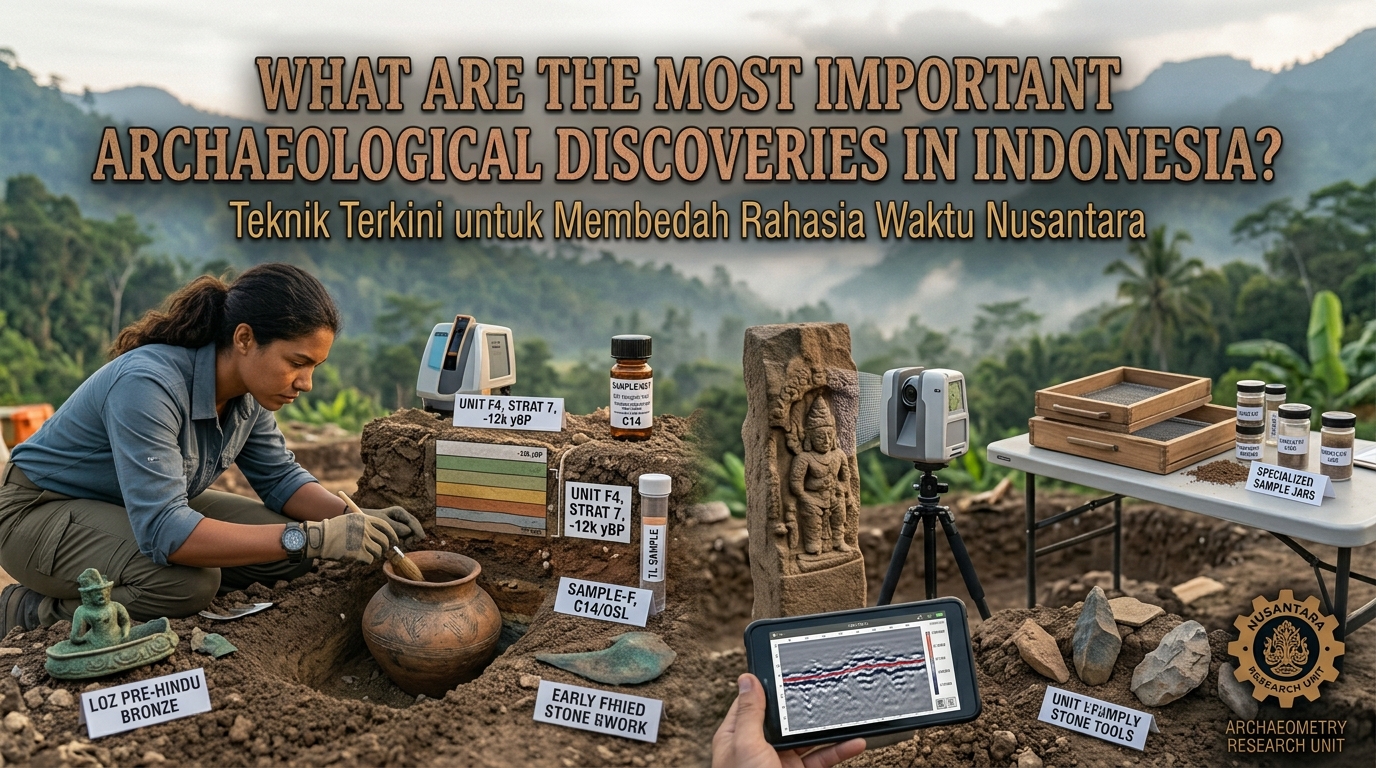
Indonesia is home to some of the world's most fascinating archaeological discoveries. Its thousands of islands contain evidence of ancient human ancestors, prehistoric communities, powerful kingdoms, and early maritime trade networks. From the remains of Homo erectus in Java to the magnificent temples of Borobudur and Prambanan, these discoveries reveal how people lived and developed across different periods. Archaeological research also helps explain Indonesia's connections with other parts of Asia and the wider world. Understanding the most important archaeological discoveries in Indonesia provides valuable insight into the country's rich history and cultural heritage.
SANGIRAN: EVIDENCE OF EARLY HUMAN EVOLUTION
Sangiran, located in Central Java, is one of the most important archaeological and paleoanthropological sites in the world. Researchers have discovered numerous human fossils, animal remains, and stone tools in the area. These findings provide evidence of early human life and environmental changes over a long period. Sangiran is especially known for discoveries associated with Homo erectus, an ancient human species that lived in parts of Asia. The fossils help scientists investigate human evolution, anatomy, and adaptation to changing environments.
The site's importance extends beyond individual fossil discoveries. Layers of geological deposits preserve evidence from different periods, allowing researchers to study how landscapes and living conditions changed over time. Sangiran also demonstrates the importance of combining fossil research with geology and archaeological analysis. Its international significance was recognized when it became a UNESCO World Heritage Site in 1996. Today, Sangiran remains a major source of evidence for understanding early human evolution in Southeast Asia.
TRINIL: THE DISCOVERY OF JAVA MAN
Trinil, located in East Java, became internationally famous following discoveries made by Dutch physician and researcher Eugène Dubois in the 1890s. The site produced fossils that included a skullcap and a thighbone attributed to Homo erectus, which Dubois originally named Pithecanthropus erectus. The discovery, commonly associated with Java Man, became an important part of early scientific debates about human evolution. It provided evidence that ancient human relatives had lived in Southeast Asia long before modern historical records. Trinil therefore holds a significant place in the development of paleoanthropology.
The fossils also helped encourage further research into human origins across Asia. Scientists have continued to examine the age, anatomy, and significance of early human remains from Java. Such studies show that human evolution cannot be understood through a single fossil or location alone. Researchers must compare evidence from multiple sites and consider the geological conditions in which fossils were preserved. Trinil remains a landmark in the history of human evolutionary research and demonstrates Indonesia's global scientific importance.
LIANG BUA: THE DISCOVERY OF HOMO FLORESIENSIS
Liang Bua, a limestone cave on Flores Island in East Nusa Tenggara, became famous after researchers discovered unusual ancient human remains there in 2003. The fossils belonged to a previously unknown human species named Homo floresiensis, which is often nicknamed the Hobbit because of its small body size. Researchers found that this species had a combination of distinctive physical characteristics that made it different from modern humans. The discovery challenged earlier assumptions about the diversity of ancient human species. It also showed that human evolution in Southeast Asia was more complex than scientists had previously understood.
Studies of the cave have provided evidence about the lives of early human populations and the environments they inhabited. Archaeologists have also examined stone tools and animal remains found at the site to investigate past activities. Dating the deposits is important because researchers need to establish when the fossils and associated materials were present. Liang Bua is a major discovery in human evolutionary science because it expanded knowledge of the different human species that once existed. It continues to attract scientific interest as researchers investigate the origins and development of Homo floresiensis.
PREHISTORIC CAVE ART IN SULAWESI
The limestone caves of Sulawesi contain some of the world's oldest known examples of figurative cave art. Archaeologists have discovered hand stencils, animal paintings, and images that may represent scenes involving humans and animals. These artworks provide evidence of the creative abilities and symbolic activities of prehistoric people. In 2024, researchers reported that a painting of a wild pig in the Leang Karampuang cave was at least approximately 51,200 years old, based on dating of mineral deposits associated with the artwork. This finding added important evidence to discussions about the early development of artistic expression.
Cave art offers more than visual representations of animals and people. It can help researchers investigate how prehistoric communities understood their surroundings and expressed ideas through images. However, the precise meanings of many paintings remain uncertain because their creators left no written explanations. Archaeologists use dating techniques, artistic comparisons, and environmental evidence to study these images. Sulawesi's prehistoric rock art is important because it demonstrates the early presence of sophisticated artistic traditions in the region and contributes to a broader understanding of human creativity.
BOROBUDUR TEMPLE: A MASTERPIECE OF BUDDHIST ARCHITECTURE
Borobudur Temple, located in Central Java, is one of Indonesia's most remarkable archaeological monuments. Built around the eighth and ninth centuries, this monumental Buddhist structure features multiple terraces, carved relief panels, and numerous stupas. Its architecture reflects the religious ideas, artistic skills, and engineering knowledge of the people who constructed it. The reliefs depict Buddhist teachings and scenes that provide insight into religious and cultural life during the period. Borobudur was designated a UNESCO World Heritage Site in 1991.
The monument also provides evidence of the cultural and religious connections that shaped ancient Java. Its construction demonstrates the ability of historical communities to organize labor, obtain materials, and create complex stone architecture. Archaeological and conservation research has helped experts understand the monument's design, deterioration, and restoration needs. Borobudur remains an important place of Buddhist worship as well as a major cultural destination. Its historical, religious, and architectural value makes it one of the most significant archaeological landmarks in Indonesia.
PRAMBANAN TEMPLE: EVIDENCE OF ANCIENT HINDU CULTURE
Prambanan Temple, located near Yogyakarta and Central Java's border, is a major Hindu temple complex built during the ninth century. The complex is especially known for its tall stone temples dedicated to Hindu deities, including Shiva, Vishnu, and Brahma. Its architecture and carved reliefs reveal the artistic achievements and religious traditions of ancient Java. The temple complex also reflects the influence of Hindu beliefs within Indonesian society during the period. Prambanan became a UNESCO World Heritage Site in 1991.
Archaeological research at Prambanan helps experts study temple construction, religious practices, and the political environment in which the complex developed. Its reliefs include scenes associated with the Ramayana, an important Hindu epic. The site has also experienced damage from earthquakes, weathering, and other environmental factors, making conservation essential. Restoration work requires careful documentation and specialized knowledge to protect the surviving structures. Prambanan is valuable evidence of Indonesia's religious diversity and architectural history, especially when studied alongside Buddhist monuments such as Borobudur.
TROWULAN: THE REMAINS OF THE MAJAPAHIT KINGDOM
Trowulan, in East Java, is widely associated with the former center of the Majapahit Kingdom, one of the most influential kingdoms in Indonesian history. Archaeological remains in the area include temple structures, bathing places, gates, canals, and residential features. Researchers have also found pottery, coins, and other artifacts that provide clues about everyday life and economic activity. These discoveries help explain how the settlement developed and how its inhabitants used the surrounding landscape. Trowulan is therefore an important source of evidence about the political and cultural history of medieval Java.
The archaeological remains also provide insight into craft production, trade, water management, and urban planning. Comparing these findings with written sources helps researchers evaluate descriptions of Majapahit society and its regional connections. However, not every surviving structure can be assigned a precise function or date without further evidence. Continued excavation, documentation, and conservation are necessary to improve understanding of the site. Trowulan helps researchers reconstruct the development of a major Javanese kingdom and the communities that supported its political and economic life.
ANCIENT MARITIME TRADE AND SHIPWRECK DISCOVERIES
Indonesia's position between the Indian and Pacific Oceans made it an important part of historical maritime trade networks. Archaeological discoveries from shipwrecks and coastal settlements provide evidence of exchanges involving ceramics, metals, spices, and other valuable goods. One well-known example is the Belitung shipwreck, discovered off Belitung Island in the 1990s. The wreck contained a large collection of Tang Dynasty Chinese ceramics and other objects associated with maritime commerce around the ninth century. Its cargo provided important evidence of long-distance trade across the Indian Ocean.
Shipwreck archaeology helps researchers investigate how goods moved between regions and what types of vessels were used for trade. The arrangement of cargo, construction of the ship, and origins of its objects can reveal information about trading practices and cultural connections. Such discoveries also show that the Indonesian archipelago was not isolated from international developments. Instead, its islands were connected to extensive networks linking Asia and other regions. Maritime archaeological discoveries help explain Indonesia's historical importance as a crossroads of trade, travel, and cultural exchange.
WHY ARCHAEOLOGICAL DISCOVERIES IN INDONESIA MATTER
Indonesia's archaeological discoveries contribute to understanding human evolution, prehistoric creativity, religious development, and international trade. Fossil sites such as Sangiran and Trinil provide evidence about ancient human populations, while Liang Bua has expanded knowledge of human diversity. Cave art in Sulawesi reveals early artistic traditions, and monumental sites such as Borobudur and Prambanan demonstrate sophisticated architecture and religious expression. Meanwhile, Trowulan and shipwreck discoveries help explain historical kingdoms and maritime connections. Together, these findings reveal the remarkable diversity of Indonesia's past.
Protecting archaeological sites is essential because their evidence can be damaged by looting, construction, environmental changes, and uncontrolled tourism. Researchers must document discoveries carefully and use scientific methods to test interpretations. Local communities also play an important role in safeguarding heritage and passing historical knowledge to future generations. Responsible tourism and effective conservation can help ensure that these places remain accessible without being damaged. Preserving archaeological heritage protects Indonesia's history and contributes to global knowledge of the human past.
CONCLUSION
The most important archaeological discoveries in Indonesia reveal a rich history stretching from early human evolution to powerful kingdoms and extensive maritime trade. Sangiran, Trinil, Liang Bua, Sulawesi's cave art, Borobudur, Prambanan, and Trowulan each provide different evidence about how people lived and developed. Shipwreck discoveries further demonstrate Indonesia's long-standing connections with international trading networks. These findings help researchers understand cultural change, human creativity, and the development of civilizations across the archipelago. By continuing archaeological research and protecting historical sites, Indonesia can preserve its cultural heritage for future generations while contributing to a deeper understanding of world history.
Recent Posts

Bagaimana Sistem SKS pada Program Kuliah... 22.11.2026/50 View

How Does Technology Make Daily Evaluation... 21.11.2026/79 View

Apa Strategi Menghadapi Kesenjangan antara Kompetensi... 21.11.2026/79 View

Mengapa Inventaris Aset Penting bagi Kelancaran... 21.11.2026/75 View

When Should Musicians Join a Record... 21.11.2026/80 View
