

What Are the Most Popular Types of Event Businesses?
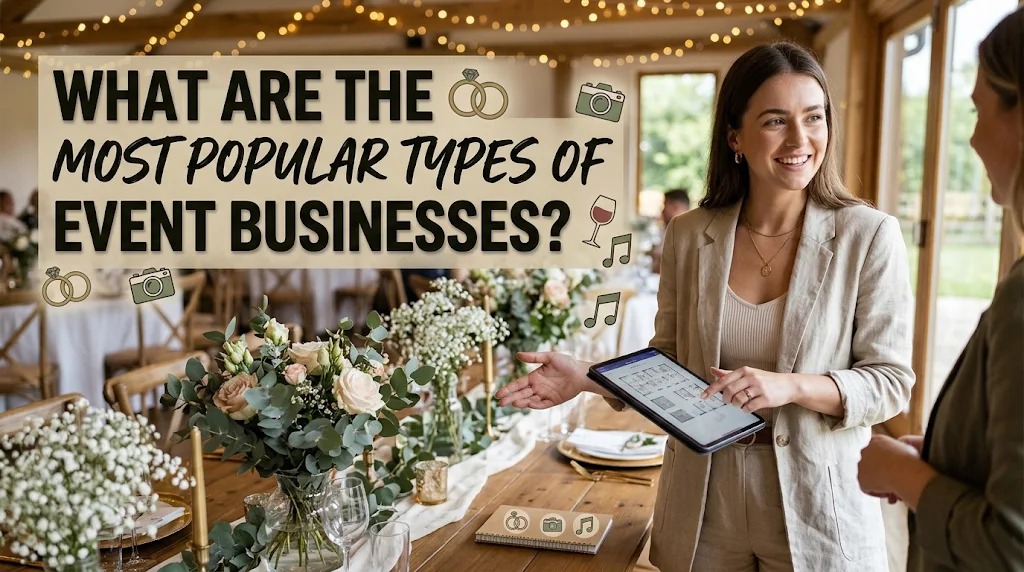
The event industry offers various business opportunities for entrepreneurs who enjoy planning activities and creating memorable experiences. Individuals, companies, educational institutions, and communities regularly organize events that require professional preparation and coordination. These needs create opportunities for businesses that provide event-related services. However, not every event business offers the same services or targets the same customers. Some focus on private celebrations, while others specialize in corporate functions, entertainment, or equipment rental. Understanding the different types of event businesses can help entrepreneurs choose a suitable business model based on their interests, skills, and available resources.
WEDDING PLANNING BUSINESS
A wedding planning business focuses on helping couples organize their wedding celebrations. Its services may include selecting venues, arranging decorations, coordinating catering, managing invitations, and preparing event schedules. Wedding planners also communicate with vendors to ensure that different parts of the celebration work together. Their main responsibility is to help couples manage the planning process and create an event that reflects their preferences.
This business requires strong organizational skills, attention to detail, and effective communication. Wedding arrangements often involve several decisions, deadlines, and service providers. Planners must understand the couple's expectations and work within the agreed budget. Building relationships with photographers, decorators, caterers, and venue managers can also improve service quality and create more opportunities for collaboration.
CORPORATE EVENT MANAGEMENT BUSINESS
A corporate event management business organizes activities for companies, institutions, and professional organizations. Common projects include conferences, seminars, workshops, product launches, company anniversaries, and networking events. These activities often have specific objectives, such as introducing a product, sharing information, strengthening business relationships, or improving employee engagement. Therefore, event organizers must understand both the client's requirements and the purpose of the event.
Professional coordination is essential because corporate events usually involve formal schedules and multiple participants. Organizers may handle venue arrangements, registration, presentation equipment, catering, transportation, and technical support. They also need to communicate with company representatives and external vendors throughout the preparation process. Reliable planning helps businesses deliver professional experiences and achieve their event objectives.
PARTY PLANNING AND PRIVATE EVENT BUSINESS
A party planning business specializes in organizing personal celebrations and social gatherings. Its services may cover birthday parties, graduation celebrations, engagement parties, family gatherings, and other special occasions. Customers often need assistance with themes, decorations, entertainment, catering, and event schedules. This creates opportunities for entrepreneurs who enjoy creative work and direct interaction with customers.
The business can be developed through different service packages based on event size and customer budgets. For example, a simple package may include decoration and basic coordination, while a more complete package may cover venue selection and entertainment arrangements. Understanding customer preferences is important because every celebration has different expectations. A creative concept combined with careful preparation can help a party planning business stand out in a competitive market.
EXHIBITION AND TRADE SHOW ORGANIZATION
An exhibition and trade show business focuses on organizing events where companies, institutions, or individuals display products, services, and information. These events may include business exhibitions, educational fairs, career expos, product showcases, and industry trade shows. Organizers must coordinate exhibitors, visitors, venue management, booth arrangements, promotional activities, and event schedules. Their work helps create an environment where participants can present their offerings and connect with potential customers or partners.
This type of business requires planning on a larger scale because exhibitions may involve many participants and different operational requirements. Organizers need to prepare suitable layouts, manage registration, coordinate technical facilities, and provide clear information to exhibitors. Marketing is also important to attract visitors and encourage participation. Successful exhibitions depend on effective coordination and a clear understanding of the event's purpose.
EVENT EQUIPMENT RENTAL AND DECORATION BUSINESS
An event equipment rental business provides essential items that customers and event organizers need for different occasions. Common rental products include tables, chairs, tents, stages, lighting systems, sound equipment, and presentation facilities. Instead of purchasing every item, customers can rent equipment according to their event requirements. This business can serve weddings, seminars, exhibitions, concerts, and community celebrations.
Meanwhile, an event decoration business focuses on creating attractive event spaces through visual concepts and design arrangements. Its services may include stage decoration, floral arrangements, lighting concepts, backdrops, table settings, and themed installations. Entrepreneurs can specialize in decoration or combine it with equipment rental to provide more comprehensive services. Proper inventory management, equipment maintenance, creative design, and reliable delivery are important for maintaining customer satisfaction.
CONCLUSION
There are several popular types of event businesses, including wedding planning, corporate event management, party planning, exhibition organization, equipment rental, and event decoration. Each business model serves different customer needs and requires specific skills, resources, and operational strategies. Entrepreneurs should consider their interests, experience, startup budget, and local market demand before choosing a business category. Starting with a focused service can make it easier to build a portfolio and establish a professional reputation. With effective planning and consistent service quality, an event business can develop and reach a wider market.
Recent Posts

Bagaimana Sistem SKS pada Program Kuliah... 22.11.2026/35 View

How Does Technology Make Daily Evaluation... 21.11.2026/69 View

Apa Strategi Menghadapi Kesenjangan antara Kompetensi... 21.11.2026/69 View

Mengapa Inventaris Aset Penting bagi Kelancaran... 21.11.2026/67 View

When Should Musicians Join a Record... 21.11.2026/68 View
