

What Are the Most Relevant Lecturer Seminar Topics in Modern Education?
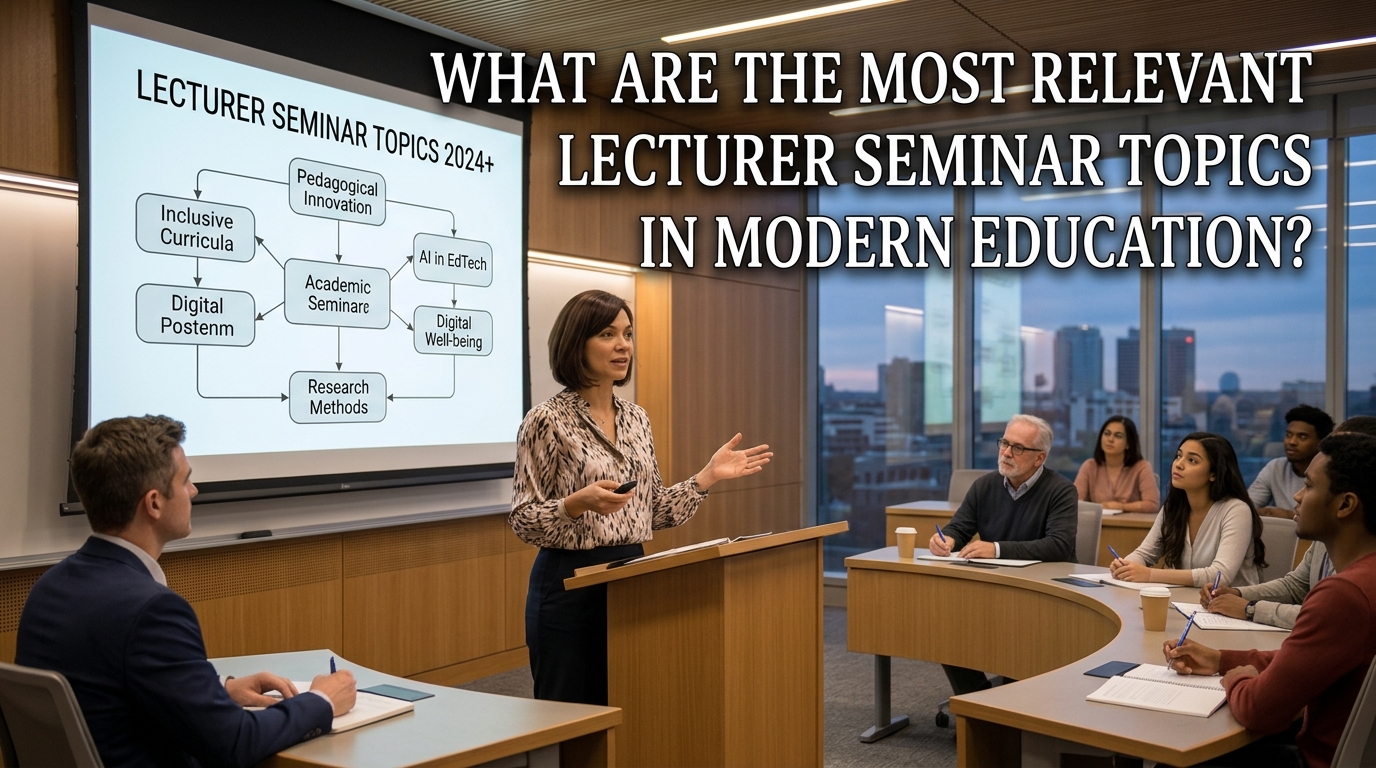
Modern education continues to evolve as technology advances, student needs change, and new research influences teaching practices. Lecturers must continually update their knowledge and skills to provide effective learning experiences and maintain academic standards. Lecturer seminars offer valuable opportunities to explore new ideas, exchange professional experiences, and discuss solutions to educational challenges. Choosing relevant seminar topics helps lecturers improve their teaching competencies, strengthen research activities, and adapt to developments in higher education.
WHY ARE LECTURER SEMINAR TOPICS IMPORTANT IN MODERN EDUCATION?
Relevant seminar topics help lecturers understand current developments and identify practical ways to improve their academic responsibilities. Higher education institutions increasingly emphasize critical thinking, digital literacy, collaboration, and student-centered learning. Seminars provide a space for educators to discuss these priorities and learn from experts and colleagues. They can also help lecturers recognize challenges that require new approaches or updated knowledge.
Selecting appropriate topics ensures that professional development activities address real educational needs. For example, a seminar on digital assessment can help lecturers explore ways to evaluate student progress more effectively. A discussion about inclusive education may introduce strategies for supporting students with different learning needs. Relevant and practical seminar topics make professional learning more meaningful for lecturers and their institutions.
EDUCATIONAL TECHNOLOGY AND ARTIFICIAL INTELLIGENCE
Educational technology is one of the most relevant topics for lecturer seminars because digital tools are increasingly used in teaching, assessment, and academic administration. Lecturers can explore learning management systems, interactive applications, online collaboration tools, and digital assessment platforms. These technologies may improve access to learning resources and support more flexible teaching methods. Seminars can also demonstrate how to select tools based on learning objectives rather than using technology simply because it is available.
Artificial intelligence is another important subject in modern education. Lecturers need to understand its potential applications, limitations, and ethical implications in academic settings. Seminar discussions can address responsible AI use, student data privacy, academic integrity, and ways to verify AI-generated information. Digital literacy and responsible AI integration help lecturers make informed decisions about technology while maintaining educational quality.
STUDENT-CENTERED LEARNING AND INNOVATIVE TEACHING METHODS
Student-centered learning focuses on helping students participate actively in their education rather than relying entirely on lectures and memorization. Seminar topics may include project-based learning, problem-based learning, case studies, collaborative activities, and flipped classrooms. These approaches can encourage students to analyze information, solve problems, and connect theoretical knowledge with practical situations. Lecturers can discuss how to select suitable methods for different subjects and learning objectives.
Innovative teaching methods also require careful planning and evaluation. Lecturers should consider class size, available resources, student readiness, and the time needed for activities. Seminars can provide opportunities to share classroom experiences and examine evidence about which approaches work in particular contexts. Active learning and meaningful student participation are important considerations when developing effective teaching practices.
CURRICULUM DEVELOPMENT AND LEARNING OUTCOMES
Curriculum development is an important seminar topic because academic programs must remain relevant to disciplinary knowledge, professional expectations, and students' learning needs. Lecturers can discuss how to establish clear learning outcomes, organize course content, and align teaching activities with assessment methods. These discussions can help educators identify gaps in existing curricula and improve the relationship between academic theory and practical skills.
Modern curriculum development also involves reviewing course materials regularly and considering feedback from students, graduates, and relevant professional communities. Seminars can help lecturers explore interdisciplinary learning, competency-based education, and approaches to curriculum evaluation. Any changes should remain consistent with institutional policies and applicable academic standards. Clear learning outcomes and curriculum alignment help ensure that educational programs provide coherent and relevant learning experiences.
RESEARCH METHODOLOGY AND ACADEMIC PUBLICATION
Research remains a central responsibility for many lecturers, making research methodology an essential seminar topic. Sessions can cover research design, data collection, statistical analysis, qualitative methods, and the interpretation of findings. Lecturers can also learn how to formulate research questions and choose methods that suit their research objectives. Discussions with experienced researchers may help participants recognize methodological weaknesses and improve their research plans.
Academic publication is another useful area for professional development. Lecturers may explore manuscript preparation, citation practices, journal selection, peer review, and research ethics. Seminars should also address plagiarism prevention, transparent reporting, and the responsible use of research data. Strong research skills and ethical publication practices help lecturers produce credible academic work and contribute responsibly to the development of knowledge.
INCLUSIVE EDUCATION AND STUDENT WELL-BEING
Inclusive education focuses on creating learning environments where students with different abilities, backgrounds, and learning needs can participate meaningfully. Lecturer seminars can introduce accessible teaching materials, flexible instructional approaches, inclusive classroom communication, and appropriate learning support. These topics help lecturers recognize barriers that may prevent some students from engaging fully in academic activities. They also encourage educators to evaluate whether their teaching practices provide fair opportunities for learning.
Student well-being is closely connected to the quality of the learning environment. Seminars can discuss ways to support student engagement, manage academic pressure, communicate respectfully, and direct students to appropriate support services when needed. Lecturers should understand the boundaries of their professional roles and follow institutional procedures when serious concerns arise. Inclusive teaching and student support can contribute to a more respectful, accessible, and supportive educational environment.
ASSESSMENT METHODS AND EFFECTIVE FEEDBACK
Assessment methods help lecturers determine whether students have achieved the intended learning outcomes. Relevant seminar topics include formative assessment, performance-based assessment, project evaluation, digital testing, and the development of clear grading criteria. Lecturers can examine the strengths and limitations of different approaches and discuss how to make assessments fair, valid, and consistent. These discussions are particularly useful when courses aim to measure practical skills as well as theoretical understanding.
Effective feedback is equally important because it helps students recognize their strengths and improve areas of difficulty. Seminars can explore how to provide feedback that is specific, timely, constructive, and connected to learning objectives. Lecturers can also discuss ways to use assessment results to adjust their teaching strategies. Fair assessment and constructive feedback support student progress and help lecturers improve the effectiveness of their courses.
ACADEMIC LEADERSHIP AND PROFESSIONAL DEVELOPMENT
Academic leadership is a valuable seminar topic for lecturers who coordinate programs, supervise research, manage academic teams, or prepare for greater institutional responsibilities. Sessions may cover communication, teamwork, conflict resolution, strategic planning, and academic decision-making. These skills can help lecturers collaborate effectively and contribute to institutional improvement. Leadership discussions can also address how to support colleagues and encourage constructive professional relationships.
Professional development should continue throughout a lecturer's career. Seminars can help educators assess their competencies, set realistic goals, and identify opportunities for further learning. Mentoring, peer observation, and professional learning communities can reinforce the knowledge gained during formal events. Academic leadership and continuous professional development help lecturers prepare for changing responsibilities while supporting the broader goals of their institutions.
HOW TO CHOOSE THE MOST RELEVANT LECTURER SEMINAR TOPICS
Choosing the right topic begins with identifying the challenges and development needs of lecturers and their institutions. Organizers can collect feedback, review teaching evaluations, consult academic departments, and consider changes in research and educational practice. This information helps them prioritize topics that address genuine needs instead of following trends without a clear purpose. Seminar objectives should also be specific enough to guide the selection of speakers and learning activities.
The format and expected outcomes should match the selected topic. A seminar on digital teaching may benefit from practical demonstrations, while a research seminar may require presentations and detailed discussions. Organizers should evaluate participant feedback and consider whether lecturers apply the knowledge gained after the event. Needs-based planning and follow-up evaluation help ensure that seminar programs remain useful, relevant, and effective.
CONCLUSION
The most relevant lecturer seminar topics in modern education include educational technology, artificial intelligence, innovative teaching methods, curriculum development, research, inclusive education, assessment, and academic leadership. Each topic addresses different challenges faced by lecturers and offers opportunities to strengthen professional competencies. The best choices depend on institutional priorities, lecturers' development needs, and the intended learning outcomes.
Universities should regularly review seminar programs and encourage lecturers to apply new knowledge in their teaching and research activities. By combining relevant topics with practical learning and proper evaluation, institutions can make professional development more effective. Well-planned lecturer seminars can support continuous improvement, strengthen academic performance, and contribute to better educational experiences for students.
Recent Posts

Bagaimana Sistem SKS pada Program Kuliah... 22.11.2026/49 View

How Does Technology Make Daily Evaluation... 21.11.2026/77 View

Apa Strategi Menghadapi Kesenjangan antara Kompetensi... 21.11.2026/78 View

Mengapa Inventaris Aset Penting bagi Kelancaran... 21.11.2026/74 View

When Should Musicians Join a Record... 21.11.2026/79 View
