

What Are the Positive and Negative Effects of High Population Density?
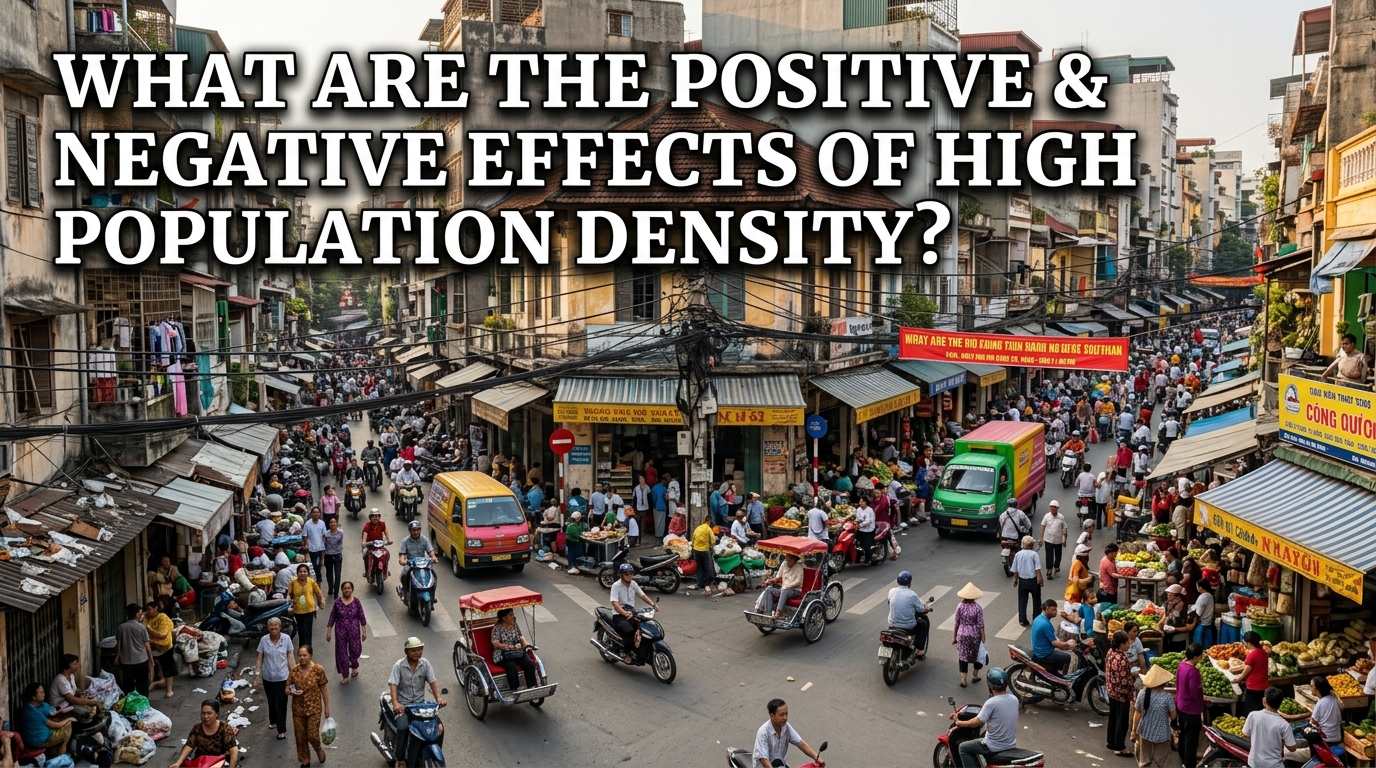
High population density is a common characteristic of modern cities and rapidly developing regions. It occurs when a large number of people live within a relatively small geographical area. This condition can influence many aspects of daily life, including economic activities, housing, transportation, healthcare, education, and environmental quality. While densely populated areas can create valuable opportunities for economic growth and social development, they can also generate serious challenges when infrastructure and public services cannot meet residents' needs.
Understanding the positive and negative effects of high population density is important for governments, urban planners, businesses, and communities. A large population concentrated in one area can support business growth, encourage innovation, and improve access to public facilities. However, excessive population concentration may also lead to traffic congestion, housing shortages, pollution, and social inequality. The overall impact depends largely on how effectively a region manages its population and available resources.
UNDERSTANDING HIGH POPULATION DENSITY
Population density refers to the number of people living within a specific unit of land area, commonly measured in people per square kilometer. It is calculated by dividing the total population of a region by its land area. For example, a city with 500,000 residents and an area of 100 square kilometers has a population density of 5,000 people per square kilometer. This measurement helps explain how concentrated a population is within a particular location.
High population density is commonly found in major cities where employment opportunities, educational institutions, healthcare facilities, and commercial activities attract residents. However, high density does not automatically mean that an area has poor living conditions. Some densely populated cities have excellent infrastructure, efficient public transportation, and well-organized housing systems. The quality of urban planning and resource management plays an important role in determining whether high population density becomes an advantage or a disadvantage.
POSITIVE EFFECTS OF HIGH POPULATION DENSITY ON ECONOMIC GROWTH
One of the main advantages of high population density is its ability to support economic growth. When many people live in the same area, businesses have access to a larger customer base and a more extensive labor force. This encourages companies to establish new branches, expand production, and introduce additional services. Industries such as retail, transportation, hospitality, healthcare, and finance can benefit from the concentration of consumers and workers.
High population density can also attract domestic and international investment. Businesses often prefer locations with developed infrastructure, convenient transportation, and access to skilled employees. These conditions can create new employment opportunities and increase economic activities within local communities. As businesses expand, residents may benefit from higher incomes, improved services, and greater opportunities for professional development.
BETTER ACCESS TO PUBLIC FACILITIES AND SERVICES
Densely populated areas often have better access to essential public facilities because a large number of residents creates strong demand for healthcare, education, and transportation. Governments and private companies may find it more practical to establish hospitals, schools, universities, and public transportation systems in areas with concentrated populations. As a result, residents can access important services without traveling long distances. This can improve convenience and support people's daily activities.
Another advantage is the possibility of providing public services more efficiently. For example, a well-developed public transportation network can serve thousands of passengers within a relatively small geographical area. Schools and healthcare facilities can also serve larger communities when their capacity is properly planned. Efficient infrastructure distribution can reduce service costs per resident and improve access to essential facilities.
ENCOURAGING INNOVATION AND SOCIAL INTERACTION
High population density can encourage innovation and creativity by bringing people with different skills, experiences, and backgrounds together. In densely populated cities, individuals have more opportunities to exchange ideas, develop professional relationships, and collaborate on new projects. Universities, research centers, technology companies, and business communities can benefit from this concentration of knowledge and talent. These interactions may lead to new products, services, and business opportunities.
Densely populated areas can also support greater social and cultural interaction. Residents may have more opportunities to participate in community activities, cultural events, educational programs, and professional networks. Exposure to different perspectives can improve communication and encourage cooperation among communities. When supported by inclusive public spaces and social programs, population concentration can contribute to a more dynamic and connected society.
NEGATIVE EFFECTS OF HIGH POPULATION DENSITY ON TRAFFIC AND TRANSPORTATION
One of the most visible disadvantages of high population density is traffic congestion. When many people live and work in the same area, the number of daily trips increases significantly. Roads may become overcrowded, especially during morning and evening rush hours. This condition can cause longer commuting times, higher fuel consumption, and delays in the delivery of goods and services.
Traffic congestion becomes more serious when road infrastructure and public transportation cannot accommodate the growing population. Residents may depend heavily on private cars and motorcycles if buses, trains, and other public transportation options are limited. The increased number of vehicles can also contribute to air and noise pollution. Without effective transportation planning, these problems can reduce productivity and negatively affect residents' quality of life.
HOUSING SHORTAGES AND RISING LIVING COSTS
Another negative effect of high population density is increasing pressure on the housing market. As more people move into a limited geographical area, the demand for residential properties rises. If housing construction cannot keep up with this demand, property prices and rental costs may increase. Low-income households often face greater difficulties finding affordable and suitable accommodation.
In some densely populated areas, housing shortages can encourage the development of overcrowded settlements with inadequate sanitation, limited access to clean water, and poor waste management. These conditions can increase health and safety risks for residents. Furthermore, higher demand for food, transportation, electricity, and other essential goods may increase household expenses. Affordable housing and proper urban development are therefore essential for managing the negative effects of population concentration.
ENVIRONMENTAL POLLUTION AND RESOURCE DEPLETION
High population density can place considerable pressure on the natural environment. A large number of residents generates more household waste, wastewater, and demand for electricity and clean water. If waste collection and sanitation facilities are insufficient, pollution can affect rivers, soil, and surrounding communities. Poor environmental management may also damage ecosystems and reduce the availability of natural resources.
Air pollution is another major concern, particularly in cities with heavy traffic and industrial activities. Vehicle emissions and factory operations can release pollutants that negatively affect public health. In addition, excessive construction and limited green spaces can increase urban temperatures and reduce natural cooling. Sustainable resource management, waste treatment, and environmental protection are necessary to maintain healthy living conditions in densely populated areas.
SOCIAL INEQUALITY AND PUBLIC HEALTH CHALLENGES
High population density can contribute to social inequality when economic opportunities and public services are not distributed fairly. Wealthier residents may have access to better housing, education, healthcare, and transportation, while disadvantaged communities may struggle to meet their basic needs. Competition for jobs and affordable housing can also become more intense. If these differences are not addressed, social tension and economic divisions may increase.
Public health can also be affected by overcrowded living conditions and inadequate sanitation. When many people live in poorly ventilated or overcrowded spaces, certain infectious diseases can spread more easily. Limited healthcare facilities may make it difficult for residents to receive timely medical treatment. In addition, constant exposure to traffic noise, pollution, and crowded environments can increase stress and affect mental well-being. Improving healthcare access and living conditions is essential to reducing these risks.
HOW TO MAXIMIZE THE BENEFITS AND REDUCE THE NEGATIVE EFFECTS
Managing high population density requires effective urban planning and cooperation between governments, businesses, and local communities. One important strategy is developing reliable public transportation systems to reduce dependence on private vehicles. Governments should also provide affordable housing, improve road networks, expand healthcare facilities, and ensure that educational institutions can accommodate growing communities. These improvements help cities serve larger populations without allowing infrastructure problems to become overwhelming.
Another important approach is promoting balanced regional development. Governments can encourage investment, create employment opportunities, and improve public services in smaller cities and rural areas. This can reduce excessive migration toward major metropolitan regions and support a more balanced population distribution. Furthermore, increasing green spaces, improving waste management, and protecting natural resources can make densely populated areas healthier and more sustainable. Long-term development planning is essential to ensure that population growth creates opportunities rather than unnecessary social and environmental pressure.
CONCLUSION
High population density has both positive and negative effects on society. On the positive side, it can encourage economic growth, create employment opportunities, improve access to public facilities, and support innovation and social interaction. On the negative side, excessive population concentration can contribute to traffic congestion, housing shortages, environmental pollution, social inequality, and public health challenges.
The overall impact of high population density depends on how effectively governments and communities manage available resources and infrastructure. Good urban planning, affordable housing, efficient public transportation, equal access to public services, and environmental protection are essential for maintaining a healthy and productive population. With the right strategies, densely populated areas can become more sustainable, economically productive, and comfortable places to live.
Recent Posts

Bagaimana Sistem SKS pada Program Kuliah... 22.11.2026/33 View

How Does Technology Make Daily Evaluation... 21.11.2026/67 View

Apa Strategi Menghadapi Kesenjangan antara Kompetensi... 21.11.2026/67 View

Mengapa Inventaris Aset Penting bagi Kelancaran... 21.11.2026/65 View

When Should Musicians Join a Record... 21.11.2026/66 View
