

What Are the Positive and Negative Effects of the Industrial Revolution on Society?
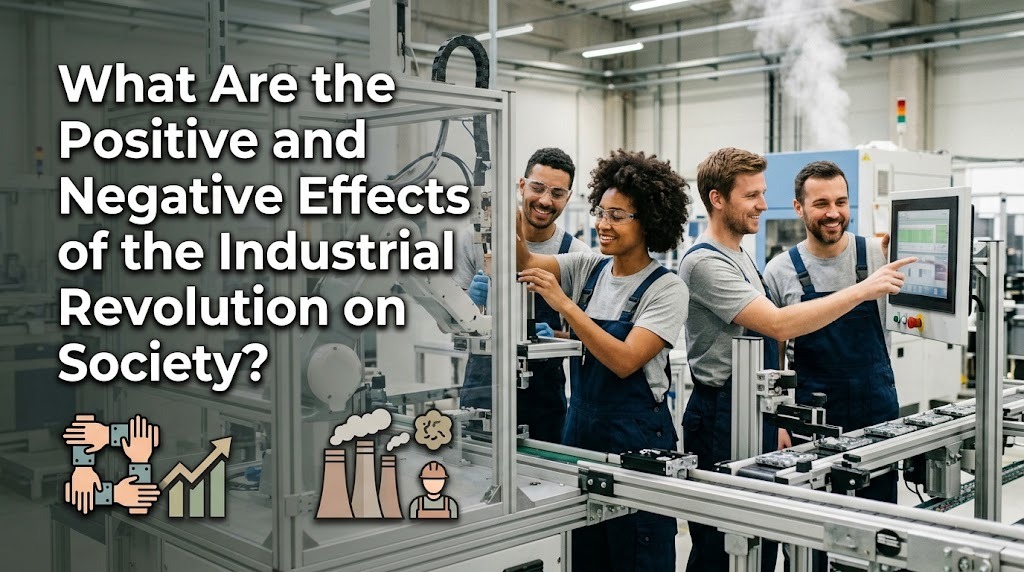
The Industrial Revolution has brought significant changes to human society by transforming how people work, produce goods, communicate, and live. Beginning in Great Britain in the late 18th century, this transformation introduced machines, factories, and new energy sources that gradually changed traditional economic activities. Over time, industrial development progressed from steam-powered machinery to electricity, computers, automation, and artificial intelligence. These innovations have helped societies increase productivity, improve transportation, and gain easier access to goods and services.
However, the Industrial Revolution has not produced benefits alone. Although technological progress has created new employment opportunities and supported economic growth, it has also contributed to environmental pollution, social inequality, and changes in traditional jobs. The effects vary depending on how governments, businesses, and communities respond to industrial development. Understanding the positive and negative effects of the Industrial Revolution is essential for making responsible decisions about technology, employment, and sustainable development.
ECONOMIC GROWTH AND INCREASED PRODUCTIVITY
One of the most significant positive effects of the Industrial Revolution is economic growth. Machines and modern production systems allow businesses to manufacture goods in larger quantities and often at lower costs than manual production. This increased productivity has supported the expansion of manufacturing, transportation, trade, and other economic activities. As industries grow, they can attract investment, develop new markets, and contribute to national income.
Industrial development has also encouraged innovation and business opportunities. Modern factories, digital platforms, and automated systems enable companies to improve efficiency and respond to customer needs more quickly. Consumers can access a wider range of products, while businesses can distribute goods to markets across different regions and countries. Nevertheless, economic benefits are not always distributed equally. Companies and individuals with greater access to capital, education, and technology may benefit more than those with limited resources. Therefore, economic growth needs to be accompanied by policies that encourage fair opportunities and inclusive development.
EMPLOYMENT OPPORTUNITIES AND CHANGING WORK PATTERNS
The Industrial Revolution has created many employment opportunities in manufacturing, engineering, transportation, construction, and business services. As industries expanded, workers gained access to jobs beyond traditional agriculture and small-scale production. Modern industrial development has also created new occupations in software development, data analysis, robotics, and cybersecurity. These changes allow people to pursue careers in sectors that did not exist in earlier industrial periods.
However, automation and artificial intelligence can reduce demand for certain repetitive tasks. Machines can perform some activities more quickly and consistently, potentially changing the responsibilities of workers or eliminating particular positions. Employees may need to learn new skills to remain competitive in a changing labor market. In addition, industrial workers have historically faced problems such as unsafe working conditions, excessive working hours, and inadequate protection, especially during the early stages of industrialization. Fair labor regulations, workplace safety standards, and accessible training programs are important for ensuring that technological progress benefits workers as well as businesses.
IMPROVEMENTS IN LIVING STANDARDS AND PUBLIC SERVICES
Industrial progress has helped improve many aspects of daily life. Mass production has made products such as clothing, household appliances, and communication devices more widely available. Advances in transportation have made travel and the distribution of goods more efficient, while developments in medicine and medical equipment have supported modern healthcare. Electricity and digital technology have also improved access to information, education, and essential services.
In today's society, the internet enables people to study remotely, communicate across long distances, and access various public and commercial services. Digital banking and online marketplaces can make financial transactions and shopping more convenient. These developments can save time and expand opportunities for people who previously faced geographical barriers. However, the benefits are not equally accessible to everyone. People in remote areas or those with limited financial resources may lack reliable internet access, modern equipment, or the skills needed to use digital services effectively. Expanding infrastructure and digital education can help reduce this gap.
ENVIRONMENTAL POLLUTION AND NATURAL RESOURCE DEPLETION
One of the major negative effects of the Industrial Revolution is environmental damage. Factories, power plants, and transportation systems can release air pollutants and greenhouse gases, particularly when they rely on fossil fuels. Industrial processes may also contaminate water and soil if waste is not treated properly. These problems can threaten human health, damage ecosystems, and contribute to climate change.
Industrial production also requires substantial amounts of energy and raw materials. Excessive extraction of minerals, deforestation, and the accumulation of waste can put pressure on natural resources. Modern technology can help reduce these effects through renewable energy, efficient machinery, recycling, and cleaner manufacturing processes. However, technological solutions must be supported by effective environmental regulations and responsible business practices. Sustainable industrial development aims to balance economic progress with environmental protection so that current needs can be met without compromising the well-being of future generations.
SOCIAL INEQUALITY AND URBANIZATION CHALLENGES
The Industrial Revolution has contributed to rapid urbanization, as people move from rural areas to cities in search of employment and better opportunities. This migration can support economic growth and expand access to education, transportation, and public services. Cities also provide spaces for businesses, innovation, and cultural exchange. When urban development is properly managed, it can improve living conditions and create stronger economic connections.
However, rapid urbanization can also cause overcrowding, housing shortages, traffic congestion, and pressure on public facilities. Industrial development may widen inequality when the benefits of economic growth are concentrated among business owners or highly skilled workers. People with limited education or access to employment may struggle to improve their living standards. Differences in wages, working conditions, and access to technology can further increase social divisions. Governments can address these challenges through affordable housing, accessible education, worker protection, public transportation, and policies that support disadvantaged communities.
TECHNOLOGICAL DEPENDENCE AND THE NEED FOR RESPONSIBLE INNOVATION
Modern industrial development has made society increasingly dependent on technology. Computers, connected devices, automated machinery, and artificial intelligence help people perform tasks efficiently and access information quickly. Businesses can use digital systems to manage operations, analyze customer behavior, and improve decision-making. These technologies can support innovation and help solve complex problems in areas such as healthcare, agriculture, and transportation.
Despite these advantages, excessive dependence on technology can create new risks. Cyberattacks, data breaches, online fraud, and privacy violations can affect individuals, companies, and public institutions. Automation may also create uncertainty for workers whose occupations are changing. Furthermore, unequal access to digital infrastructure can prevent some communities from benefiting fully from technological progress. To address these issues, society needs digital literacy, cybersecurity protection, ethical technology policies, and continuous education. Responsible innovation should improve human well-being rather than prioritize efficiency without considering social consequences.
CONCLUSION
The Industrial Revolution has had both positive and negative effects on society. Its positive contributions include economic growth, higher productivity, improved living standards, expanded employment opportunities, and better access to modern services. At the same time, industrial development has created challenges involving environmental pollution, social inequality, changing employment patterns, and technological dependence.
The overall impact of industrial progress depends on how technology is developed and managed. Governments, businesses, educational institutions, and individuals all have important roles in maximizing its benefits and reducing its risks. By investing in education, protecting workers, promoting environmental sustainability, and ensuring fair access to technology, society can build a future in which industrial innovation supports inclusive and sustainable development.
Recent Posts

Bagaimana Sistem SKS pada Program Kuliah... 22.11.2026/50 View

How Does Technology Make Daily Evaluation... 21.11.2026/79 View

Apa Strategi Menghadapi Kesenjangan antara Kompetensi... 21.11.2026/79 View

Mengapa Inventaris Aset Penting bagi Kelancaran... 21.11.2026/75 View

When Should Musicians Join a Record... 21.11.2026/80 View
