

What Are the Requirements for Lecturer Certification?
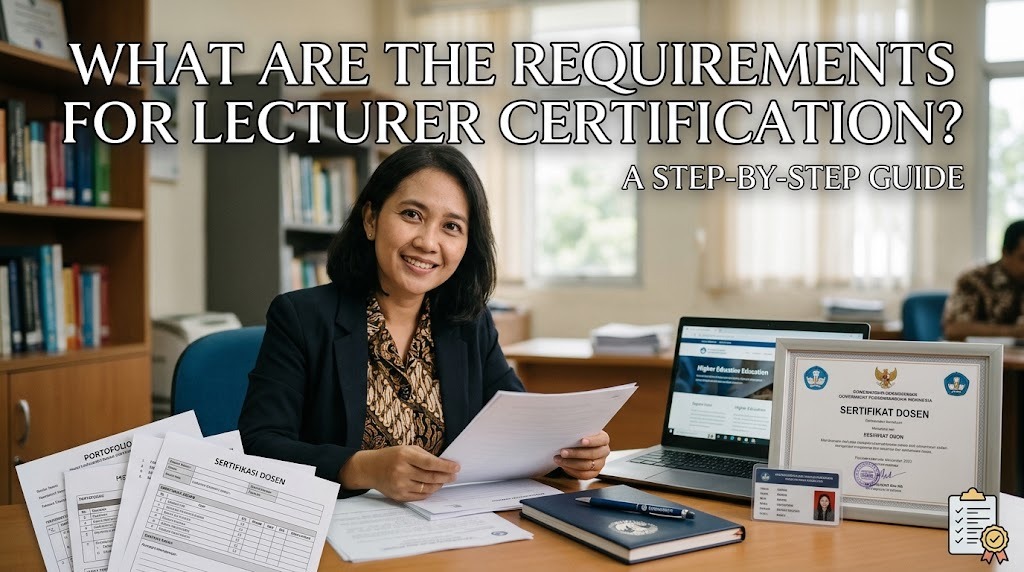
Lecturer certification requirements are a set of qualifications and conditions that educators must meet to receive professional recognition in higher education. These requirements are designed to ensure that lecturers have the academic background, professional competence, and experience needed to fulfill their responsibilities. In Indonesia, the certification process follows government regulations and official guidelines that may be updated periodically.
Understanding the requirements is important for lecturers who plan to apply for professional certification. Applicants need to review their academic qualifications, employment status, institutional records, and evidence of professional activities. Preparing these aspects carefully can help lecturers avoid administrative difficulties during the application process.
MEET THE REQUIRED ACADEMIC QUALIFICATIONS
One of the main requirements for lecturer certification is having the academic qualifications specified in the applicable regulations. Lecturers generally need to hold a recognized higher education degree that meets the requirements for their academic position and field of expertise. The relevance of their educational background may also be considered when evaluating their professional responsibilities.
Academic qualifications demonstrate that lecturers have completed the necessary formal education to teach at the higher education level. Applicants should ensure that their diplomas and other academic records are valid and properly documented. If there are differences in personal information across academic documents and institutional records, these should be addressed before the certification process begins.
HAVE AN ELIGIBLE EMPLOYMENT AND LECTURER STATUS
Another important aspect of the lecturer certification requirements is employment and lecturer status. Applicants must meet the conditions established for their lecturer category, including the applicable requirements concerning employment relationships and registration with the higher education system.
Institutional data must also be accurate and up to date. Information about the lecturer's identity, workplace, academic position, and employment status may be used during administrative verification. Therefore, applicants should coordinate with their university's academic or human resources administration to confirm that their records are complete and consistent with official requirements.
FULFILL THE REQUIRED ACADEMIC POSITION AND PROFESSIONAL EXPERIENCE
Depending on the certification program and regulations in effect, lecturers may need to hold a specified academic position or demonstrate relevant professional experience. Academic positions reflect a lecturer's responsibilities and career development within a higher education institution.
Teaching experience can also provide evidence of a lecturer's ability to manage learning activities and support student development. Applicants should review the current eligibility criteria to determine whether their academic position, length of service, and professional background meet the requirements. These conditions should not be assumed to be identical for every lecturer because certification policies may differ according to the applicable program.
PREPARE DOCUMENTS AND EVIDENCE OF PROFESSIONAL PERFORMANCE
Applicants need to prepare supporting documents that demonstrate their qualifications and academic activities. These may include educational certificates, lecturer identification records, employment information, and evidence of teaching, research, and community service. The exact documents depend on the official instructions for the relevant certification period.
Some procedures may also require a professional portfolio containing information about teaching performance, academic achievements, publications, and contributions to the institution or community. The portfolio helps present a broader picture of the lecturer's professional activities. Applicants should organize their evidence carefully and ensure that all submitted information is accurate and verifiable.
COMPLETE THE REQUIRED ASSESSMENT AND ADMINISTRATIVE PROCESS
Meeting the basic qualifications does not automatically result in certification. Lecturers must also complete the official certification process, which may include institutional verification, document submission, competency assessment, or other evaluation stages. The specific procedures depend on the regulations and technical guidelines applied during the relevant period.
Applicants should follow announcements from their universities and the government authorities responsible for higher education. They must pay attention to registration schedules, document formats, assessment instructions, and application deadlines. If corrections or additional information are requested, lecturers should complete them according to the official instructions to prevent delays in the evaluation process.
CONCLUSION
The requirements for lecturer certification generally involve academic qualifications, eligible employment and lecturer status, academic position or professional experience, supporting documents, and completion of the required assessment process. These conditions help ensure that lecturers demonstrate the competence and professionalism expected in higher education.
However, the exact requirements may change according to government regulations and the certification program being implemented. Lecturers should therefore verify the latest guidelines through their universities and official higher education authorities before applying. Careful preparation and accurate documentation can help applicants understand their eligibility and complete the certification process more systematically.
Recent Posts

Bagaimana Sistem SKS pada Program Kuliah... 22.11.2026/45 View

How Does Technology Make Daily Evaluation... 21.11.2026/73 View

Apa Strategi Menghadapi Kesenjangan antara Kompetensi... 21.11.2026/75 View

Mengapa Inventaris Aset Penting bagi Kelancaran... 21.11.2026/71 View

When Should Musicians Join a Record... 21.11.2026/75 View
