

What Are the Risks of Excessive Digital Technology Use in Educational Activities?
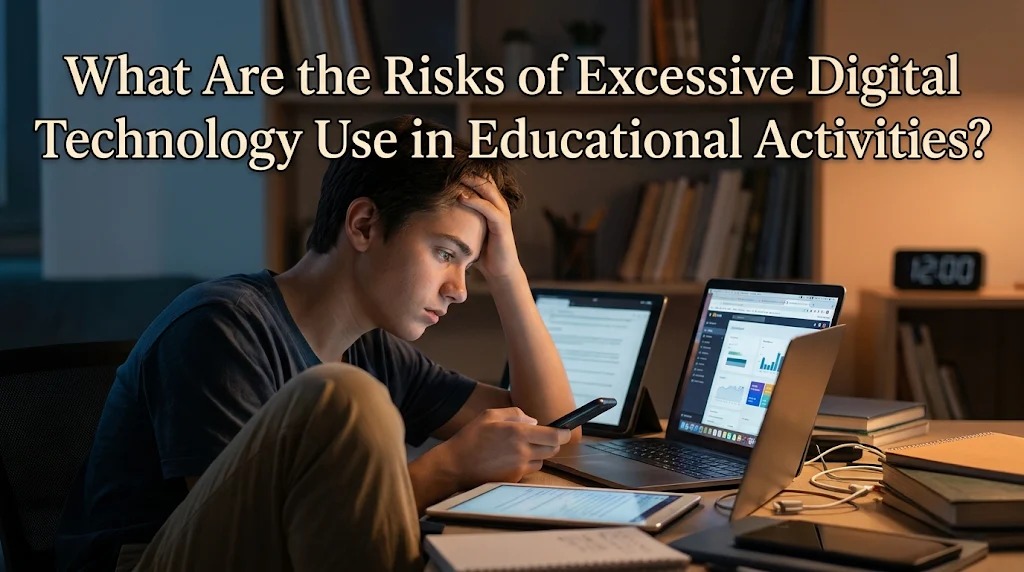
Digital technology has become an important part of modern education. Students and teachers use computers, smartphones, tablets, and online learning platforms to access information, complete assignments, and communicate during educational activities. These technologies provide many advantages, including flexible learning schedules, broader access to educational resources, and more interactive teaching methods. However, excessive use of digital technology can also create problems that affect students' academic performance, physical health, and social development.
The increasing dependence on digital devices makes it important for schools, teachers, and parents to understand the potential risks of technology-based education. Spending too much time in front of screens, experiencing online distractions, and depending heavily on digital tools can reduce learning effectiveness. Therefore, digital technology must be used wisely and balanced with traditional learning activities. Understanding these risks can help educational institutions create healthier and more productive learning environments.
REDUCING STUDENT CONCENTRATION AND LEARNING FOCUS
One of the most common risks of excessive digital technology use is reduced concentration during learning activities. Students who study using smartphones or computers may easily become distracted by social media notifications, online games, entertainment videos, and unrelated websites. These distractions can interrupt their attention and make it difficult to understand educational materials. As a result, students may spend more time studying without achieving the expected learning outcomes.
Frequent interruptions can also affect students' ability to process and remember information. When students repeatedly switch between learning applications and entertainment platforms, their attention becomes divided. They may struggle to complete assignments carefully or follow explanations during online classes. To prevent this problem, students should develop self-discipline by limiting unnecessary notifications, organizing study schedules, and using digital devices mainly for educational purposes during learning sessions.
CAUSING PHYSICAL HEALTH PROBLEMS
Excessive screen time can negatively affect students' physical health, especially when they spend long periods sitting in front of computers or looking at smartphones. Continuous screen exposure may cause digital eye strain, which can involve dry eyes, blurred vision, headaches, and eye discomfort. Poor sitting positions can also contribute to neck pain, shoulder tension, and back problems. These conditions may become more noticeable when students do not take regular breaks.
Another concern is reduced physical activity. Students who spend most of their free time using digital devices may have fewer opportunities to exercise, play outdoors, or participate in physical activities. Limited movement can negatively affect physical fitness and overall well-being. Students should therefore follow healthy screen habits, maintain appropriate sitting positions, adjust screen brightness, and take regular breaks. Balancing screen time and physical activity is important for maintaining a healthy learning routine.
INCREASING DEPENDENCE ON DIGITAL DEVICES
Another risk of excessive technology use is the possibility of becoming too dependent on digital devices. Students may begin to rely on search engines, educational applications, and artificial intelligence tools whenever they face academic difficulties. Although these resources can support learning, excessive dependence may reduce their willingness to think independently and solve problems without technological assistance. Over time, students may become less confident in completing tasks that require personal reasoning.
This problem can also affect students' ability to develop fundamental academic skills. For example, depending entirely on automatic calculators may reduce opportunities to practice mathematical reasoning, while copying AI-generated answers without understanding them can weaken writing and analytical abilities. Students need to use technology as a supporting resource rather than a replacement for their own thinking processes. Developing independent learning skills helps them maintain intellectual abilities while benefiting from modern educational tools.
REDUCING SOCIAL INTERACTION AND COMMUNICATION SKILLS
Digital learning platforms allow students to communicate through online discussions, video conferences, and messaging applications. However, excessive dependence on digital communication may reduce opportunities for direct social interaction. Students who spend most of their learning time behind screens may have fewer chances to practice face-to-face conversations and collaborate physically with classmates. This situation can limit opportunities to develop important interpersonal abilities.
Direct interaction plays an important role in developing empathy, teamwork, confidence, and effective communication. Through classroom discussions and group activities, students learn to listen to different opinions, express ideas clearly, and resolve disagreements. These experiences are difficult to replace completely with online communication. Schools should therefore balance digital learning with face-to-face interaction so students can develop both technological competencies and healthy social relationships.
EXPOSURE TO MISINFORMATION AND CYBERSECURITY THREATS
The internet provides access to extensive educational information, but not all available content is accurate or trustworthy. Students who lack sufficient digital literacy may accept misleading information, outdated explanations, or fabricated claims as reliable facts. This can affect the quality of their assignments, research, and understanding of academic subjects. Excessive dependence on online sources without proper evaluation may also weaken their ability to distinguish credible information from misinformation.
In addition, frequent use of digital platforms can expose students to cybersecurity risks. These threats include phishing messages, fraudulent websites, malware, cyberbullying, and unauthorized access to personal accounts. Students may accidentally share sensitive information or click suspicious links when they do not understand basic online safety practices. Developing digital literacy and cybersecurity awareness is essential to helping students evaluate information, protect personal data, and use educational platforms responsibly.
AFFECTING SLEEP QUALITY AND EMOTIONAL WELL-BEING
Excessive digital technology use can also interfere with students' sleep patterns. Using smartphones, tablets, or computers late at night may delay bedtime and make it harder to maintain consistent sleeping habits. Exposure to screen light, particularly when combined with stimulating online activities, can contribute to sleep difficulties. Insufficient sleep may then affect students' concentration, memory, motivation, and academic performance the following day.
Digital environments can also influence students' emotional well-being. Constant exposure to social media, online comparisons, negative comments, and unrealistic expectations may contribute to stress or feelings of inadequacy. Academic pressure can become more difficult to manage when students feel they must remain constantly connected to online platforms. Students need to establish healthy technology boundaries, participate in offline activities, and seek support from parents or teachers when digital experiences negatively affect their well-being. Maintaining digital balance is important for supporting both emotional health and academic success.
CONCLUSION
Excessive digital technology use in educational activities can create several risks, including reduced concentration, physical health problems, dependence on digital devices, limited social interaction, exposure to misinformation, and disrupted sleep patterns. Although technology offers many benefits for modern education, using it without proper limits may reduce its positive impact on students' learning experiences.
To prevent these problems, students need to develop responsible technology habits and balance online learning with offline activities. Teachers and parents also play important roles in guiding students, monitoring screen time, and encouraging healthy digital behavior. With appropriate supervision and strong digital literacy, technology can remain a valuable educational tool without negatively affecting students' academic performance, physical health, and personal development.
Recent Posts

Bagaimana Sistem SKS pada Program Kuliah... 22.11.2026/31 View

How Does Technology Make Daily Evaluation... 21.11.2026/67 View

Apa Strategi Menghadapi Kesenjangan antara Kompetensi... 21.11.2026/66 View

Mengapa Inventaris Aset Penting bagi Kelancaran... 21.11.2026/64 View

When Should Musicians Join a Record... 21.11.2026/65 View
