

What Are the Risks of Fake Identities in Online Transactions?
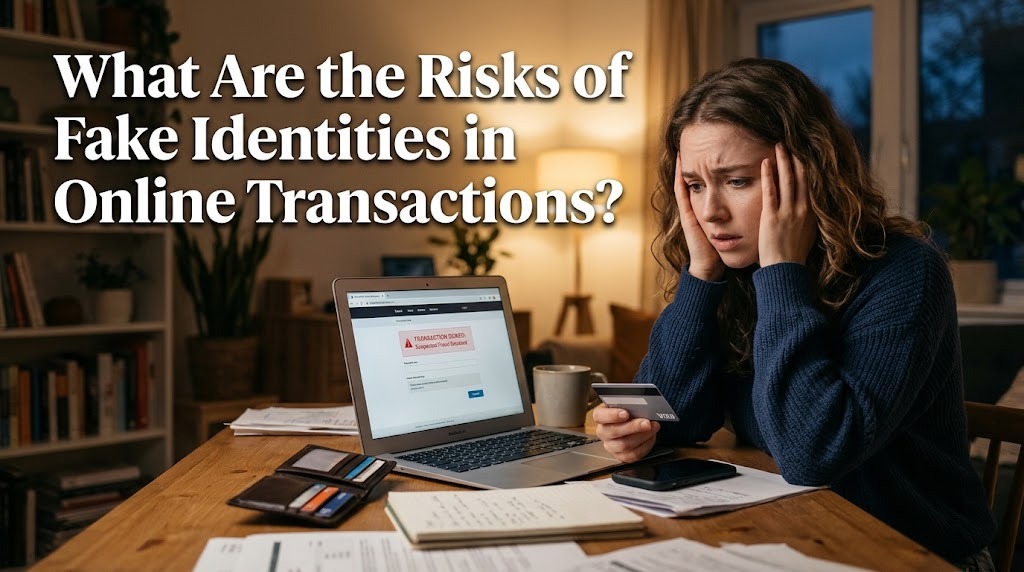
Online transactions have become increasingly common because they allow people to buy products, sell services, and transfer money without meeting in person. However, the growth of digital transactions has also created opportunities for scammers to use fake identities to deceive other people. They may pretend to be legitimate sellers, buyers, business owners, or financial representatives to gain trust and obtain money or personal information.
Fake identities in online transactions can cause serious problems for individuals and businesses. Victims may experience financial losses, stolen personal information, damaged reputations, and difficulties resolving disputes. Understanding these risks is important to help people recognize suspicious activities and conduct safer transactions.
UNDERSTANDING FAKE IDENTITIES IN ONLINE TRANSACTIONS
A fake identity is false or misleading personal information used by someone to pretend to be another individual or represent an identity that does not genuinely belong to them. In online transactions, scammers may use fake names, stolen photographs, false business profiles, or manipulated identification documents to appear trustworthy.
These identities are often found on online marketplaces, social media platforms, classified advertisement websites, and digital payment services. For example, a scammer may create a seller account using another person's photograph and provide false contact information to attract potential buyers. Some criminals also impersonate well-known businesses or customer service representatives to convince victims that their transactions are legitimate.
Not every anonymous account is automatically fraudulent because some platforms allow users to maintain privacy through usernames. However, providing false information to deceive others or misuse another person's identity can create significant security and legal problems.
FINANCIAL LOSSES CAUSED BY ONLINE TRANSACTION FRAUD
One of the biggest risks of fake identities is financial loss. Scammers may pretend to be legitimate sellers and advertise products at attractive prices to encourage buyers to transfer money quickly. After receiving payment, they may stop responding, delete their accounts, or disappear without delivering the promised products.
Fake identities can also be used by dishonest buyers. Someone may pretend to have completed a payment by sending an edited transaction receipt or a fake payment notification. Sellers who fail to verify the actual payment may release their products or services without receiving any money.
In some cases, scammers impersonate financial institutions or payment service representatives to obtain banking information and authentication codes. This information may then be used to access accounts or authorize unauthorized transactions. Therefore, users should always confirm payments through official applications rather than relying on screenshots or messages provided by other people.
IDENTITY THEFT AND MISUSE OF PERSONAL INFORMATION
Fake identities in online transactions can involve stolen personal information belonging to innocent individuals. Scammers may collect names, photographs, telephone numbers, identification documents, and other private details from social media or data leaks. They then use this information to create convincing profiles or conduct transactions under someone else's identity.
The actual identity owner may suffer serious consequences even though they are not involved in the fraudulent activity. Their personal information could be associated with suspicious transactions, complaints, or unpaid financial obligations. This situation can create difficulties when reporting identity misuse and proving that they were not responsible for the activities.
Victims may also experience repeated attempts at fraud if their personal information continues to circulate among criminals. For this reason, people should avoid sharing identification documents with unknown individuals and should carefully review the privacy settings of their online accounts.
LOSS OF TRUST AND DAMAGE TO BUSINESS REPUTATION
Fake identities can damage trust between buyers and sellers in digital marketplaces. When customers encounter fraudulent sellers, they may become less confident about purchasing products online. Even legitimate businesses can experience negative effects when scammers copy their names, logos, or product photographs to create fake accounts.
Business owners may receive complaints from customers who mistakenly believe they have communicated with an official representative. This can damage a company's reputation, reduce customer confidence, and create additional costs for handling complaints and verifying transactions.
For small businesses, these problems can be particularly difficult because customer trust is essential for maintaining sales. Businesses should protect their official accounts, communicate through verified channels, and inform customers about suspicious accounts impersonating their brands.
LEGAL AND SECURITY CONSEQUENCES
Using a fake identity to conduct online transactions may lead to legal consequences, especially when it involves fraud, impersonation, forged documents, or unauthorized use of personal information. The consequences depend on the nature of the activity and the applicable laws in each country. In Indonesia, certain forms of online fraud and personal data misuse may fall under relevant electronic information, personal data protection, and criminal law provisions.
Fake identity activities can also create security problems for digital platforms. Fraudulent accounts may be used to bypass verification procedures, manipulate transactions, or gain unauthorized access to services. Platforms may respond by suspending suspicious accounts, restricting transactions, or requiring additional identity verification.
Users who become involved in suspicious transactions may also face difficulties recovering their money or resolving disputes. Keeping transaction records and reporting fraudulent activities as soon as possible can help support investigations and protect other users.
HOW TO AVOID FAKE IDENTITY SCAMS IN ONLINE TRANSACTIONS
Preventing fake identity scams requires careful verification before sending money or sharing personal information. Buyers should examine seller profiles, check customer reviews, and look for consistent business information. However, positive reviews and attractive profiles should not be treated as complete proof of legitimacy because scammers can manipulate online reputations.
Always use trusted payment methods and transaction systems that provide appropriate buyer or seller protection. Avoid transferring money to unfamiliar personal accounts when an official payment channel is available. Never share passwords, one-time verification codes, or banking information with someone claiming to help complete a transaction.
If an account appears suspicious, verify the person's identity through an independent communication channel. For business transactions, contact the company using its official website or verified telephone number. If fraud occurs, preserve screenshots, payment records, and communication history, then contact the relevant platform and financial institution immediately.
CONCLUSION
Fake identities in online transactions create risks ranging from financial losses and identity theft to damaged business reputations and legal problems. Scammers use false information to gain trust, manipulate payments, and steal confidential data. Therefore, buyers and sellers should verify identities, use secure payment methods, and avoid sharing sensitive information with unknown individuals. Staying alert and understanding common fraud techniques can help everyone conduct safer and more trustworthy online transactions.
Recent Posts

Bagaimana Sistem SKS pada Program Kuliah... 22.11.2026/37 View

How Does Technology Make Daily Evaluation... 21.11.2026/70 View

Apa Strategi Menghadapi Kesenjangan antara Kompetensi... 21.11.2026/73 View

Mengapa Inventaris Aset Penting bagi Kelancaran... 21.11.2026/68 View

When Should Musicians Join a Record... 21.11.2026/71 View
