

What Are the Stages of the Indonesian Police Academy Admission Process?
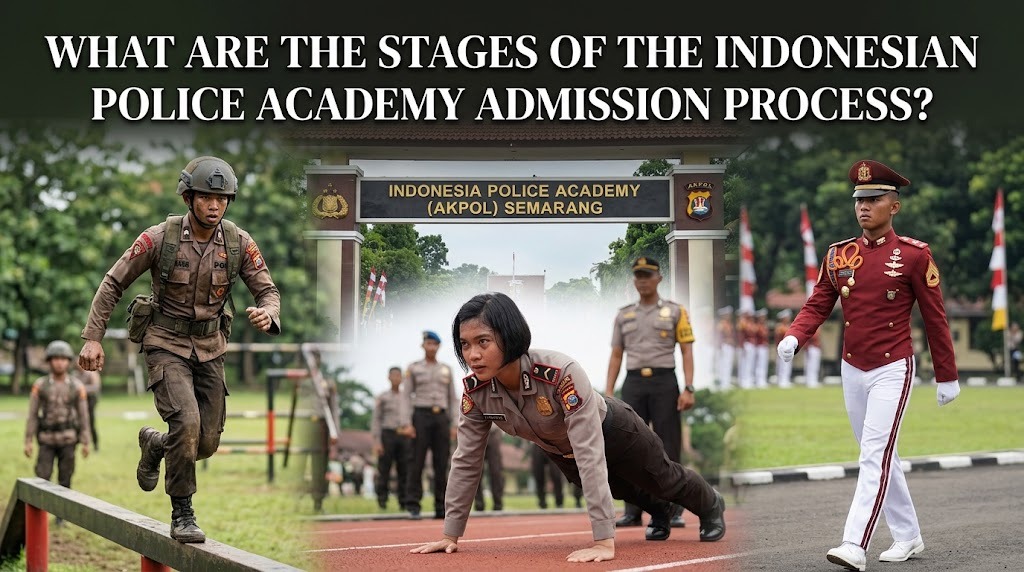
The Indonesian Police Academy, known as Akademi Kepolisian or Akpol, is an educational institution that prepares cadets to become professional officers of the Indonesian National Police (Polri). Admission to Akpol is competitive and involves several selection stages designed to assess applicants' academic abilities, physical fitness, health, personality, and suitability for police service. Understanding the admission process helps prospective cadets prepare more effectively and avoid missing important requirements.
The selection process generally begins with registration and administrative verification, followed by various examinations and assessments. The exact schedule, requirements, and technical procedures may change each year, so applicants should always consult official Polri recruitment announcements for the applicable admission period.
UNDERSTANDING THE BASIC ADMISSION REQUIREMENTS
Before registering for the Indonesian Police Academy, applicants must ensure that they meet the eligibility criteria established by Polri. These requirements generally cover Indonesian citizenship, educational qualifications, age limits, physical standards, and other administrative conditions. Applicants must also meet the specific requirements stated in the official recruitment announcement for their admission year.
Preparing these documents and checking eligibility early can prevent problems during registration. Applicants should carefully review requirements related to identity documents, school certificates, academic records, and other supporting materials. Meeting the basic requirements does not guarantee acceptance because candidates must still pass the subsequent selection stages. Therefore, understanding the official criteria is the first step toward preparing a strong application.
COMPLETING ONLINE REGISTRATION
The admission process generally begins with online registration through the official Polri recruitment website when registration opens. Applicants must create or complete their registration profiles, enter accurate personal information, and select the appropriate recruitment pathway. They should carefully check their names, birth dates, educational details, and other information against their official documents.
After submitting the online registration, applicants may need to print registration forms or other required documents for the next stage. They should also follow instructions regarding document submission and verification at the designated recruitment office. Incorrect information or incomplete documents can cause administrative difficulties, so accuracy is essential. Applicants should keep copies of their registration details and regularly monitor official announcements for updates.
SIGNING THE INTEGRITY PACT AND ADMINISTRATIVE SCREENING
After registration and initial verification, applicants are generally required to participate in an integrity pact process. This stage reinforces the commitment to honesty, discipline, and compliance with recruitment regulations. Candidates must understand that providing false information, using improper assistance, or attempting to manipulate selection results can jeopardize their application.
The initial administrative examination, commonly called rikmin awal, checks whether applicants meet the required documentary and eligibility standards. Officials examine relevant identity documents, educational certificates, and other records specified in the official announcement. Candidates should bring original documents and copies in the required format. Passing this stage allows eligible applicants to proceed to the subsequent examinations according to the official selection schedule.
UNDERGOING MEDICAL AND PSYCHOLOGICAL EXAMINATIONS
Medical examinations are important because police officers need to be physically capable of performing demanding duties. The first medical examination, known as rikkes I, evaluates an applicant's health according to the standards established by Polri. Depending on the applicable examination protocol, assessments may cover vision, hearing, general physical condition, and other relevant health factors. Candidates who meet the required standards may proceed to further selection stages.
Psychological testing is another important part of the Indonesian Police Academy admission process. Computer-based psychological assessments may evaluate reasoning, emotional stability, personality characteristics, and other qualities relevant to police service. Applicants should prepare by maintaining healthy routines, getting adequate sleep, and practicing concentration rather than trying to memorize supposedly correct answers. The exact tests and evaluation criteria depend on the official recruitment regulations for the relevant year.
TAKING ACADEMIC TESTS AND PHYSICAL FITNESS ASSESSMENTS
Academic examinations assess whether candidates possess the knowledge and reasoning abilities needed for higher education and police training. Depending on the official selection scheme, assessments may include academic computer-based tests and other specified examinations. Candidates should review relevant school subjects, practice logical reasoning, and become familiar with computer-based testing procedures. Consistent preparation is more effective than relying on last-minute study.
Physical fitness tests evaluate whether applicants can meet the physical demands associated with police education and future duties. The selection may include running, strength, endurance, agility, and other exercises prescribed by the recruitment authorities. Anthropometric assessments also measure physical characteristics against the applicable standards. Candidates should train progressively, follow safe exercise practices, and avoid extreme training that could cause injury before the examinations.
COMPLETING THE SECOND MEDICAL EXAMINATION AND PERSONALITY ASSESSMENT
Candidates who pass the required earlier stages may be invited to undergo a second medical examination, commonly called rikkes II. This stage provides further evaluation of medical suitability according to the applicable recruitment standards. The examinations may involve more detailed assessments or specialist evaluations when required by the official protocol. Applicants must follow the instructions provided by the medical examination team and disclose relevant information honestly.
Further assessments may include a psychological evaluation and a mental personality examination, often referred to as PMK, depending on the current selection framework. These assessments help evaluate personal character, integrity, emotional maturity, and suitability for police service. Candidates may also be interviewed about their background, conduct, motivations, and understanding of the responsibilities of a police officer. The assessment methods and exact requirements may vary according to the official recruitment rules.
PASSING FINAL ADMINISTRATIVE REVIEW AND CENTRAL SELECTION
After completing the regional selection stages, eligible candidates undergo final administrative verification, commonly called rikmin akhir. Officials review documents and confirm that candidates continue to satisfy the applicable requirements. A regional final selection meeting determines which candidates qualify to advance to the next stage. Applicants should continue checking official announcements because passing an earlier examination does not automatically guarantee final acceptance.
Candidates who qualify may proceed to the national-level selection, known as seleksi tingkat pusat or Panpus. This stage can involve further administrative checks, medical examinations, physical assessments, psychological evaluations, and appearance assessments, according to the recruitment framework for that year. The final decision is based on the applicable selection rules and assessment results. Candidates who successfully complete all required stages and are declared accepted can then follow the instructions for beginning their education at Akpol.
CONCLUSION
The Indonesian Police Academy admission process involves several stages, beginning with online registration and administrative verification and continuing through medical, psychological, academic, and physical assessments. Candidates must also complete any additional personality evaluations, final administrative checks, and national-level selection requirements that apply to their recruitment year. Each stage serves to assess whether applicants are suitable for the responsibilities of police education and service.
Prospective cadets should prepare early, maintain their physical and mental well-being, organize their documents, and study consistently. Most importantly, they should obtain information directly from the official Polri recruitment website at penerimaan.polri.go.idThe official announcement is the most reliable source for current eligibility criteria, selection schedules, and examination procedures. Polri recruitment emphasizes a clean, transparent, accountable, and humane process, so candidates should avoid anyone who promises acceptance in exchange for money or special assistance.
Recent Posts

Bagaimana Sistem SKS pada Program Kuliah... 22.11.2026/57 View

How Does Technology Make Daily Evaluation... 21.11.2026/86 View

Apa Strategi Menghadapi Kesenjangan antara Kompetensi... 21.11.2026/84 View

Mengapa Inventaris Aset Penting bagi Kelancaran... 21.11.2026/82 View

When Should Musicians Join a Record... 21.11.2026/86 View
