

What Are the Types of Nonverbal Communication to Understand?
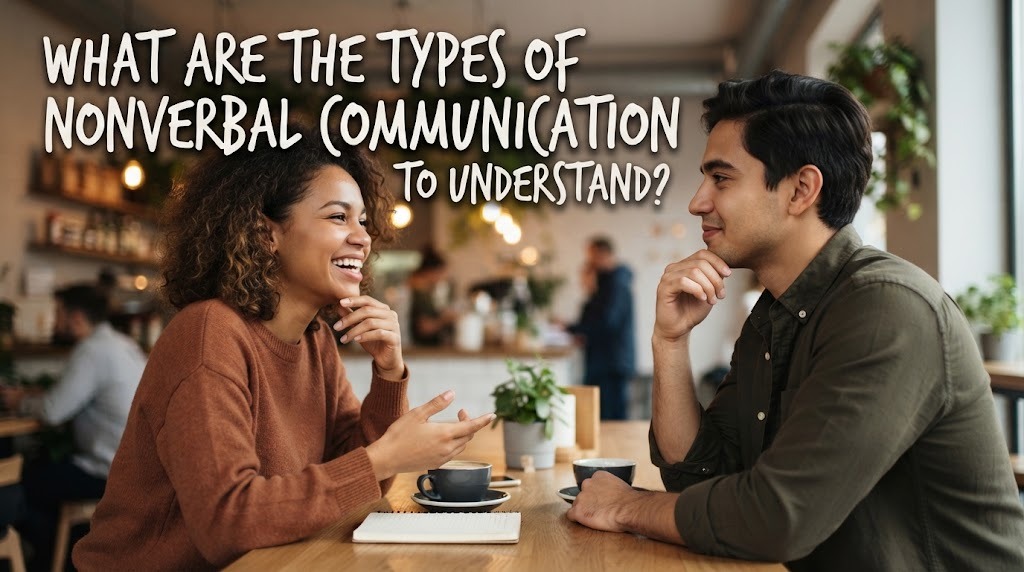
Nonverbal communication is an important part of how people interact with one another. Communication does not always happen through spoken or written words because people can also send messages through facial expressions, gestures, body movements, eye contact, tone of voice, and other signals. These signals can show emotions, attitudes, intentions, and reactions during an interaction. Understanding the types of nonverbal communication can help people communicate more effectively and avoid misunderstandings in daily life.
Nonverbal signals often work together with verbal communication. For example, a person may say that they are happy, but their facial expression and body posture can provide additional information about how they actually feel. Because of this, learning to recognize nonverbal communication is useful in school, friendships, family relationships, and professional environments.
FACIAL EXPRESSIONS
Facial expressions are one of the most noticeable forms of nonverbal communication. A smile can indicate happiness, friendliness, or appreciation, while a frown may suggest confusion, disappointment, or concern. Changes in the eyebrows, eyes, and mouth can also provide clues about a person's emotional state. These expressions often happen naturally, so people may communicate feelings without intentionally saying anything.
Facial expressions are especially useful for understanding reactions during conversations. When someone looks surprised, confused, interested, or uncomfortable, their expression can provide information that is not directly expressed through words. However, facial expressions should not always be interpreted in isolation because the same expression can have different meanings depending on the situation and cultural context.
EYE CONTACT AND GAZE
Eye contact is another important type of nonverbal communication. Looking at someone while they are speaking can show attention, interest, and involvement in the conversation. Appropriate eye contact can also help create a sense of trust and connection between people. On the other hand, constantly avoiding eye contact may sometimes be interpreted as nervousness, discomfort, or a lack of attention, although it does not always mean these things.
The direction and duration of a person's gaze can also communicate different messages. For example, looking toward a particular object may indicate interest, while frequently looking away may suggest distraction. However, eye contact is strongly influenced by social and cultural norms, so people should avoid making conclusions based only on someone's gaze.
GESTURES AND BODY MOVEMENTS
Gestures include movements of the hands, arms, head, and other parts of the body that can communicate meaning. Waving can be used to greet someone, pointing can direct attention, and nodding can indicate agreement or understanding. Some gestures are widely recognized, while others may have specific meanings within certain communities or cultures. This makes gestures an important part of understanding communication beyond words.
Body movements can also reveal a person's reactions during an interaction. Moving closer may show engagement, while repeatedly moving away could indicate discomfort or a desire for more personal space. However, body movements should be considered together with the situation and other nonverbal signals because one movement does not always have a single fixed meaning.
BODY POSTURE AND PERSONAL SPACE
Body posture refers to the way a person positions their body while sitting, standing, or interacting with others. An upright and open posture can sometimes suggest confidence and attentiveness, while a closed posture may appear more reserved or uncomfortable. Posture can influence how other people perceive a person's attitude even when no words are spoken. This is why body posture is often important during presentations, interviews, meetings, and everyday conversations.
Personal space is also part of nonverbal communication. The distance people maintain from one another can communicate familiarity, respect, comfort, or formality. Friends may usually feel comfortable standing closer to each other than strangers, while professional situations may require a more appropriate distance. Respecting personal space can help create a comfortable environment and prevent people from feeling pressured or uncomfortable.
TONE OF VOICE AND PARALANGUAGE
Nonverbal communication is not limited to body movements because the way words are spoken can also communicate additional meaning. Tone of voice, volume, speed, pitch, and pauses can influence how a spoken message is understood. The same sentence can sound friendly, angry, uncertain, excited, or sarcastic depending on how it is delivered. These elements are often called paralanguage because they accompany spoken language without being the actual words themselves.
For example, speaking with a calm tone can make a conversation feel more comfortable, while speaking loudly and quickly may create an impression of anger or urgency. Pauses can also give someone time to think or emphasize an important point. Therefore, effective communication requires attention not only to what a person says but also to how the message is delivered.
TOUCH AND PHYSICAL APPEARANCE
Touch can communicate different messages depending on the relationship, situation, and cultural expectations. A handshake can represent a greeting or professional interaction, while a supportive pat on the shoulder may communicate encouragement or sympathy. Because touch can be interpreted differently by different people, it should always be appropriate to the situation and respectful of personal boundaries.
Physical appearance can also influence communication. Clothing, grooming, accessories, and overall appearance can create impressions about a person's role, personality, or the formality of a situation. Appearance does not always accurately represent someone's character, so it should not be used to make unfair judgments. Instead, it can be understood as one of several signals that contribute to how an interaction is perceived.
WHY IS IT IMPORTANT TO UNDERSTAND NONVERBAL COMMUNICATION?
Understanding nonverbal communication can improve the way people interpret messages and respond to others. It can help someone notice emotions, identify confusion, understand reactions, and adjust their communication style when necessary. In school, for example, students can observe their teacher's facial expressions, tone, and gestures to better understand the atmosphere of a lesson. In the workplace, nonverbal communication can support teamwork, presentations, interviews, and professional relationships.
Nonverbal communication can also help reduce misunderstandings. When spoken words and nonverbal signals appear different, people can pay attention to the overall context rather than immediately making assumptions. Good communication requires both speaking clearly and observing carefully. By learning different types of nonverbal communication, people can become more aware of how their own behavior affects others and how they interpret signals during everyday interactions.
CONCLUSION
There are many types of nonverbal communication, including facial expressions, eye contact, gestures, body posture, personal space, tone of voice, touch, and physical appearance. Each type can provide additional information about emotions, attitudes, reactions, and intentions. However, nonverbal signals should always be interpreted based on context because the same behavior can have different meanings in different situations or cultures.
Learning to understand nonverbal communication can make everyday interactions more effective and meaningful. It helps people become better observers, express themselves more appropriately, and respond to others with greater awareness. When verbal and nonverbal communication work together, messages can become clearer and relationships can become stronger.
Recent Posts

Bagaimana Sistem SKS pada Program Kuliah... 22.11.2026/38 View

How Does Technology Make Daily Evaluation... 21.11.2026/71 View

Apa Strategi Menghadapi Kesenjangan antara Kompetensi... 21.11.2026/73 View

Mengapa Inventaris Aset Penting bagi Kelancaran... 21.11.2026/69 View

When Should Musicians Join a Record... 21.11.2026/73 View
