

What Can the General Elections Commission Do to Increase Political Awareness Among Young People?
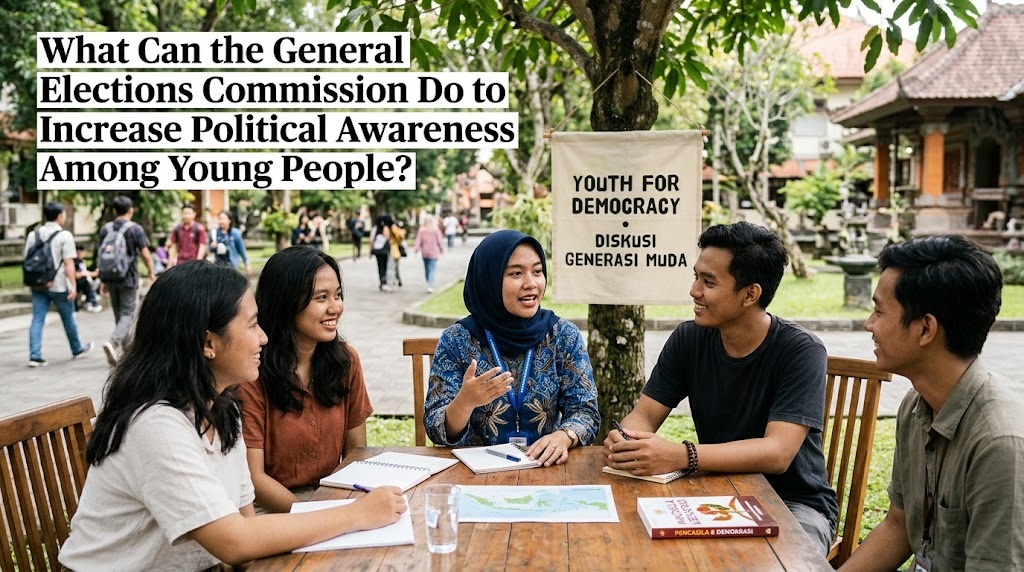
Political awareness among young people is an important factor in building a healthy and sustainable democracy. Young people represent a significant part of Indonesia’s population and have an important role in determining the country’s future through elections. However, political awareness is not only about knowing political parties or choosing candidates. It also involves understanding democratic values, recognizing citizens’ rights and responsibilities, and evaluating political information critically. The General Elections Commission, known as the Komisi Pemilihan Umum (KPU), has an important responsibility to encourage young people to become informed and active participants in the democratic process. Through education, public engagement, and accessible information, the KPU can help young generations understand why their participation matters.
PROVIDING POLITICAL EDUCATION THROUGH SCHOOLS AND UNIVERSITIES
One effective way for the KPU to increase political awareness is by providing political education in schools and universities. Educational institutions are important places to introduce young people to democracy, elections, and responsible citizenship. The KPU can organize discussions, seminars, workshops, and educational activities that explain how elections work. These programs can introduce students to voter rights, election procedures, candidate selection, and the importance of participating in elections. Political education should help young people understand the democratic process rather than simply encourage them to vote.
Cooperation with teachers, lecturers, student organizations, and educational institutions can make these activities more effective. For example, the KPU can hold simulated elections to demonstrate how voters register, receive ballots, and cast their votes. Students can also participate in discussions about political issues that affect their communities. These experiences make political education more practical and easier to understand. By introducing democratic values at an early age, the KPU can help develop a generation that is more responsible and knowledgeable about public affairs.
USING SOCIAL MEDIA TO REACH YOUNG VOTERS
Social media is one of the most effective communication channels for reaching young people. Many young voters use platforms such as Instagram, TikTok, YouTube, and other digital services to obtain information and follow current developments. The KPU can use these platforms to share educational content about elections in a simple, attractive, and understandable format. Short videos, infographics, live discussions, and question-and-answer sessions can explain election procedures without overwhelming audiences with complicated information. Digital communication allows election education to reach young people through platforms they already use in their daily lives.
However, social media content should be accurate, neutral, and easy to verify. The KPU must avoid communication that could be interpreted as supporting a particular candidate or political party. Instead, its content should explain democratic principles, voter rights, election schedules, and official procedures. The KPU can also respond to common questions and clarify misleading information circulating online. Consistent communication can help young people become more familiar with election processes and encourage them to seek information from reliable sources.
ORGANIZING INTERACTIVE AND CREATIVE ELECTION ACTIVITIES
Traditional political education does not always attract young audiences, especially when the information is delivered through lengthy presentations. To overcome this challenge, the KPU can organize interactive activities that encourage young people to participate directly. Examples include election simulations, public discussions, quizzes, educational competitions, and creative campaigns. These activities can make political topics more enjoyable while helping participants understand how democratic institutions operate. Interactive learning gives young people opportunities to experience democratic processes instead of only learning about them theoretically.
The KPU can also collaborate with student communities, youth organizations, and local creative groups to develop activities that match the interests of different audiences. For example, young people can create short educational videos, posters, podcasts, or public service campaigns about responsible voting. These activities allow participants to share election information with their peers. When young people become involved in producing educational content, they may develop a stronger sense of responsibility toward their communities. Such programs can also create a more welcoming environment for discussing political issues constructively.
BUILDING PARTNERSHIPS WITH YOUTH COMMUNITIES
Cooperation with youth communities is another important strategy for increasing political awareness. Young people often communicate more comfortably with individuals who share similar interests, experiences, and backgrounds. The KPU can work with student associations, youth organizations, community groups, and volunteer networks to distribute reliable election information. These partnerships can help election education reach young people in schools, universities, neighborhoods, and remote areas. Youth communities can become important partners in spreading democratic knowledge and encouraging responsible participation.
The KPU can involve young volunteers in voter education activities, public campaigns, and community discussions. Volunteers can help explain basic election information and direct citizens to official sources when they need clarification. However, their activities should follow clear guidelines to maintain neutrality and prevent the spread of inaccurate information. Cooperation should also include young people with different educational and social backgrounds so that election information reaches a wider audience. Through these partnerships, political education can become a shared effort between election organizers and society.
IMPROVING ACCESS TO ACCURATE AND EASY TO UNDERSTAND INFORMATION
Young people need accurate information to make responsible political decisions. Unfortunately, election-related information can sometimes be difficult to understand because it contains technical terms, complicated procedures, or lengthy explanations. The KPU can address this problem by presenting information in clear and accessible language. Educational materials should explain important topics such as voter registration, election procedures, candidate information, and voting rights in a straightforward way. Accessible information helps young voters understand their rights and responsibilities without unnecessary confusion.
The KPU should also make sure that official election information is available through multiple communication channels. Digital platforms, public information services, educational materials, and community outreach programs can complement one another. Information should be accessible to people with disabilities and communities that face limitations in internet access. In addition, the KPU can provide explanations about how to identify official information and distinguish it from misleading claims. When young people can easily find trustworthy information, they are better prepared to evaluate political issues and participate in elections responsibly.
ENCOURAGING CRITICAL THINKING AND RESPONSIBLE DIGITAL PARTICIPATION
Political awareness involves more than receiving information because young people also need the ability to evaluate what they read, watch, and share. During election periods, social media can become a place where misinformation, manipulated content, and misleading political claims spread quickly. The KPU can support digital literacy education by teaching young voters how to check sources, compare information, and recognize content that may be misleading. These skills are important because political decisions should be based on reliable information rather than emotional reactions or unverified claims. Critical thinking helps young people become more independent and responsible participants in democracy.
The KPU can include digital literacy topics in voter education programs, public discussions, and online campaigns. Young people should be encouraged to verify information before sharing it and to respect differences of opinion during political discussions. They should also understand that freedom of expression comes with responsibility, especially when discussing candidates, political parties, and election results. The KPU can explain official election information and direct the public toward reliable sources without taking sides in political competition. By developing critical thinking and responsible digital habits, young people can contribute to a healthier democratic environment.
CONCLUSION
The General Elections Commission can increase political awareness among young people through education, social media communication, interactive activities, community partnerships, accessible information, and digital literacy programs. These strategies can help young voters understand elections and recognize the importance of their participation in democracy. Political awareness should not be limited to election periods because democratic responsibility continues throughout public life. Young people who understand their rights, responsibilities, and political environment can make more informed decisions and contribute positively to society. Therefore, cooperation between the KPU, educational institutions, youth communities, and the wider public is essential for developing a more informed and responsible generation.
Recent Posts

Bagaimana Sistem SKS pada Program Kuliah... 22.11.2026/47 View

How Does Technology Make Daily Evaluation... 21.11.2026/74 View

Apa Strategi Menghadapi Kesenjangan antara Kompetensi... 21.11.2026/75 View

Mengapa Inventaris Aset Penting bagi Kelancaran... 21.11.2026/72 View

When Should Musicians Join a Record... 21.11.2026/75 View
