

What Career Opportunities Are Available for Production Staff?
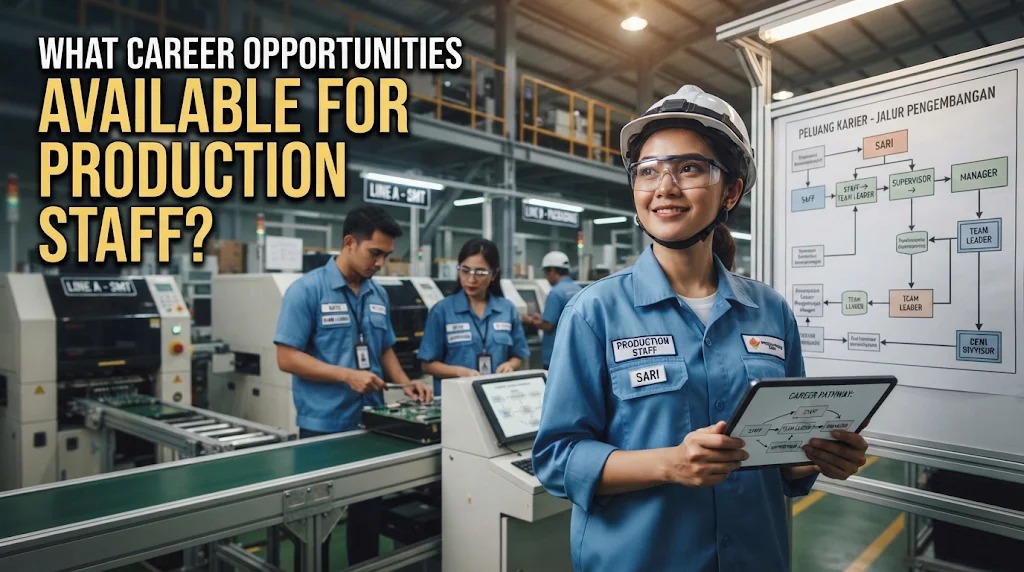
Working as production staff can provide various career opportunities in the manufacturing industry. This position allows employees to gain practical experience in production planning, quality control, operational management, and workplace coordination. As employees develop their knowledge and professional skills, they may have opportunities to move into more specialized or higher-level positions. Understanding the available career paths can help individuals plan their professional development and prepare for long-term employment in the manufacturing sector.
PRODUCTION SUPERVISOR
One career opportunity for experienced production staff is becoming a production supervisor. This position involves managing daily manufacturing activities and ensuring that employees complete their responsibilities according to company targets. Production supervisors coordinate work schedules, monitor production output, and address operational problems that may affect performance. They also communicate with managers and other departments to maintain an organized production process.
To become a production supervisor, employees generally need experience in manufacturing operations, leadership abilities, and strong communication skills. They must understand production procedures and know how to manage different workplace situations. Good decision-making is also important because supervisors are responsible for maintaining productivity and discipline within their teams. This role can be a suitable career step for employees who want to develop their management abilities.
PRODUCTION PLANNER
Production staff can also develop their careers in production planning. Production planners are responsible for preparing manufacturing schedules based on customer demand, available resources, and company capacity. They determine when production activities should begin, how materials should be allocated, and how deadlines can be achieved. Their work helps companies maintain a balanced production process.
This position requires analytical thinking, time management, and an understanding of manufacturing operations. Production planners often use spreadsheets and specialized software to organize schedules and monitor production requirements. They must also communicate with warehouse, purchasing, and production departments to ensure that necessary resources are available. Employees with strong organizational and data management skills may find this career path suitable.
QUALITY CONTROL INSPECTOR
Another career opportunity is becoming a quality control inspector. This role focuses on checking products and ensuring that they meet established quality standards before being distributed to customers. Quality control inspectors examine materials, monitor manufacturing results, and identify defects that may affect product performance. They may also record inspection findings and report problems to the responsible departments.
Production staff who understand manufacturing procedures can develop useful knowledge for this position. They need attention to detail, accuracy, and an understanding of product specifications. Some companies also require employees to understand quality management systems and inspection techniques. With additional training and experience, employees may advance to quality control supervisor or quality assurance positions.
PRODUCTION ADMINISTRATOR
Production administration is another possible career direction for employees who prefer documentation and office-based responsibilities. Production administrators manage documents related to manufacturing activities, including production reports, schedules, inventory records, and employee information. They help ensure that important operational data is organized and accessible to supervisors and managers. Accurate documentation supports better decision-making and improves communication between departments.
This position requires computer skills, attention to detail, and good organizational abilities. Knowledge of Microsoft Excel and other office applications can be particularly useful for preparing reports and managing production data. Employees should also understand basic manufacturing terminology and administrative procedures. With experience, they may develop their careers in operations administration or production management support.
INVENTORY AND WAREHOUSE STAFF
Production staff may also pursue career opportunities in inventory management and warehouse operations. These positions involve monitoring stock levels, receiving materials, recording inventory movements, and ensuring that supplies are available when needed. Employees in this field help prevent material shortages that could interrupt manufacturing activities. They also support accurate inventory records and efficient storage procedures.
Experience in production can provide useful knowledge about material requirements and manufacturing schedules. To develop in this area, employees should understand stock management, inventory systems, and warehouse safety procedures. Computer skills and accuracy are important because inventory information must remain reliable. With further experience, employees may become inventory coordinators, warehouse supervisors, or logistics staff.
PROCUREMENT STAFF
Procurement is another career path connected to production activities. Procurement staff are responsible for helping companies obtain the raw materials, equipment, and supplies needed for business operations. Their tasks may include requesting supplier quotations, comparing prices, preparing purchase documents, and monitoring delivery schedules. They must ensure that purchased materials meet company requirements and arrive at the appropriate time.
Production staff can benefit from their understanding of manufacturing needs when moving into procurement roles. They should develop negotiation, communication, and supplier management skills. Knowledge of purchasing procedures and inventory planning can also improve their professional qualifications. This career path is suitable for employees who enjoy organizing resources and working with external suppliers.
PRODUCTION MANAGER
With sufficient experience and professional development, production staff may have the opportunity to become production managers. This position involves overseeing broader manufacturing operations, managing production teams, and ensuring that company targets are achieved. Production managers make decisions related to operational planning, workforce requirements, resource allocation, and productivity improvement. They also work with other managers to support business objectives.
This role generally requires strong leadership, problem-solving, analytical, and decision-making abilities. Employees need a thorough understanding of production systems, quality standards, workplace safety, and cost management. Formal education and management training may also be required depending on the company. Becoming a production manager can represent an important career achievement for individuals who want to lead manufacturing operations.
OPERATIONS MANAGER
Another advanced career opportunity is becoming an operations manager. This position involves overseeing wider business activities to ensure that company operations function efficiently. Responsibilities may include managing production performance, coordinating departments, controlling operational costs, and improving business processes. Unlike production managers, who primarily focus on manufacturing activities, operations managers may supervise several functions across the organization.
Production staff who want to pursue this career path need to develop strategic thinking and leadership skills. They should understand how production activities connect with supply chains, inventory management, distribution, and business performance. Experience in different departments can provide valuable knowledge for handling broader responsibilities. Additional education and professional training may help employees prepare for this management position.
CONCLUSION
Production staff have various career opportunities in the manufacturing industry, ranging from production supervision and planning to quality control, administration, and inventory management. With sufficient experience, training, and professional skills, they may also advance into production manager or operations manager positions. Each career path requires different abilities, but communication, discipline, accuracy, and problem-solving remain important across these roles. By continuously developing their knowledge and gaining practical experience, production staff can build long-term careers and pursue greater professional responsibilities.
Recent Posts

How Does Technology Make Daily Evaluation... 21.11.2026/56 View

Apa Strategi Menghadapi Kesenjangan antara Kompetensi... 21.11.2026/58 View

Mengapa Inventaris Aset Penting bagi Kelancaran... 21.11.2026/52 View

When Should Musicians Join a Record... 21.11.2026/53 View

Daily Evaluation or Daily Planning Which... 21.11.2026/60 View
