

What Career Opportunities Are Available in Logistics Management in the Digital Era?
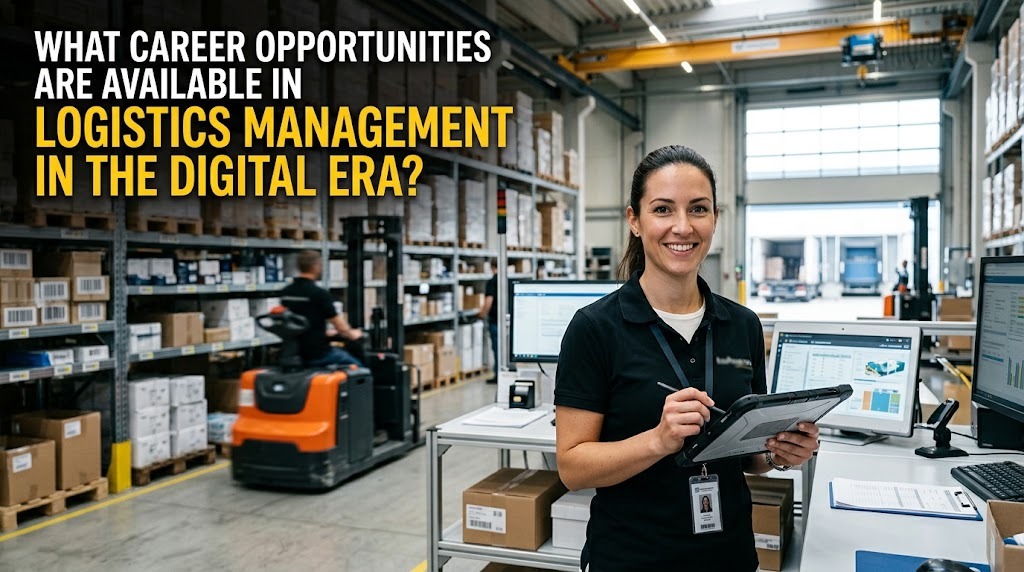
Logistics management has become an important field as businesses increasingly depend on efficient transportation, inventory control, warehousing, and product distribution. The growth of e-commerce, international trade, and digital technology has created new opportunities for professionals who can manage the movement of goods efficiently. Companies need skilled workers to coordinate deliveries, analyze operational data, operate digital systems, and improve supply chain performance. Career opportunities in logistics management are available across manufacturing, retail, transportation, e-commerce, and distribution industries. Understanding these career paths can help students, graduates, and job seekers prepare for a promising future in the logistics sector.
UNDERSTANDING LOGISTICS MANAGEMENT CAREERS
Logistics management careers involve planning, coordinating, and monitoring activities that ensure products move efficiently from suppliers to customers. Professionals in this field may work in warehouses, transportation companies, manufacturing facilities, distribution centers, or online retail businesses. Their responsibilities can include managing inventory, scheduling shipments, coordinating suppliers, monitoring deliveries, and controlling operating costs. The specific duties depend on the position, company size, and type of products being handled. However, most logistics roles require strong organizational skills, attention to detail, and effective communication.
The digital era has also changed how logistics professionals perform their jobs. Businesses increasingly use inventory software, transportation management systems, warehouse management platforms, and data analytics tools to improve operational performance. As a result, employees need to understand both traditional logistics processes and modern digital applications. Digital literacy and problem-solving skills can help candidates adapt to changing workplace requirements. Professionals who combine operational knowledge with technology skills may have access to a wider range of career opportunities.
LOGISTICS COORDINATOR AND TRANSPORTATION MANAGER
A logistics coordinator helps organize daily logistics activities, including shipment scheduling, order tracking, documentation, and communication with suppliers or transportation providers. This role requires employees to ensure that goods move according to established schedules and that relevant information is recorded accurately. Coordinators may also help resolve delivery delays, update shipment records, and communicate with customers about order status. The position is suitable for people who enjoy organizing tasks and coordinating activities between different teams. Strong communication and time management skills are particularly valuable in this role.
A transportation manager has broader responsibilities for planning and supervising transportation operations. These professionals may select carriers, manage delivery schedules, monitor vehicle performance, evaluate shipping expenses, and ensure compliance with relevant regulations. They often use transportation management systems to analyze routes and improve delivery efficiency. Transportation managers must also respond to unexpected problems, such as vehicle breakdowns or changing road conditions. Experience in logistics operations, analytical thinking, and leadership skills can help professionals prepare for this career path.
WAREHOUSE AND INVENTORY MANAGEMENT SPECIALISTS
Warehouse management offers career opportunities for individuals interested in storage operations, order fulfillment, and distribution activities. A warehouse supervisor coordinates employees, manages storage areas, monitors product handling, and ensures that orders are prepared correctly. Warehouse managers generally oversee broader responsibilities, including staffing, equipment use, safety procedures, and operational performance. Their goal is to ensure that warehouse activities remain efficient, accurate, and organized. Familiarity with warehouse management systems can be an important advantage in modern facilities.
Inventory management specialists focus on maintaining accurate stock records and ensuring that businesses have sufficient products to meet demand. Their duties may include monitoring inventory levels, analyzing stock movements, preparing replenishment recommendations, and investigating discrepancies between recorded and physical quantities. These professionals help prevent stock shortages and excessive inventory, both of which can increase business costs. Digital inventory systems and spreadsheet tools are commonly useful for managing these responsibilities. Attention to detail, numerical skills, and an understanding of inventory control methods can support career development in this area.
SUPPLY CHAIN ANALYST AND DATA SPECIALIST
The increasing use of digital technology has created opportunities for supply chain analysts who evaluate operational data and recommend improvements. These professionals examine information about demand, supplier performance, transportation costs, inventory levels, and delivery times. Their analysis helps businesses identify inefficiencies, forecast requirements, and make better operational decisions. For example, an analyst may discover that certain routes consistently increase shipping costs or that a product frequently experiences stock shortages. The findings can help managers develop more effective strategies.
A logistics data specialist may focus more specifically on collecting, organizing, and interpreting information from logistics systems. Useful technical skills can include spreadsheet analysis, dashboard development, database knowledge, and data visualization. Depending on the position, familiarity with tools such as SQL, Power BI, or Python may also be beneficial. Employers may value candidates who can explain complex information clearly and turn analytical findings into practical recommendations. Combining logistics knowledge with data analysis skills can open opportunities in digitally advanced logistics and supply chain operations.
E COMMERCE AND LOGISTICS TECHNOLOGY CAREERS
The growth of online shopping has increased the importance of efficient order fulfillment and last-mile delivery. E-commerce logistics specialists help manage online orders, coordinate warehouse processing, monitor shipments, and maintain delivery performance. They may work for online retailers, third-party logistics providers, courier companies, or distribution businesses. Their responsibilities often involve handling high order volumes, responding to changing demand, and coordinating with multiple delivery partners. These roles require flexibility, organization, and the ability to solve problems quickly.
Technology-focused positions are also becoming relevant in modern logistics operations. Professionals may work with warehouse automation, transportation management software, shipment tracking systems, or digital logistics platforms. Some roles involve implementing software, supporting users, analyzing system performance, or helping companies integrate different operational systems. Knowledge of artificial intelligence, automation, and digital supply chain tools may be useful for certain specialized positions. Candidates should review job descriptions carefully because technical requirements vary considerably between employers.
SKILLS AND EDUCATION FOR LOGISTICS CAREER DEVELOPMENT
Preparing for a logistics management career requires a combination of education, practical experience, and relevant professional skills. Degrees or diplomas in logistics, supply chain management, business administration, industrial engineering, and related fields may provide a useful foundation. However, some entry-level positions may also accept candidates from other educational backgrounds who demonstrate suitable skills and willingness to learn. Internships, industry projects, and practical training can help candidates understand real workplace procedures. Relevant experience and continuous learning can improve a candidate's readiness for employment.
Employers commonly value communication, organization, analytical thinking, teamwork, and problem-solving abilities. Digital skills are increasingly useful because logistics employees often work with inventory databases, spreadsheets, tracking platforms, and reporting systems. Candidates can strengthen their profiles by learning demand forecasting, inventory control, transportation planning, or data visualization. Professional certifications may also support career development when they match the candidate's goals and are recognized by relevant employers. By developing both technical and interpersonal skills, job seekers can prepare for changing demands in the logistics industry.
CONCLUSION
Logistics management offers diverse career opportunities in the digital era, including logistics coordinator, transportation manager, warehouse manager, inventory specialist, supply chain analyst, and e-commerce logistics professional. Digital transformation has also created demand for workers who understand logistics software, data analysis, automation, and operational improvement. The most suitable career depends on individual interests, education, experience, and professional goals. Candidates can improve their opportunities by gaining practical experience, strengthening digital skills, and continuing to learn about industry developments. With the right preparation, logistics management can provide a pathway toward long-term professional growth in a wide range of industries.
Recent Posts

Bagaimana Sistem SKS pada Program Kuliah... 22.11.2026/60 View

How Does Technology Make Daily Evaluation... 21.11.2026/87 View

Apa Strategi Menghadapi Kesenjangan antara Kompetensi... 21.11.2026/85 View

Mengapa Inventaris Aset Penting bagi Kelancaran... 21.11.2026/83 View

When Should Musicians Join a Record... 21.11.2026/87 View
