

What Careers Are Suitable For People With Bodily Kinesthetic Intelligence?
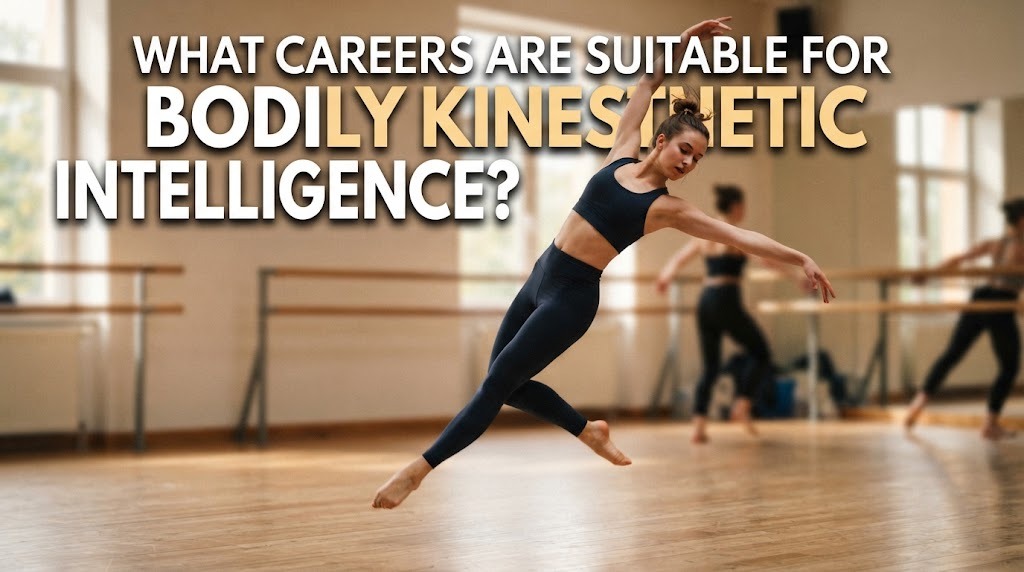
Bodily kinesthetic intelligence refers to the ability to use the body effectively for movement, coordination, physical expression, and practical activities. People with this type of intelligence often learn and work well when they can interact directly with objects, tools, or their surroundings. They may enjoy activities that involve hands on practice, physical movement, and creating something through their skills. However, having bodily kinesthetic intelligence does not mean someone must choose a physical career. Career choices should also consider interests, abilities, education, personality, and long term goals.
CAREERS THAT INVOLVE PHYSICAL MOVEMENT
People with strong bodily kinesthetic abilities may feel comfortable in careers that require regular movement and body coordination. Examples include athletes, dancers, fitness trainers, physical education teachers, and performers. These careers often require people to understand how their bodies move and respond to different situations. Good balance, timing, flexibility, strength, and coordination can be useful in these fields. With proper training, physical abilities can become important professional skills.
Some careers also combine movement with communication and creativity. For example, dancers and performers use their bodies to express ideas, while fitness trainers demonstrate exercises and guide other people. Physical education teachers use movement to help students develop healthy habits and motor skills. These careers require more than physical ability because communication, discipline, and continuous learning are also important.
CAREERS THAT REQUIRE HANDS ON SKILLS
Bodily kinesthetic intelligence can also be useful in careers that involve working with tools, materials, machines, or physical objects. Examples include chefs, mechanics, carpenters, electricians, craft workers, and technicians. These jobs often require careful hand movements, practical problem solving, and the ability to understand how different objects work. People may improve these abilities through repeated practice and real work experience. In many cases, practical skills become stronger when they are developed through direct experience.
A person who enjoys making or repairing things may find this type of work interesting. For example, a chef needs hand coordination when preparing ingredients, while a mechanic needs precise movements when working with vehicle components. A craft worker may use fine motor skills to create detailed products. These careers show that kinesthetic intelligence can support practical and technical abilities, not only sports or performing arts.
CAREERS IN HEALTH AND BODY MOVEMENT
Some careers in health and physical development also involve strong bodily awareness. Physiotherapists, occupational therapists, sports therapists, and some rehabilitation professionals work closely with body movement and physical function. They need to understand movement while helping people improve or maintain their physical abilities. These professions also require formal education, professional training, and knowledge of health and human anatomy. Bodily kinesthetic ability can support practical work, but it is only one part of the qualifications needed.
Professionals in these fields often demonstrate exercises, observe movement, and guide people through physical activities. They may need good coordination and careful hand movements when providing practical assistance. Empathy, communication, patience, and scientific knowledge are also essential. Therefore, someone interested in these careers should develop both practical abilities and academic knowledge.
CAREERS IN PERFORMING ARTS AND ENTERTAINMENT
Performing arts can be another career area that matches people who enjoy using their bodies to communicate. Careers such as dancer, actor, choreographer, stunt performer, and stage performer can involve movement, body control, timing, and physical expression. Performers often spend many hours practicing movements and learning how to respond to music, scripts, or other performers. They also need confidence and creativity to communicate with an audience. Regular practice is important because performance skills usually improve through experience.
Bodily kinesthetic intelligence can help performers understand how to control posture, gestures, and movement. However, success in entertainment also depends on factors such as creativity, discipline, communication, and professional experience. Performers may also need to adapt to different roles, styles, and working environments. This makes performing arts a field where physical intelligence can work together with other abilities.
CAREERS THAT COMBINE CREATIVITY AND PRACTICAL WORK
Some people with bodily kinesthetic intelligence may enjoy careers that combine creativity with physical activities. Examples include fashion designers, florists, photographers, interior decorators, jewelry makers, and product creators. These careers can involve manipulating materials, designing objects, arranging physical spaces, or producing visual results. The ability to coordinate hands and eyes can be useful when working on detailed projects. Creativity helps transform practical skills into unique products or experiences.
These careers also show why bodily kinesthetic intelligence is broader than athletic ability. Someone may enjoy creating clothing, arranging objects, building models, or producing handmade products without being interested in sports. Fine motor skills, spatial awareness, creativity, and attention to detail can all contribute to this type of work. Education and experience can further strengthen these abilities and help turn an interest into a career.
HOW TO CHOOSE A CAREER BASED ON KINESTHETIC ABILITIES
Bodily kinesthetic intelligence can provide useful clues when exploring career options, but it should not be the only factor considered. A person should think about what activities they enjoy, what skills they have, and what type of working environment they prefer. It is also important to consider the education, certification, and training required for a particular profession. Trying different activities through school projects, internships, courses, or hobbies can help someone discover suitable career interests. Practical experience can make career planning more realistic.
People should also consider whether they prefer working independently, helping others, creating products, performing, or solving technical problems. For example, someone who enjoys helping people and understanding movement may explore rehabilitation-related careers. Someone who enjoys building and repairing objects may prefer a technical field. Career exploration allows people to connect their strengths with realistic opportunities instead of choosing a profession based on one ability alone.
BODILY KINESTHETIC INTELLIGENCE CAN SUPPORT MANY CAREERS
People with bodily kinesthetic intelligence can explore many different professional fields. Their strengths may be useful in sports, education, healthcare, technical work, culinary arts, performing arts, crafts, and creative industries. The most suitable career depends on how their physical abilities interact with their other interests and skills. Communication, problem solving, teamwork, creativity, and knowledge can be just as important as physical coordination. Therefore, bodily kinesthetic intelligence should be viewed as one potential strength within a broader career profile.
Developing this intelligence through practice can help people become more confident in practical tasks. They can improve coordination, body awareness, flexibility, precision, and other useful skills through regular activities. The key is to find a career that matches both personal strengths and genuine interests. With appropriate education and experience, kinesthetic abilities can become valuable skills in many different workplaces.
CONCLUSION
People with bodily kinesthetic intelligence may be interested in careers that involve movement, hands on activities, physical coordination, practical problem solving, or creative work. Possible fields include sports, performing arts, healthcare, technical professions, culinary work, education, and crafts. However, there is no single career that is automatically suitable for everyone with this type of intelligence. Interests, education, personality, experience, and career goals should all be considered before making a decision. Exploring different activities can help individuals discover which career direction fits them best.
Recent Posts

Bagaimana Sistem SKS pada Program Kuliah... 22.11.2026/28 View

How Does Technology Make Daily Evaluation... 21.11.2026/65 View

Apa Strategi Menghadapi Kesenjangan antara Kompetensi... 21.11.2026/65 View

Mengapa Inventaris Aset Penting bagi Kelancaran... 21.11.2026/62 View

When Should Musicians Join a Record... 21.11.2026/63 View
