

What Caused the Rise of Historic Urban Districts?
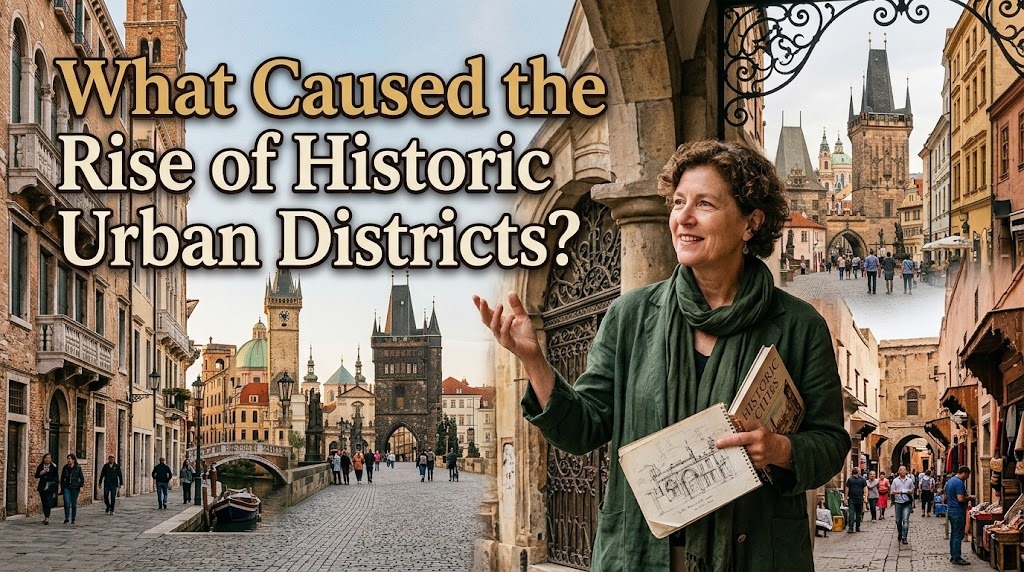
Historic urban districts developed as cities grew into important centers of government, trade, culture, and social activity. These districts often formed around royal palaces, religious institutions, marketplaces, ports, and administrative buildings. Over time, the concentration of economic activities and public institutions attracted residents, merchants, craftspeople, and visitors. Their buildings, streets, and public spaces gradually became part of the city's historical identity. Understanding the rise of historic urban districts helps explain how earlier communities organized their lives and influenced modern urban development.
THE GROWTH OF TRADE AND COMMERCE
Trade was one of the major factors behind the development of historic urban districts. Merchants gathered in central locations to exchange goods, negotiate prices, and establish business relationships. Markets, warehouses, shops, and trading houses appeared around these commercial centers, attracting workers and customers from nearby settlements. As commercial activities expanded, surrounding areas became more densely populated and economically important. Many historic districts developed from these early trading centers and retained their commercial functions for generations.
POLITICAL POWER AND GOVERNMENT CENTERS
Political authority also contributed to the formation of historic urban districts. Rulers often established palaces, administrative offices, courts, and official residences in strategically selected locations. These institutions attracted government officials, soldiers, service workers, and people seeking access to political authorities. Roads and public spaces developed around important government buildings, creating organized urban centers. In some cities, these former administrative districts remain recognizable through their historic architecture and street layouts.
RELIGIOUS INSTITUTIONS AND CULTURAL ACTIVITIES
Religious institutions played a significant role in shaping historic urban districts. Temples, churches, mosques, monasteries, and other sacred buildings often became focal points for surrounding communities. People gathered at these locations for worship, festivals, education, and social interaction. Businesses and residential areas frequently developed nearby to serve visitors and religious communities. Over time, these places became important cultural landmarks that reflected the beliefs and traditions of the people who lived there.
TRANSPORTATION ROUTES AND STRATEGIC LOCATIONS
The location of transportation routes influenced where historic urban districts emerged. Settlements near rivers, ports, crossroads, and major roads offered convenient access to trade, travel, and essential resources. These locations attracted merchants, travelers, and residents who needed transportation and commercial services. As movement increased, inns, markets, storage facilities, and workshops developed along important routes. Their continued use helped establish districts that remained central to urban life even after transportation systems changed.
POPULATION GROWTH AND MIGRATION
Population growth encouraged the expansion of historic urban districts. People moved into cities to find employment, access education, participate in trade, or improve their living conditions. New residents often settled near workplaces, markets, religious institutions, and existing residential communities. As demand for housing increased, neighborhoods expanded through the construction of houses, public buildings, and local businesses. Interactions among people from different backgrounds also contributed to the cultural diversity that characterizes many historic districts.
COLONIALISM AND URBAN PLANNING
In many parts of the world, colonial rule influenced the formation and layout of historic urban districts. Colonial administrations established government offices, military facilities, commercial buildings, and residential areas to support their political and economic objectives. Ports and trading centers frequently expanded because they connected local resources with international markets. In some cities, urban planning separated communities according to social status, ethnicity, or administrative purpose. These historical arrangements influenced architecture, infrastructure, and patterns of urban inequality that can still be observed in certain places today.
ARCHITECTURE AND THE DEVELOPMENT OF LOCAL IDENTITY
Architectural styles helped give historic urban districts their distinctive character. Buildings reflected the materials, construction techniques, cultural traditions, and economic resources available during different periods. Traditional houses, colonial offices, religious monuments, and commercial structures sometimes existed within the same district, revealing layers of historical development. Streets, courtyards, public squares, and building facades also influenced how residents interacted with their surroundings. Together, these physical features helped establish a recognizable urban identity.
HISTORIC URBAN DISTRICTS IN INDONESIA
Indonesia has many historic urban districts shaped by maritime trade, royal administration, migration, and colonial development. In Semarang, the Old Town area, commonly known as Kota Lama, preserves buildings associated with the city's historical role in regional and international commerce. Other Indonesian cities developed historic centers around royal palaces, traditional markets, ports, and religious institutions. These districts demonstrate how local traditions interacted with external influences over time. Today, many are valued for their cultural heritage, tourism potential, and contribution to urban identity.
PRESERVATION AND MODERN URBAN DEVELOPMENT
Historic urban districts continue to change as cities modernize. Some former commercial buildings become museums, galleries, restaurants, offices, or cultural centers, allowing historic structures to serve new purposes. Preservation programs can protect architectural features while supporting economic activity and community participation. However, redevelopment may also create challenges, including rising property costs, traffic congestion, and the displacement of long-term residents. Sustainable management requires balancing conservation with the needs of people who live and work in these areas.
CONCLUSION
The rise of historic urban districts resulted from the interaction of trade, political authority, religion, transportation, population growth, and cultural development. These factors encouraged people to gather in particular locations and establish lasting centers of urban activity. Over generations, buildings and public spaces reflected changes in society, technology, and government. Preserving historic districts helps cities maintain connections with their past while adapting to contemporary needs.
Recent Posts

Bagaimana Sistem SKS pada Program Kuliah... 22.11.2026/50 View

How Does Technology Make Daily Evaluation... 21.11.2026/80 View

Apa Strategi Menghadapi Kesenjangan antara Kompetensi... 21.11.2026/79 View

Mengapa Inventaris Aset Penting bagi Kelancaran... 21.11.2026/75 View

When Should Musicians Join a Record... 21.11.2026/80 View
