

What Causes a Company's Profit to Decline Continuously?
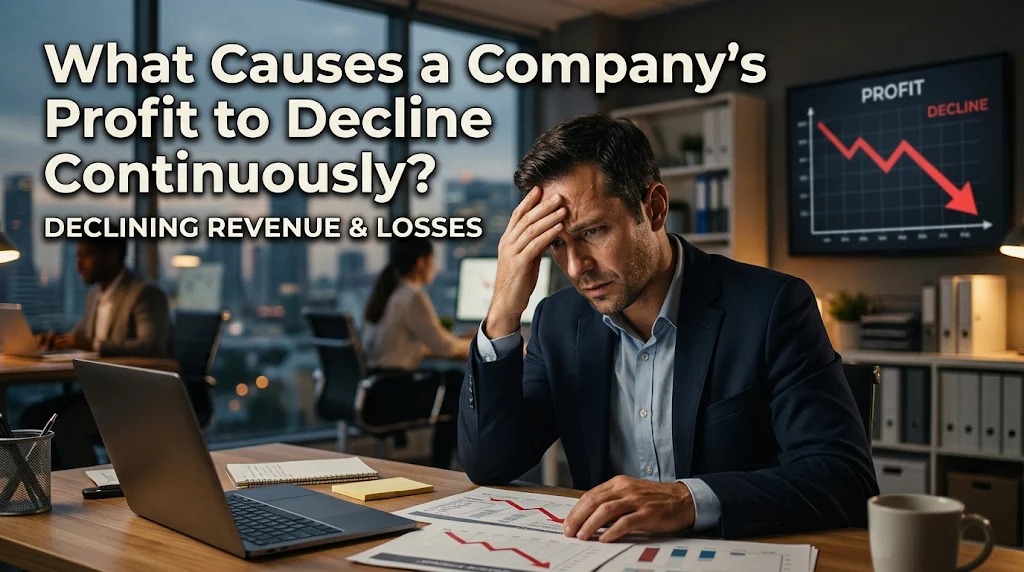
A company's profit can decline continuously when its revenue decreases, operating expenses increase, or business operations become less efficient. This situation can affect financial stability and make it more difficult for a company to maintain its daily activities. Even businesses with established products and loyal customers can experience declining profitability when market conditions or internal operations change.
Understanding the causes of declining profit is important for business owners and management teams. By identifying financial problems early, companies can evaluate their strategies, control unnecessary expenses, and improve operational performance. Recognizing the underlying causes also helps businesses develop more realistic plans to restore profitability.
DECLINING SALES REVENUE
One of the most common reasons a company's profit declines is falling sales revenue. When fewer customers purchase products or services, the business receives less income to cover its expenses and generate earnings.
Several factors can contribute to declining sales, including changing customer preferences, weak marketing activities, lower purchasing power, and stronger competition. Businesses may also experience reduced demand when their products no longer meet customer expectations.
If sales revenue continues to decrease while operating expenses remain relatively stable, the company's profit margin may become smaller. Management should regularly monitor sales performance and identify which products, customer segments, or sales channels are experiencing the greatest decline.
RISING PRODUCTION AND OPERATING COSTS
Increasing business expenses can reduce profit even when revenue remains relatively stable. Production costs may rise because of more expensive raw materials, higher employee wages, transportation charges, or increased energy prices.
Operating expenses can also grow as companies expand their activities or maintain inefficient business processes. Expenses such as rent, advertising, utilities, equipment maintenance, and administrative costs may gradually consume a larger portion of revenue.
When costs increase faster than revenue, the company earns less profit from its business activities. Businesses should review their expense structure regularly to identify unnecessary spending and opportunities to improve efficiency.
INEFFICIENT BUSINESS OPERATIONS
Inefficient operations can create unnecessary expenses and reduce a company's ability to generate profit. Problems such as repeated tasks, poor communication, production delays, and inadequate resource planning can make business activities more expensive than necessary.
For example, a manufacturing company may experience frequent machine breakdowns because it does not perform regular maintenance. These interruptions can reduce production output, delay customer orders, and increase repair expenses.
Companies can address operational inefficiencies by improving workflows, training employees, maintaining equipment, and using appropriate technology. Better coordination between departments can also reduce errors and help businesses use resources more effectively.
WEAK PRICING STRATEGIES
Pricing decisions directly influence how much profit a company earns from each sale. If prices are too low compared with production and operating costs, the business may struggle to maintain sufficient profit margins.
Some companies reduce prices to attract customers or respond to competitors without calculating the long-term financial impact. Although discounts may increase sales volume, they can reduce total profit if the additional purchases do not compensate for the lower margin.
On the other hand, prices that are too high may discourage customers and reduce demand. Businesses should evaluate customer expectations, production costs, competitor prices, and perceived product value before making pricing adjustments.
STRONGER MARKET COMPETITION
Increasing competition can put pressure on a company's revenue and profit margins. Competitors may introduce similar products, offer lower prices, improve product quality, or provide better customer experiences.
When customers find more attractive alternatives, they may switch to other businesses. Companies may respond by increasing promotional spending, offering discounts, or improving their products, which can create additional expenses.
To remain competitive, businesses need to understand their unique value and identify what customers appreciate about their products or services. Improving customer service, product quality, and brand differentiation can help maintain customer interest without depending entirely on price reductions.
POOR INVENTORY MANAGEMENT
Inventory problems can gradually reduce profitability, particularly for businesses that sell physical products. Excessive inventory can increase storage, handling, and insurance expenses while tying up money that could support other activities.
Meanwhile, insufficient inventory can lead to stock shortages and missed sales opportunities. Products may also lose value because of expiration, damage, changing customer preferences, or outdated designs.
Businesses should monitor inventory movement and use sales forecasts to plan purchasing decisions. Accurate stock records and regular inventory evaluations can help reduce unnecessary losses and maintain a more balanced supply.
DECLINING PRODUCT OR SERVICE QUALITY
Product and service quality can influence customer satisfaction, repeat purchases, and long-term revenue. When quality becomes inconsistent, customers may complain, request refunds, or choose competitors.
Poor quality can also create additional expenses through repairs, replacements, product returns, and customer service activities. These costs can reduce profit while damaging the company's reputation.
Businesses should establish quality control procedures and collect customer feedback regularly. Maintaining consistent standards helps reduce product defects and supports stronger customer relationships.
HIGH DEBT AND INTEREST EXPENSES
Debt can support business expansion and investment, but excessive borrowing may increase financial pressure. Companies that rely heavily on loans must allocate part of their income to interest payments and debt obligations.
When interest expenses rise, net profit may decline even if the company's operating performance remains stable. This can become more difficult when revenue decreases or cash flow becomes unpredictable.
Businesses should evaluate borrowing decisions carefully and ensure that expected returns justify financing costs. Monitoring debt levels, repayment schedules, and interest rates can help management reduce financial risks.
WEAK FINANCIAL MANAGEMENT
Poor financial management can make it difficult for companies to identify problems that affect profitability. Inaccurate budgets, incomplete expense records, unrealistic sales forecasts, and insufficient financial monitoring can lead to unsuitable business decisions.
For example, a company may continue investing in a product that generates low margins because management does not regularly evaluate its financial performance. Without accurate information, unnecessary spending may continue for several reporting periods.
Businesses should review financial statements, compare actual results with budgets, and monitor important indicators such as gross profit margin, operating profit margin, and net profit margin. Reliable financial information allows management to identify declining performance and respond more effectively.
CHANGING ECONOMIC CONDITIONS
External economic conditions can influence business costs and customer purchasing behavior. Inflation may increase the price of raw materials, transportation, utilities, and other operating resources.
Changes in interest rates, exchange rates, and consumer purchasing power can also affect business performance. For example, companies that depend on imported materials may experience higher costs when their local currency weakens.
Businesses cannot control every economic development, but they can prepare by monitoring market conditions, reviewing financial forecasts, and maintaining flexible operating plans. Adjusting purchasing, pricing, and inventory strategies may help reduce the impact of external pressures.
HOW COMPANIES CAN PREVENT FURTHER PROFIT DECLINES
Preventing continuous profit declines requires businesses to identify the main financial problems and take appropriate corrective action. Companies should avoid relying on assumptions and instead use sales records, expense reports, and financial statements to evaluate their performance.
Several practical steps can help businesses improve profitability:
- Review Business Expenses: Identify unnecessary costs and evaluate whether existing spending supports important business activities.
- Improve Sales Strategies: Understand customer needs, strengthen marketing activities, and develop products that offer relevant value.
- Monitor Profit Margins: Evaluate gross, operating, and net profit margins to identify where earnings are decreasing.
- Increase Operational Efficiency: Reduce production waste, improve workflows, and use resources more effectively.
- Evaluate Pricing Decisions: Ensure that product prices reflect costs, market conditions, and customer expectations.
- Strengthen Customer Retention: Improve product quality and customer service to encourage repeat purchases.
- Prepare Financial Forecasts: Estimate future revenue and expenses to identify potential financial challenges before they become serious.
These actions can help companies address the causes of declining profitability and create a more sustainable financial strategy.
CONCLUSION
A company's profit can decline continuously because of falling sales, rising expenses, inefficient operations, weak pricing decisions, stronger competition, and poor financial management. External factors such as inflation and changing economic conditions can also create additional pressure on business earnings.
Companies should regularly evaluate their financial performance to identify the reasons behind declining profit. By improving operational efficiency, controlling expenses, strengthening customer relationships, and making informed financial decisions, businesses can work toward restoring profitability and maintaining long-term stability.
Recent Posts

Bagaimana Sistem SKS pada Program Kuliah... 22.11.2026/34 View

How Does Technology Make Daily Evaluation... 21.11.2026/68 View

Apa Strategi Menghadapi Kesenjangan antara Kompetensi... 21.11.2026/68 View

Mengapa Inventaris Aset Penting bagi Kelancaran... 21.11.2026/66 View

When Should Musicians Join a Record... 21.11.2026/67 View
