

What Causes a Person to Experience Color Blindness?
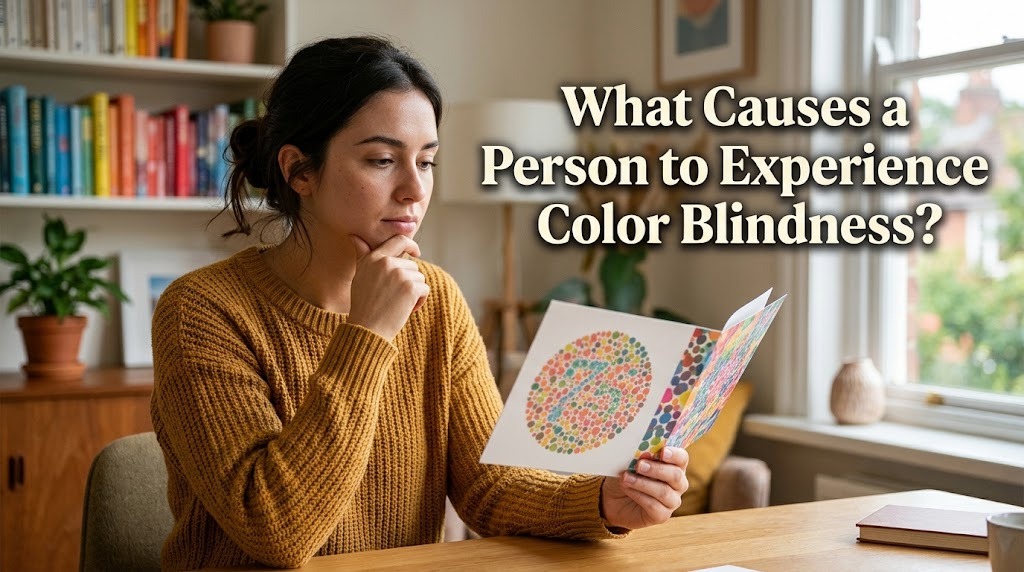
Color blindness is a vision condition that makes it difficult for someone to distinguish certain colors accurately. This condition occurs when the eyes cannot properly detect specific colors because of problems with the light-sensitive cells in the retina. Some people have difficulty distinguishing red and green, while others experience problems recognizing blue and yellow. In rare cases, a person may have very limited ability to see colors and perceive the world mainly in shades of gray.
Many people experience color blindness from birth because of genetic factors inherited from their parents. However, color vision problems can also develop later in life due to eye diseases, damage to the optic nerve, certain medications, or other medical conditions. Understanding the causes of color blindness is important because it helps people recognize possible symptoms and determine when they should seek an eye examination.
HOW DOES COLOR BLINDNESS OCCUR?
Color blindness occurs when the visual system cannot properly distinguish certain colors. Inside the retina, there are specialized light-sensitive cells called cone cells that help the eyes recognize colors. Humans generally have three types of cone cells that respond to different ranges of light wavelengths associated with red, green, and blue. The brain combines signals from these cells to produce the wide range of colors people normally see.
When one or more types of cone cells do not function properly, the ability to distinguish certain colors can become limited. For example, someone with a red-green color vision deficiency may have difficulty recognizing differences between red and green shades. In other cases, the cone cells may be missing or unable to function effectively, resulting in more severe color vision problems. The type and severity of color blindness depend on which parts of the visual system are affected.
GENETIC FACTORS INHERITED FROM PARENTS
One of the most common causes of color blindness is genetic inheritance. This condition can develop when a person inherits genetic changes that affect the development or function of cone cells in the retina. Red-green color blindness is commonly associated with genes located on the X chromosome. Because males typically have only one X chromosome, they are more likely to experience this inherited condition than females.
Women generally have two X chromosomes, meaning that a normal copy of the relevant gene can sometimes compensate for an altered copy. However, women can also experience color blindness if they inherit the necessary genetic changes. Parents who carry color vision deficiency-related genes may pass them to their children, even if they do not experience noticeable symptoms themselves. Inherited color blindness is usually present from birth and often remains relatively stable throughout life.
DAMAGE TO THE RETINA AND CONE CELLS
Problems affecting the retina can also cause color vision deficiencies. The retina is the light-sensitive layer at the back of the eye that receives visual information and sends signals to the brain through the optic nerve. Cone cells located in the retina are responsible for detecting colors and helping people see details clearly, particularly in bright conditions. If these cells become damaged, the ability to recognize certain colors may decrease.
Several retinal conditions can affect how cone cells function. For example, cone dystrophy is a group of inherited disorders that damage cone cells and can cause reduced color perception, poor visual sharpness, and sensitivity to bright light. Other retinal diseases may also interfere with normal color vision. In these situations, color blindness or color vision deficiency may occur alongside other visual symptoms.
EYE DISEASES THAT AFFECT COLOR VISION
Certain eye diseases can interfere with the normal process of recognizing colors. One example is glaucoma, a condition that damages the optic nerve and can gradually affect vision. Although glaucoma is primarily associated with visual field loss, some individuals may also experience changes in color perception. Cataracts can also affect color vision because clouding of the eye's natural lens changes how light passes into the eye.
Age-related macular degeneration is another eye condition that can affect central vision and visual quality. Depending on the severity and location of the damage, it may also influence how clearly a person perceives colors. These conditions do not necessarily cause the same type of color blindness as inherited genetic deficiencies. However, they can reduce the accuracy of color perception and should be evaluated by an eye care professional.
DAMAGE TO THE OPTIC NERVE
The optic nerve plays an essential role in transmitting visual information from the retina to the brain. Even when the eyes detect light and colors correctly, damage to this nerve can interfere with how visual information is processed. As a result, a person may experience reduced color sensitivity or difficulty distinguishing certain shades. These changes can sometimes appear in one eye or affect both eyes, depending on the underlying condition.
Optic neuritis is one example of a condition that can affect color perception. It involves inflammation of the optic nerve and may cause blurred vision, pain when moving the eye, and colors appearing less vivid than usual. Other problems, including optic nerve injuries and certain neurological conditions, can also affect color vision. If someone suddenly notices that colors appear faded or different, a medical examination is important to identify the cause.
MEDICATIONS AND CHEMICAL EXPOSURE
Certain medications can affect the visual system and cause changes in color perception. Some medicines used to treat infections, heart conditions, or other diseases may have visual side effects in particular circumstances. For example, ethambutol, a medication used to treat tuberculosis, can cause optic nerve damage and affect color vision. The risk may depend on the medication, dosage, duration of treatment, and individual health factors.
Exposure to certain industrial chemicals and toxic substances can also interfere with normal visual function. Some substances may damage the retina or optic nerve, resulting in changes in color perception. People who work with chemicals should follow appropriate workplace safety procedures and use recommended protective equipment. Anyone who experiences unusual visual changes while taking medication or after chemical exposure should consult a healthcare professional rather than stopping prescribed treatment independently.
AGE AND OTHER HEALTH CONDITIONS
Changes in color perception can sometimes develop as people get older. The natural lens of the eye gradually becomes less clear and may develop a yellowish appearance, affecting how certain colors are perceived. This change can make some colors appear less bright or slightly different from how they appeared earlier in life. Age-related eye conditions may also contribute to reduced color discrimination.
In addition, certain health conditions can affect the structures responsible for normal vision. Diabetes, for example, can damage blood vessels in the retina and lead to diabetic retinopathy, which may affect overall visual function. Some neurological conditions can also interfere with the processing of visual information. Therefore, changes in color perception should not automatically be considered ordinary aging, especially when they occur suddenly or are accompanied by other vision problems.
CONCLUSION
Color blindness can be caused by several factors, including genetic inheritance, retinal damage, eye diseases, optic nerve disorders, medications, chemical exposure, and certain health conditions. Inherited color blindness is generally present from birth, while acquired color vision deficiencies can develop at different stages of life.
Understanding the causes of color blindness is important for recognizing symptoms and determining whether further medical evaluation is necessary. Although inherited color blindness cannot currently be cured, some acquired conditions may be treated or managed depending on their underlying causes. Anyone experiencing sudden changes in color perception should seek professional eye care to protect their vision and overall eye health.
Recent Posts

Bagaimana Sistem SKS pada Program Kuliah... 22.11.2026/42 View

How Does Technology Make Daily Evaluation... 21.11.2026/72 View

Apa Strategi Menghadapi Kesenjangan antara Kompetensi... 21.11.2026/74 View

Mengapa Inventaris Aset Penting bagi Kelancaran... 21.11.2026/70 View

When Should Musicians Join a Record... 21.11.2026/73 View
