

What Causes Companies to Lose Public Confidence?
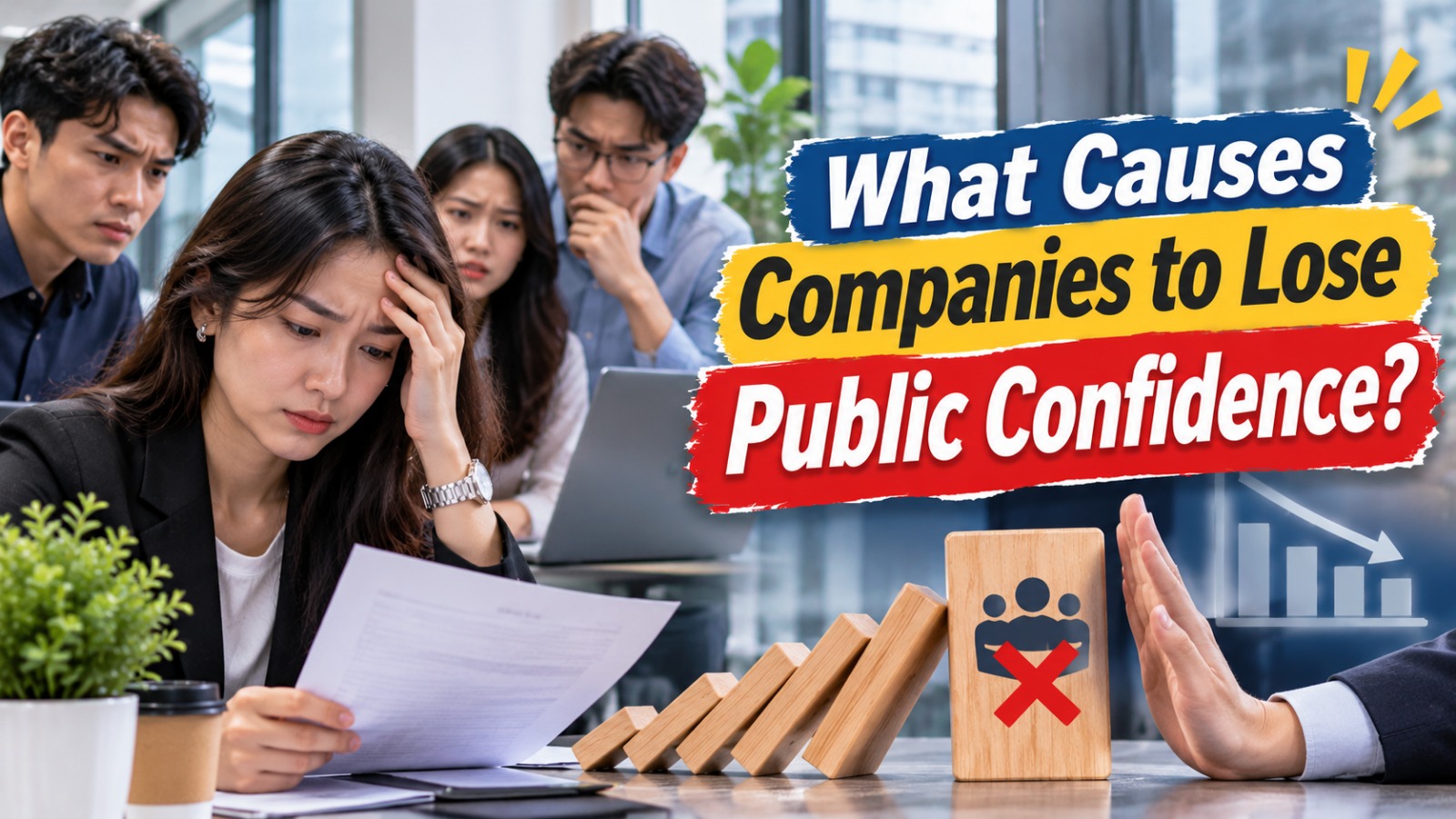
Public confidence is an important foundation of a company's reputation and long-term success. It reflects how much customers, employees, investors, and other stakeholders believe in an organization's honesty, reliability, and ability to fulfill its responsibilities. When people trust a company, they are more likely to support its products, maintain business relationships, and view its decisions positively.
However, public confidence can decline when a company repeatedly fails to meet expectations or behaves in ways that contradict its promises. Misleading information, poor customer service, unethical practices, and weak crisis management can all damage public perception. Understanding these causes helps businesses identify potential risks and maintain stronger relationships with their stakeholders.
MISLEADING ADVERTISING AND FALSE CLAIMS
Misleading advertising can quickly weaken public confidence because customers expect businesses to provide accurate information. When promotional messages exaggerate product benefits, hide important limitations, or make unsupported claims, consumers may feel deceived.
For example, a company that advertises a product as having certain features but delivers something substantially different can create disappointment. Once customers discover the inconsistency, they may question the company's honesty and become reluctant to purchase again. Businesses should ensure that their advertisements accurately represent their actual offerings.
POOR PRODUCT AND SERVICE QUALITY
Customers expect products and services to meet reasonable quality standards. When businesses repeatedly provide defective products, unreliable services, or inconsistent results, public confidence may gradually decline.
Poor quality can also create additional problems, including complaints, refunds, negative reviews, and customer dissatisfaction. Companies should maintain quality control procedures and regularly evaluate product performance. Consistent delivery is essential for demonstrating that a business can fulfill its promises.
UNETHICAL BUSINESS PRACTICES
Unethical behavior can damage a company's credibility and create serious concerns among stakeholders. Examples include dishonest transactions, unfair employee treatment, corruption, discrimination, and misuse of customer information.
Such practices may conflict with the values that a company communicates publicly. When stakeholders discover that an organization does not follow its stated principles, they may question its integrity. Businesses need clear ethical guidelines, responsible leadership, and effective internal controls to prevent misconduct.
POOR CUSTOMER SERVICE
Customer service strongly influences how people evaluate their experiences with a business. Unhelpful employees, slow responses, unclear information, and unresolved complaints can make customers feel ignored or undervalued.
Repeated negative interactions may encourage customers to share unfavorable experiences through online reviews and social media. These discussions can influence the opinions of potential buyers. Companies should provide appropriate employee training, accessible support channels, and clear procedures for handling complaints.
LACK OF TRANSPARENCY
Transparency helps stakeholders understand how a company operates and makes important decisions. When businesses hide relevant information, provide unclear explanations, or avoid answering legitimate questions, people may begin to suspect that something is wrong.
For example, a company that introduces unexpected fees without explaining them clearly may create frustration among customers. Similarly, unclear communication about major business changes can increase uncertainty among employees and investors. Sharing accurate and relevant information helps organizations maintain credibility.
DATA PRIVACY AND SECURITY FAILURES
Customers trust businesses to handle their personal information responsibly. Data breaches, unauthorized access, and careless information management can weaken this trust and create concerns about privacy.
The impact may extend beyond the immediate technical problem, particularly when affected individuals do not receive timely information or appropriate assistance. Companies should implement suitable security measures, limit unnecessary data collection, and communicate clearly about privacy practices. Responsible data management is an important part of maintaining public confidence.
NEGATIVE SOCIAL MEDIA EXPOSURE
Social media allows customers and other stakeholders to share opinions about companies with a wide audience. Complaints, controversial statements, and negative experiences can spread quickly through posts, videos, and online discussions.
When businesses respond defensively or ignore legitimate criticism, public dissatisfaction may increase. Companies should monitor relevant conversations and address concerns professionally. They should also avoid spreading misleading responses or attempting to manipulate online feedback.
FAILURE TO TAKE RESPONSIBILITY
Mistakes can happen in any organization, but refusing to acknowledge them can make the consequences more serious. Customers and other stakeholders may lose confidence when a company shifts blame, ignores complaints, or avoids explaining what went wrong.
Taking responsibility requires businesses to recognize the impact of their actions and provide appropriate solutions. For instance, a company that discovers a defective product should communicate the issue and explain the steps being taken to protect customers. Accountability demonstrates a willingness to correct problems rather than hide them.
INCONSISTENT BRAND PROMISES
A company's reputation depends partly on whether its actions match its public promises. If a brand promotes reliability, affordability, or environmental responsibility but fails to demonstrate these values in its operations, stakeholders may question its credibility.
Inconsistent experiences can also make customers uncertain about what to expect. A business that provides excellent service one day but repeatedly delivers poor support later may struggle to maintain confidence. Companies should ensure that marketing messages, internal policies, and daily operations reflect the same standards.
POOR CRISIS MANAGEMENT
A business crisis can involve product failures, financial difficulties, employee misconduct, or public complaints. The way a company manages these situations can influence whether stakeholders continue to trust the organization.
Delayed statements, inaccurate information, and unclear corrective actions may increase uncertainty. Companies should prepare crisis communication procedures, identify responsible spokespersons, and establish clear methods for sharing verified updates. Effective crisis management requires both timely communication and meaningful action.
FINANCIAL MISMANAGEMENT
Financial problems can affect public confidence, particularly when stakeholders discover that a company has handled its resources irresponsibly. Poor financial planning, inaccurate reporting, excessive debt, or misuse of funds may create concerns about organizational stability.
Investors and business partners need reliable information to evaluate financial performance and potential risks. Companies should maintain accurate records, apply appropriate financial controls, and communicate important developments honestly. Responsible financial management helps protect credibility and supports business continuity.
CONCLUSION
Companies can lose public confidence for several reasons, including misleading advertising, poor product quality, unethical practices, weak customer service, and a lack of transparency. Data security failures, negative online exposure, financial mismanagement, and poor crisis responses can also damage stakeholder relationships.
Maintaining public confidence requires consistent ethical behavior, honest communication, and accountability. Businesses should identify potential problems early, listen to stakeholder concerns, and take meaningful corrective action. By ensuring that their actions match their promises, companies can protect their reputation and maintain stronger public relationships.
Recent Posts

How Does Technology Make Daily Evaluation... 21.11.2026/63 View

Apa Strategi Menghadapi Kesenjangan antara Kompetensi... 21.11.2026/64 View

Mengapa Inventaris Aset Penting bagi Kelancaran... 21.11.2026/60 View

When Should Musicians Join a Record... 21.11.2026/59 View

Daily Evaluation or Daily Planning Which... 21.11.2026/67 View
