

What Causes Cultural Heritage to Become Endangered?
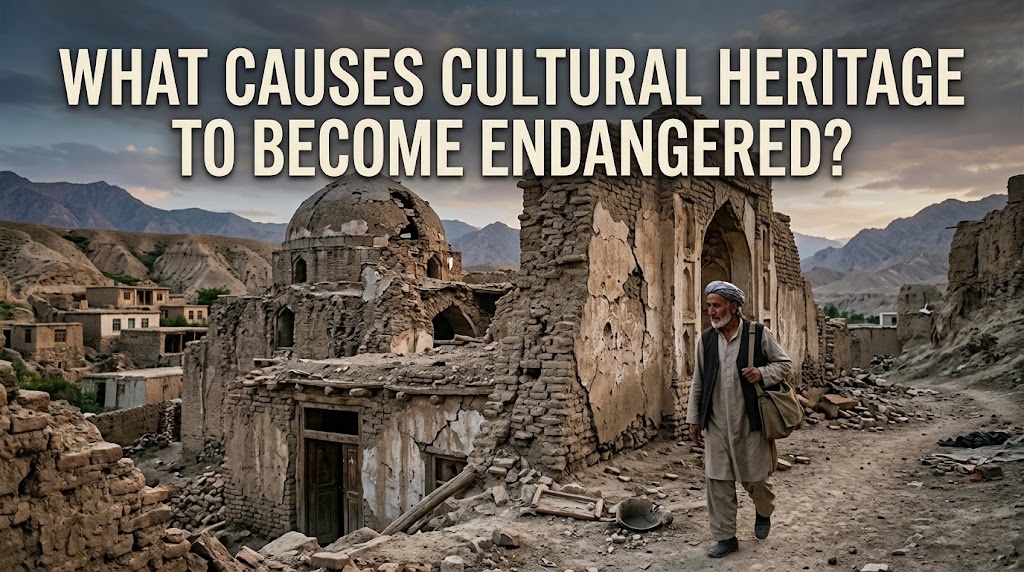
Cultural heritage is an important part of human history because it represents the traditions, knowledge, values, and achievements passed down through generations. It includes historical buildings, ancient artifacts, traditional languages, music, dances, ceremonies, and local craftsmanship. However, cultural heritage can become endangered when the places, objects, or practices that preserve it face serious threats. Modernization, natural disasters, armed conflicts, and declining interest in traditional culture are among the factors that can cause cultural heritage to disappear. Understanding these threats is essential for developing effective strategies to protect cultural heritage for future generations.
MODERNIZATION AND URBAN DEVELOPMENT
Modernization is one of the major factors that can threaten cultural heritage. As cities expand, historical buildings and traditional neighborhoods may be demolished to make room for new housing, roads, shopping centers, and other infrastructure. Traditional ways of life can also change as communities adopt modern technologies and lifestyles. Although development can improve living conditions, poorly planned projects may destroy important cultural sites and weaken connections with local history. Balancing development with heritage protection is therefore essential.
Urban development can also affect traditional communities and their cultural practices. When people move away from ancestral villages, they may have fewer opportunities to participate in local ceremonies, maintain traditional houses, or learn cultural skills from older generations. Traditional buildings may be abandoned when younger residents choose different living arrangements. Over time, the knowledge associated with these places can become less widely practiced. Careful urban planning and community participation can help protect cultural heritage while allowing cities to develop.
NATURAL DISASTERS AND CLIMATE CHANGE
Natural disasters can cause serious damage to cultural heritage. Earthquakes, floods, volcanic eruptions, landslides, and fires may destroy historical buildings, archaeological sites, museums, and valuable collections. Some cultural objects are irreplaceable because they contain unique historical information or artistic features. Even when damaged structures can be repaired, important details may be permanently lost. Preparing for disasters is therefore a crucial part of heritage protection.
Climate change creates additional risks for cultural heritage. Rising sea levels can threaten coastal historical sites, while changing rainfall patterns and more frequent extreme weather events can increase erosion and structural damage in vulnerable locations. Higher temperatures, humidity changes, and biological growth may also affect certain artifacts and historic buildings. Communities and conservation professionals can reduce these risks through regular inspections, environmental monitoring, disaster planning, and appropriate restoration methods. Long-term protection requires understanding how local environmental conditions affect different forms of heritage.
GLOBALIZATION AND CHANGING LIFESTYLES
Globalization allows people to exchange ideas, products, and cultural practices across borders. While this can increase appreciation for cultural diversity, it may also influence local communities to adopt lifestyles that reduce their use of traditional languages, crafts, and customs. Younger generations may become more interested in global entertainment and modern trends than in cultural activities practiced by older family members. When fewer people learn traditional skills or participate in local ceremonies, certain practices may become endangered. However, globalization does not automatically destroy cultural heritage because international connections can also help promote and preserve traditions.
Changing lifestyles can affect the transmission of cultural knowledge within families and communities. Traditional crafts may decline when handmade products struggle to compete with cheaper mass-produced alternatives. Local languages may lose everyday use when families increasingly communicate in more widely spoken languages. Traditional music, dances, and oral storytelling can also become less common if there are fewer opportunities to practice them. Cultural education, community programs, and support for traditional practitioners can help keep these practices relevant to modern life.
LACK OF EDUCATION AND PUBLIC AWARENESS
Limited public understanding of cultural heritage can make preservation more difficult. When people do not recognize the historical or cultural value of a building, artifact, or tradition, they may not see why it deserves protection. This can lead to neglect, inappropriate renovations, vandalism, or the removal of culturally significant features. A lack of educational resources may also prevent younger generations from learning about their community's history. Public awareness is therefore an important foundation for effective preservation.
Education can help people understand the meaning and significance of cultural heritage. Schools can introduce students to local history, traditional architecture, regional languages, and cultural practices through lessons and practical activities. Museums, cultural organizations, and community groups can organize exhibitions, workshops, and historical tours. Families can also share traditional stories and customs at home. These efforts help people recognize that cultural heritage is a shared responsibility rather than something that only experts or governments should protect.
ARMED CONFLICT AND POLITICAL INSTABILITY
Armed conflicts can place cultural heritage at serious risk. Historical buildings, religious sites, museums, libraries, and archaeological locations may be damaged or destroyed during fighting. Collections may also be stolen, displaced, or lost when institutions are forced to close. In some situations, cultural sites are deliberately targeted because of their association with a particular community, identity, or belief system. Such losses can damage both historical records and the cultural connections that communities maintain with their past.
Political instability can make heritage protection more difficult even when cultural sites are not directly attacked. Governments and local organizations may lack the resources needed to maintain historical buildings, protect collections, or support cultural practitioners. Conflict can also force people to leave their homes, interrupting the transmission of traditional knowledge and community practices. International cooperation, emergency documentation, protective measures, and support for displaced communities can help reduce some of these risks. However, prevention and long-term recovery remain essential for protecting endangered cultural heritage.
ECONOMIC PRESSURES AND COMMERCIALIZATION
Economic difficulties can threaten cultural heritage when communities lack the resources to maintain historical buildings or continue traditional practices. Restoring an old structure may require specialized materials, skilled workers, and substantial funding. Traditional craftspeople may also struggle to earn a stable income from their skills, especially when demand for handmade products declines. Without sufficient support, they may stop practicing their craft or choose other forms of employment. This can result in the gradual loss of both physical heritage and specialized cultural knowledge.
Commercialization can create additional challenges when cultural heritage is used mainly to generate profit. Traditional ceremonies may be changed to meet tourist expectations, while historical neighborhoods may lose their original character because of excessive commercial development. Cultural designs and traditional knowledge may also be used without proper recognition or permission from the communities that maintain them. Economic activity is not necessarily harmful, since responsible tourism and cultural businesses can support preservation. The key is to ensure that commercial activities respect cultural meaning, community rights, and the long-term condition of heritage resources.
LOSS OF TRADITIONAL LANGUAGES AND KNOWLEDGE
Traditional languages are important carriers of cultural heritage because they preserve stories, expressions, knowledge, and ways of understanding the world. When a language is no longer spoken regularly, younger generations may lose access to oral histories, traditional songs, local terminology, and cultural knowledge expressed through that language. Language loss can also weaken connections between generations and reduce the ability of communities to pass on their traditions. Although written records can preserve some information, they cannot fully replace a living language used in everyday communication.
Traditional knowledge and skills may also disappear when experienced practitioners are unable to pass them on. Examples include traditional weaving, pottery, boatbuilding, medicinal plant knowledge, folk music, and oral storytelling. Some practices require years of observation and hands-on experience to learn properly. If apprenticeships and community teaching opportunities become less common, these skills may gradually disappear. Supporting language learning, cultural workshops, intergenerational activities, and community-led documentation can help preserve this valuable knowledge.
POLLUTION, NEGLECT, AND ILLEGAL TRADE
Pollution and neglect can gradually damage cultural heritage. Air pollution may affect historic stone surfaces and building materials, while moisture and biological growth can weaken vulnerable structures. Improper waste disposal and uncontrolled visitor activities can also harm cultural sites. When historical buildings receive little maintenance, small problems such as leaks or cracks may develop into serious structural damage. Regular monitoring and responsible site management can help prevent avoidable losses.
Illegal trade presents another major threat, particularly to archaeological artifacts and culturally significant objects. Stolen objects may be removed from their original locations, separating them from the historical information that gives them meaning. Illegal excavation can destroy archaeological evidence even when individual artifacts survive. Vandalism and unauthorized restoration may also cause irreversible damage. Strong legal protection, responsible collecting practices, public reporting, and cooperation among authorities and cultural institutions are important for reducing these threats.
HOW CAN ENDANGERED CULTURAL HERITAGE BE PROTECTED?
Protecting endangered cultural heritage requires cooperation among governments, local communities, educational institutions, conservation professionals, and cultural organizations. Historical buildings and artifacts need appropriate maintenance, documentation, and conservation planning. Traditional languages, ceremonies, music, and crafts require opportunities for continued practice and transmission. Preservation programs should also involve local communities because they often possess important knowledge about the heritage and its cultural significance. Community participation helps ensure that protection efforts respond to local needs and values.
Modern technology can provide additional support through digital archives, photography, audio recordings, and three-dimensional documentation. These tools can preserve information about vulnerable buildings, artifacts, oral histories, and cultural practices. Schools can raise awareness through cultural education, while responsible tourism can help generate resources for conservation. Governments can strengthen legal protections and provide funding for threatened heritage sites and cultural practitioners. By combining these approaches, societies can reduce the risks facing cultural heritage and help ensure its survival for future generations.
CONCLUSION
Cultural heritage becomes endangered for many reasons, including modernization, natural disasters, climate change, armed conflicts, economic pressures, pollution, and declining interest in traditional knowledge. These threats can damage historical buildings and artifacts or interrupt the transmission of languages, customs, and cultural skills. In many cases, several factors occur together, making preservation even more challenging.
Protecting cultural heritage requires more than saving old buildings or recording traditional practices. It also involves educating younger generations, supporting local communities, maintaining cultural skills, and creating effective conservation policies. Technology, responsible tourism, and international cooperation can provide additional support when used appropriately. Through shared responsibility and consistent action, communities can protect their cultural identity and ensure that valuable heritage remains accessible to future generations.
Recent Posts

Bagaimana Sistem SKS pada Program Kuliah... 22.11.2026/49 View

How Does Technology Make Daily Evaluation... 21.11.2026/77 View

Apa Strategi Menghadapi Kesenjangan antara Kompetensi... 21.11.2026/78 View

Mengapa Inventaris Aset Penting bagi Kelancaran... 21.11.2026/74 View

When Should Musicians Join a Record... 21.11.2026/79 View
